
Kinmundy Businesses (1800's - early 1900's)
Kinmundy, Marion Co., Illinois
(Note: Since there are so many images, these have been divided up into several books for the website.
Remember that you can also use CTRL-F to find a particular surname within these pictures when you are on the page.)
We are looking for photos of people and/or places from around Kinmundy & Alma. Can you help?
Or maybe you have stories or memories from the "Good Old Days"? What do YOU remember?
The Kinmundy Historical Society would be honored to preserve your memories and stories. We also have the
equipment to scan (or copy) your photos so that they may be enjoyed now as well as for generations yet to come!
We would love to hear from you! For more information, please contact:
Dolores (Ford) Mobley – fordmobley@gmail.com
208 Joan Dr.; Divernon, IL 62530; (217) 494-7527
or
Gladys (Corrie) See – gsee49@yahoo.com
408 S. Washington St.; Kinmundy, IL 62854; (618) 547-7731
Click to return to

a%20fix.jpg)
(B-8) Plat of Kinmundy - probably around 1895-1900. Kinmundy was platted in 1857, and incorporated in 1867.
(Info. from “Kinmundy – Railway to Thruway (1857 – 1957”)
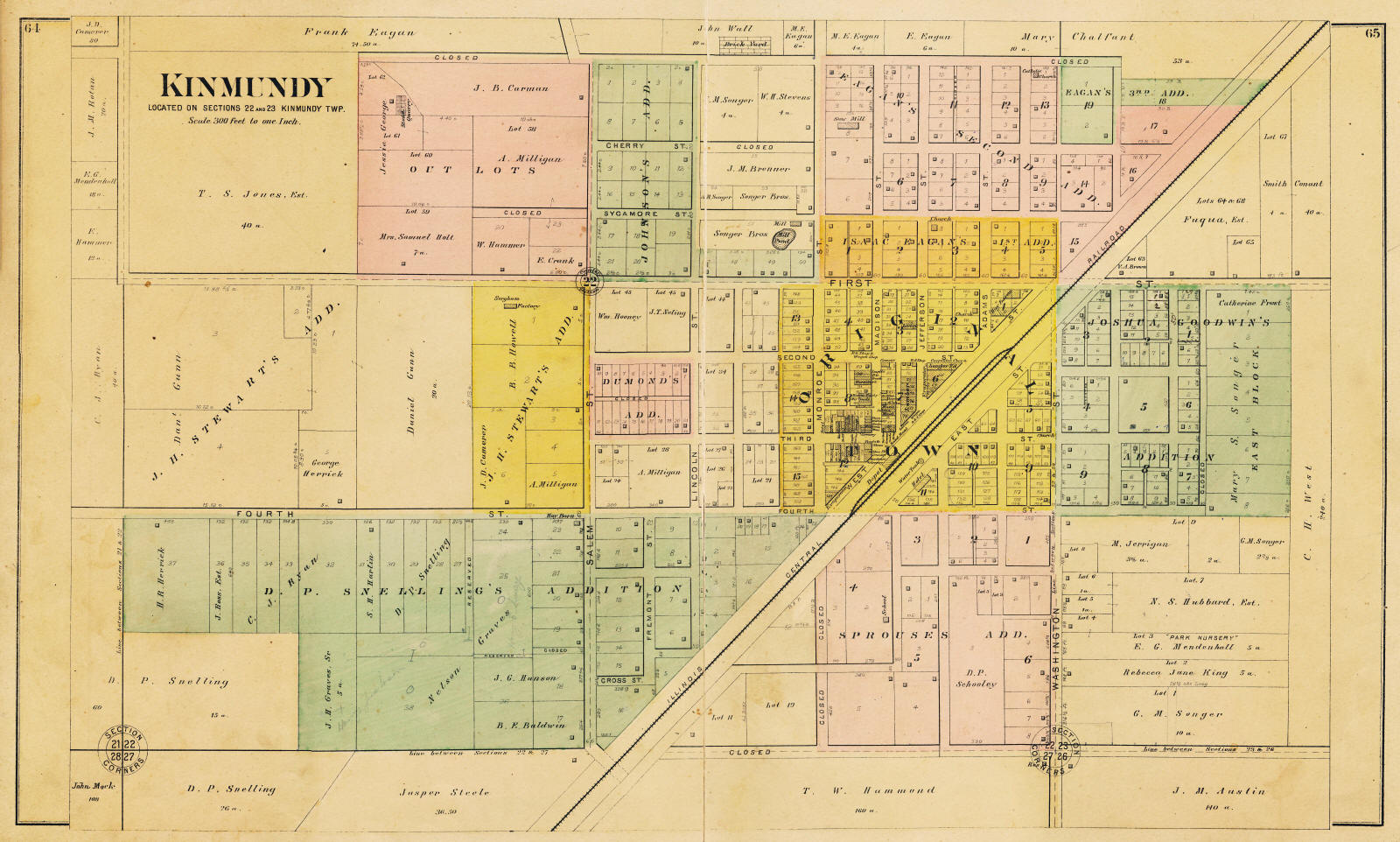
Plat of Kinmundy - 1892 Marion County Atlas Book
%20-%20orginal%20section.jpg)
Plat of Kinmundy - 1892 Marion County Atlas Book (Business section area)
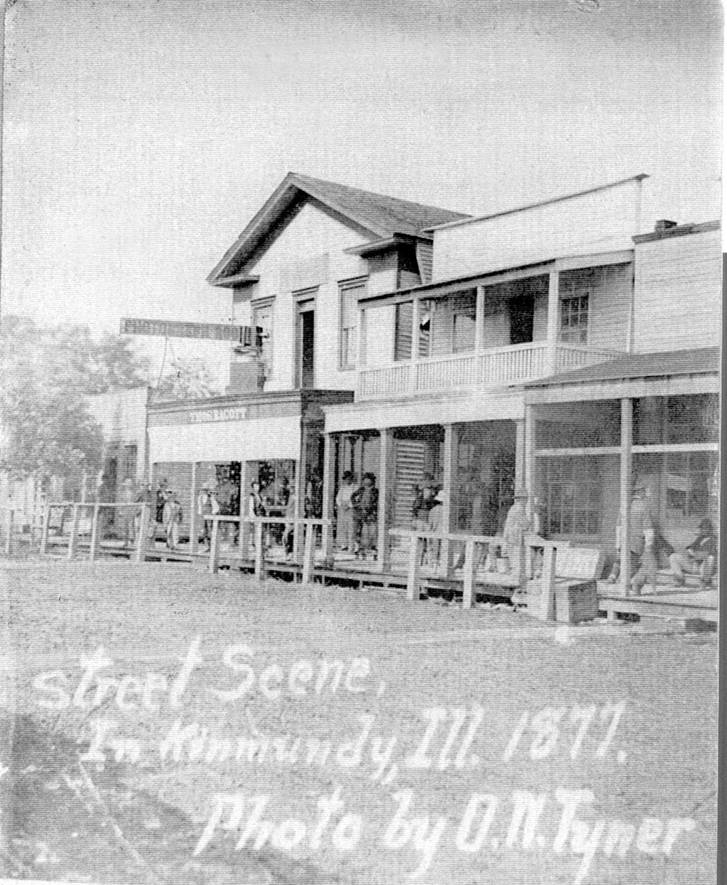
(B-1a) "Thomas Bagott’s store, which he started after working for D.C. Moore, an early Kinmundy merchant.
They both came from Cincinnati. The store is about where the Mahan & Motch Store was in 1957."
(Info. from “Kinmundy – Railway to Thruway (1857 – 1957”)
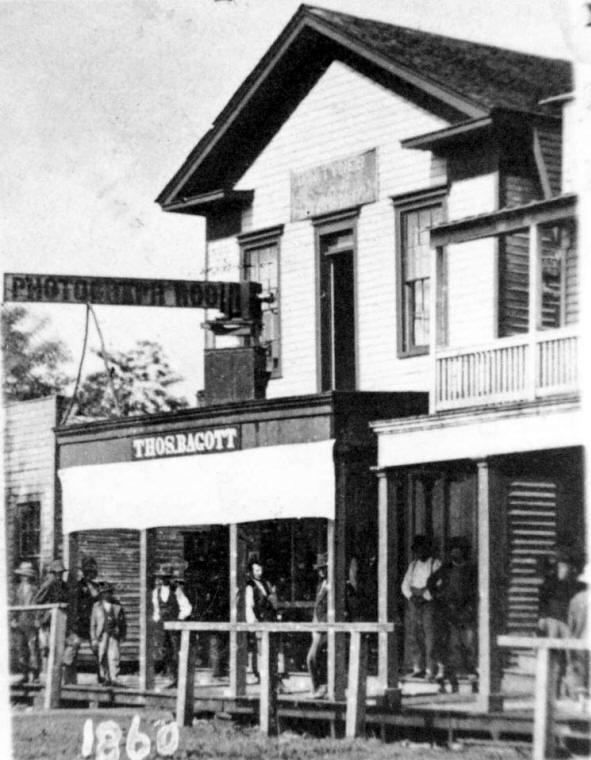
(B-1b) The businesses shown on this street scene of Kinmundy included that of Thos. Bagott,
and in the 2nd floor above that, the studio of the long-time local photographer, O.N. Tyner.
According to an article in "The Kinmundy Express" on Jan. 11, 1923, O.N. Tyner opened his store in Kinmundy in 1877.
He had a photography studio and also sold musical instruments, as an article was published in a national magazine
in celebration of his 80th birthday.
(The "1860" written in the corner is incorrect and should be 1877.)
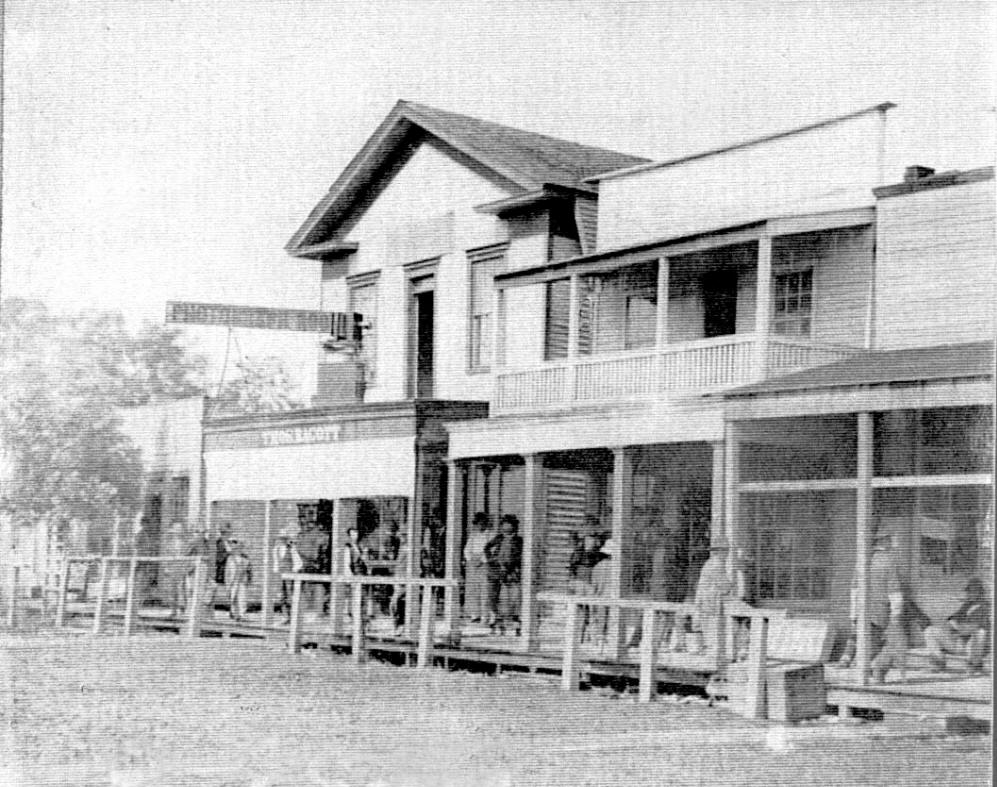
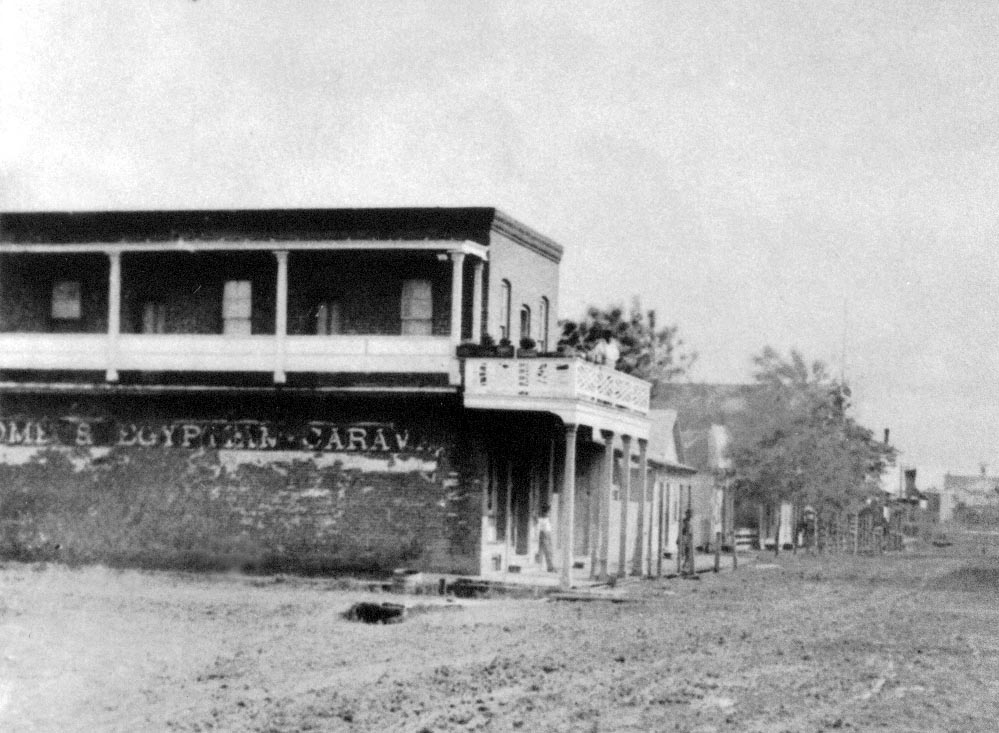
(B-1c) A close up of the street scene of the Bagott and Tyner stores in 1877, photographed by O.N. Tyner.
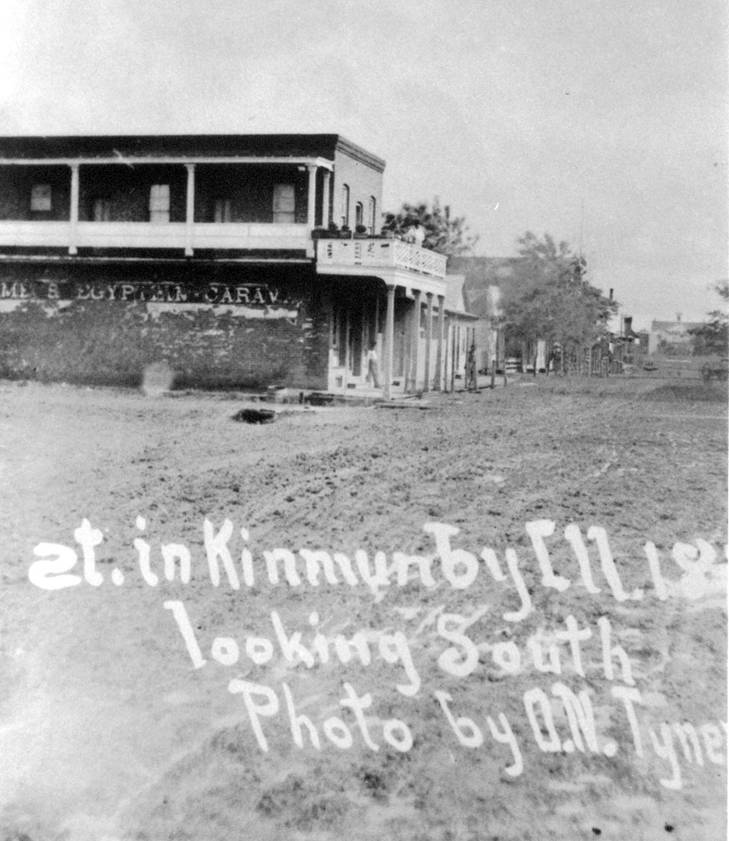
(B-2a) Old Wetter building located on the northeast corner of Madison and 2nd streets. This photo was taken by O.N. Tyner in 1877.
 .
.
(B-2b) Close up photo of the old Wetter building located on the northeast corner of Madison and 2nd streets.
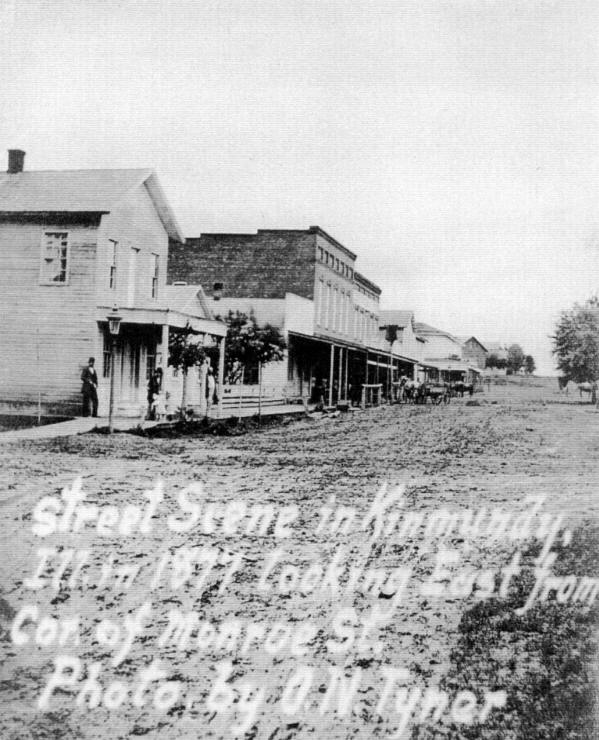
(B-5b) Corner of Monroe St. looking east. On right a residence, Dr's office, Fire House, Opera House first floor, Grocery store, Gramley's, and Jewelry store
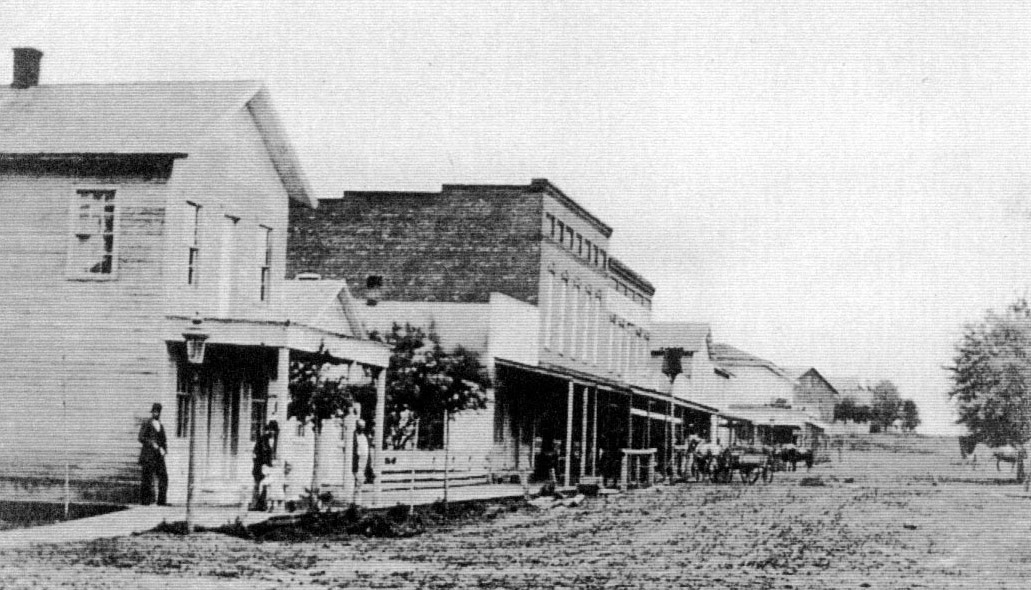
(B-5b) Corner of Monroe St. looking east. On right a residence, Dr's office, Fire House, Opera House first floor, Grocery store, and Gramley's Jewelry store
(Close up)
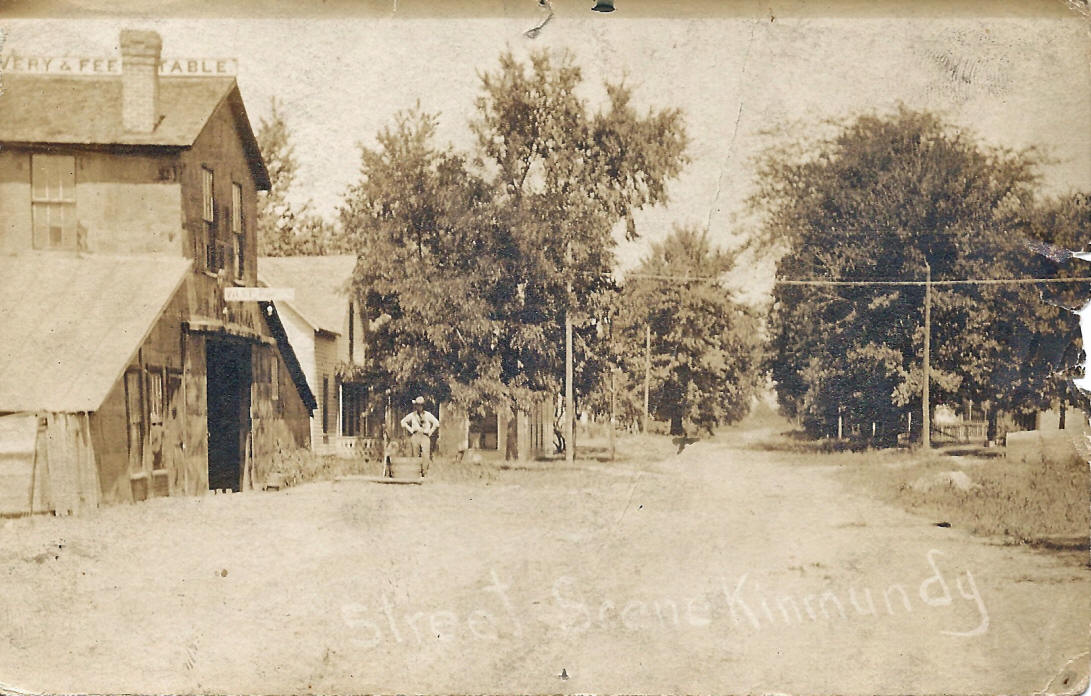
(B-157) West Livery & Feed Stable on left of street.
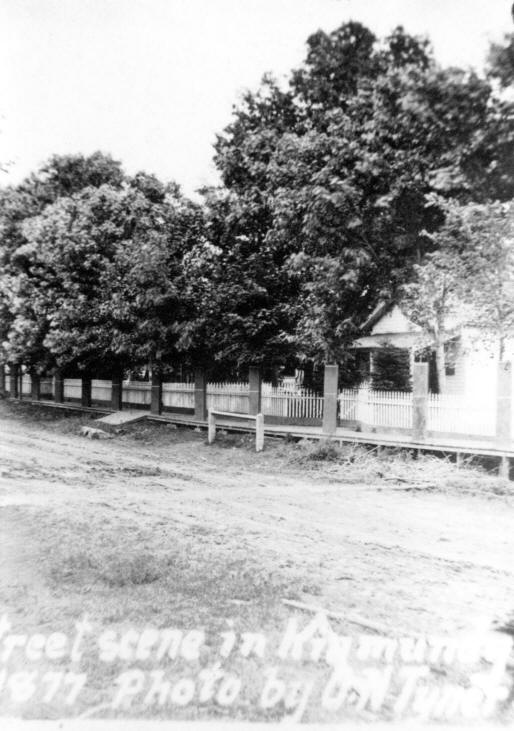
(B-69) Street scene in Kinmundy by O.N. Tyner with board walks.
(Elwyn Cheatum believes this is a scene east of the Methodist Church and railroad on the north side, which would be near the Tyner home.)
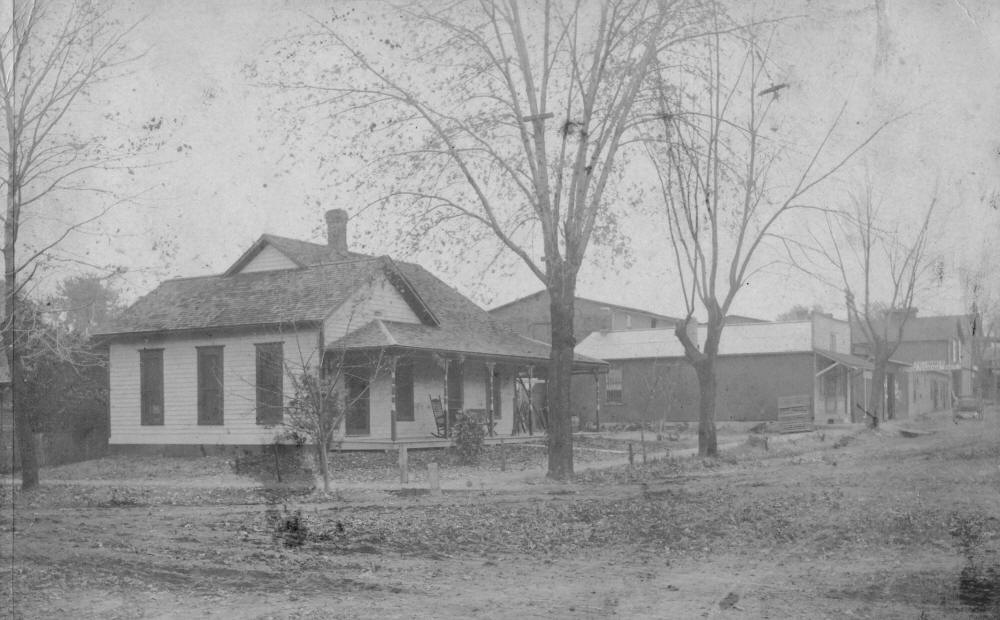
(B-72) Northeast corner of 2nd and Monroe Streets
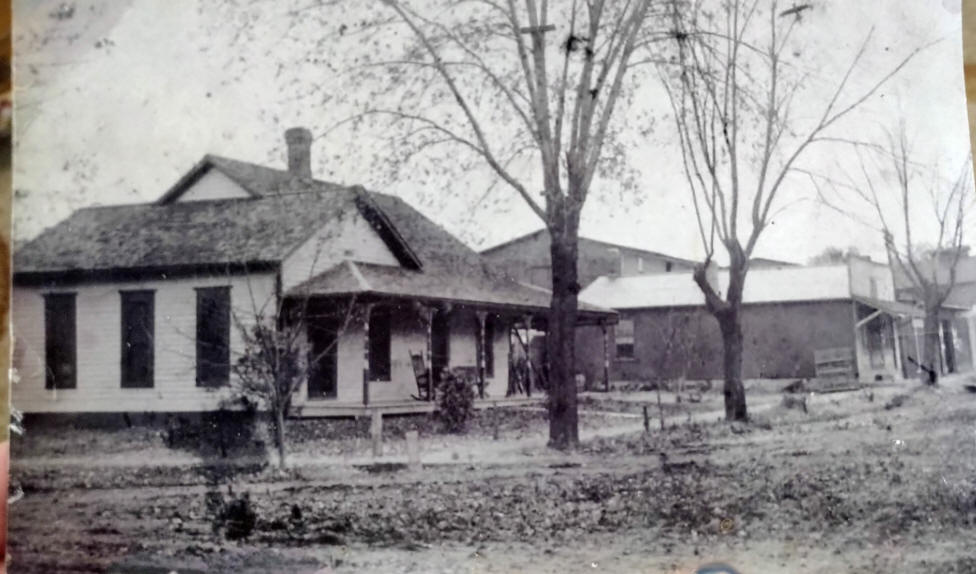
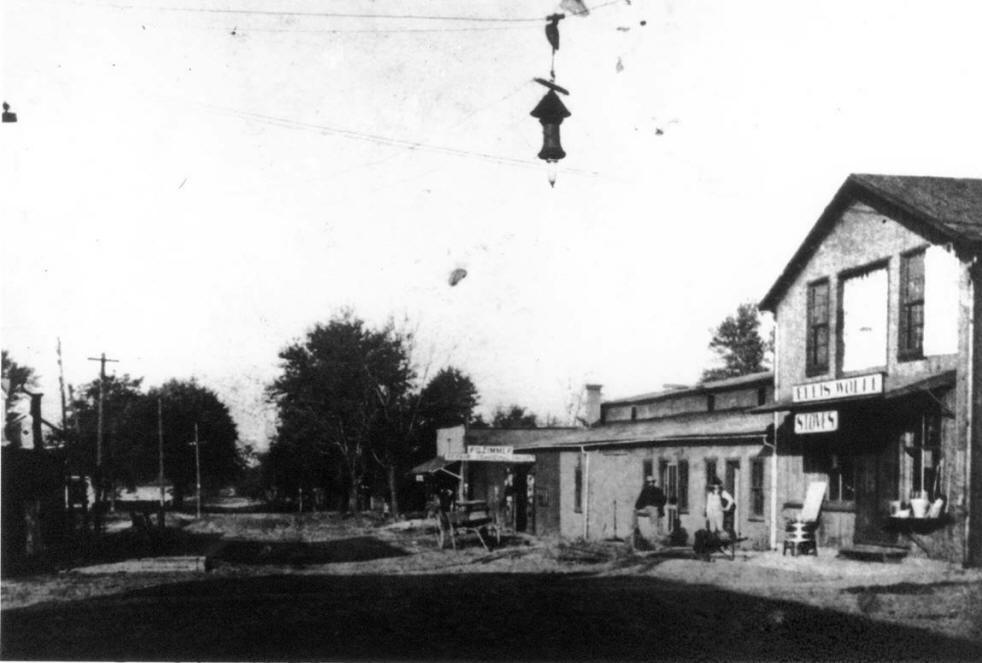
(B-89) Ellis Wolfe's business can be seen to the right. He opened a hardware store at this time, and then sold it in 1918.
The business of Ener O. Zimmer can be seen down the street.
E.O. Zimmer, Refreshing Drinks, Candies, Tobaccos, Eats. Zimmer's Cafe was established in 1927
GRISSOM’s Hardware, Everything in Hardware: GRISSOM’s Hardware Store was established by Mr. Ellis WOLFE several years ago. In 1918 he sold it to Mr. H.P. BRICKWOOD, who came here from Wisconsin. Mr. BRICKWOOD sold it in 1920 to Mr. J.S. EVANS, who hailed from Mt. Vernon, Ind. Mr. EVANS sold it in 1921 to Mr. F.O. GRISSOM. Since Mr. GRISSOM came into ownership of it, he has built up the stock and added many lines until now Kinmundy can boast 1 of the best hardware stores in Southern Illinois. Fred O., son of John W. and Maria J. PARRILL GRISSOM, was born in Meacham twp., March 9, 1876. On Jan. 19, 1899 he married Miss Jennie A. BASCOM of Farina. He came to Kinmundy from Farina on Aug. 23, 1898 where he purchased The Kinmundy Express. He owned the publication for 18 years. He was appointed postmaster in 1914 and served in that capacity for 9 years. After leaving the post office, he traveled around in many states looking for another newspaper, but finally decided to go into the hardware business here. Fred has been very faithful to the Democratic party and he has again been recompensed by being appointed post master. This occurred on Aug. 23, 1933, the anniversary of his coming to Kinmundy. He is an active member of the Kinmundy Chamber of Commerce. Fred is a very congenial fellow. His store remains open every evening, not so much from a business standpoint, but more as a meeting place for his friends. In this store, many a political battle is fourth, many a poor quail is killed, or an innocent bass is hooked and gets away, wild goose stories are told, family trees are discussed, the history of our town repeated, and many a yarn is spun. Mr. GRISSOM has always advocated the slogan, "Trade at home. Spend your money where you make it." ("The Kinmundy Express" 50th anniversary edition - Nov. 9, 1933)
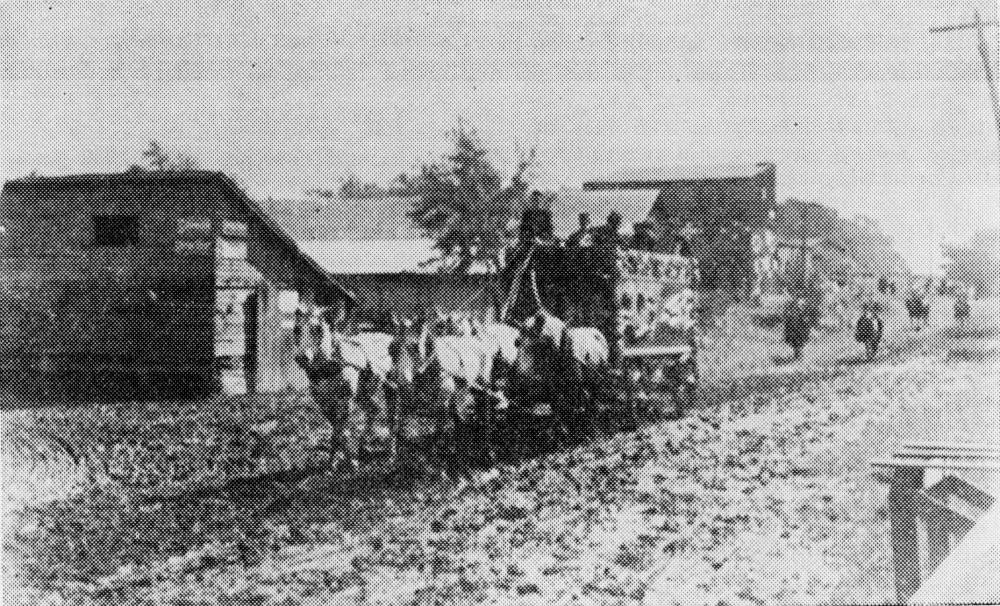
(B-90) The Circus coming north on Monroe from 4th after unloading at C. & E.I. railroad.
Background shows old Cooperage Building.
(“Kinmundy – Railway to Thruway (1857 – 1957”)
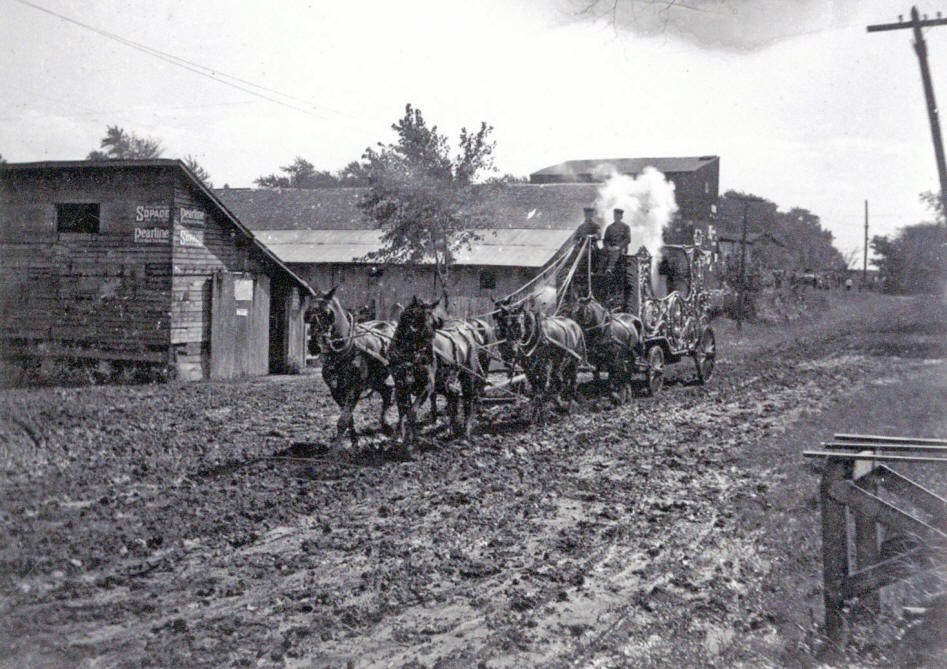
A Circus wagon headed north on Monroe Street from 4th Street in Kinmundy after unloading at C. & E.I. railroad.
Background shows old Cooperage Building.
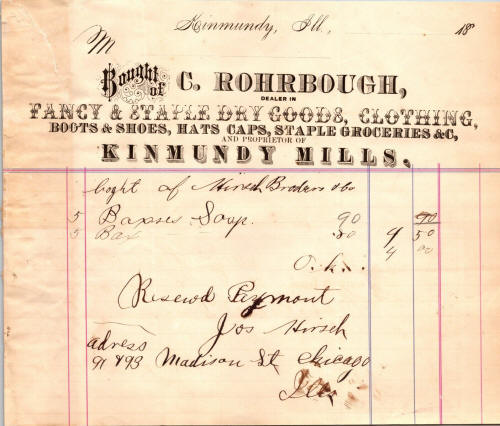
Receipt from Calander Rohbough's store
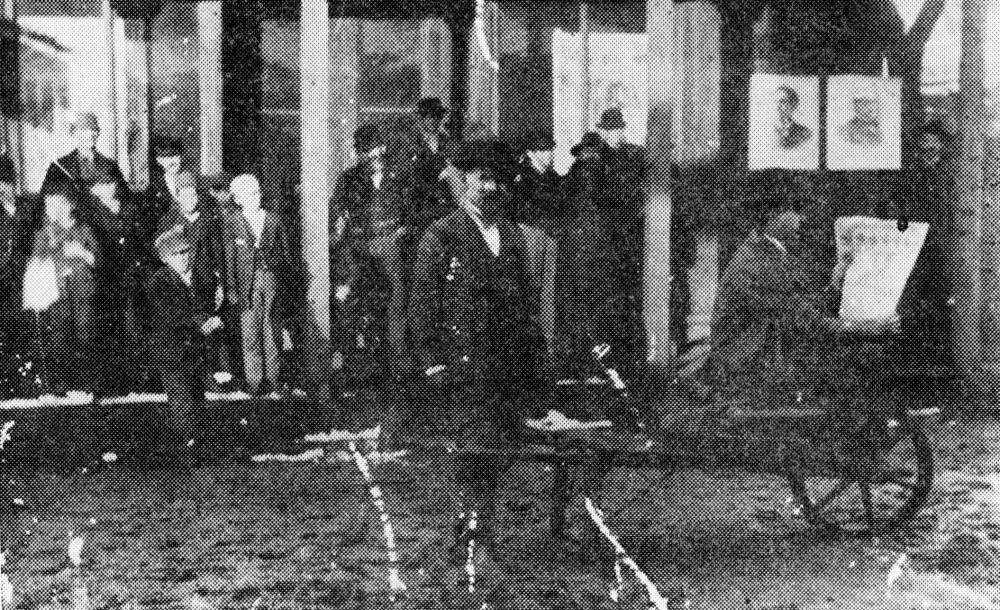
(B-91) "Leander Matthews pays off an election bet by wheeling Dr. Gause around the block when Bryan was defeated in 1896."
(“Kinmundy – Railway to Thruway (1857 – 1957”)
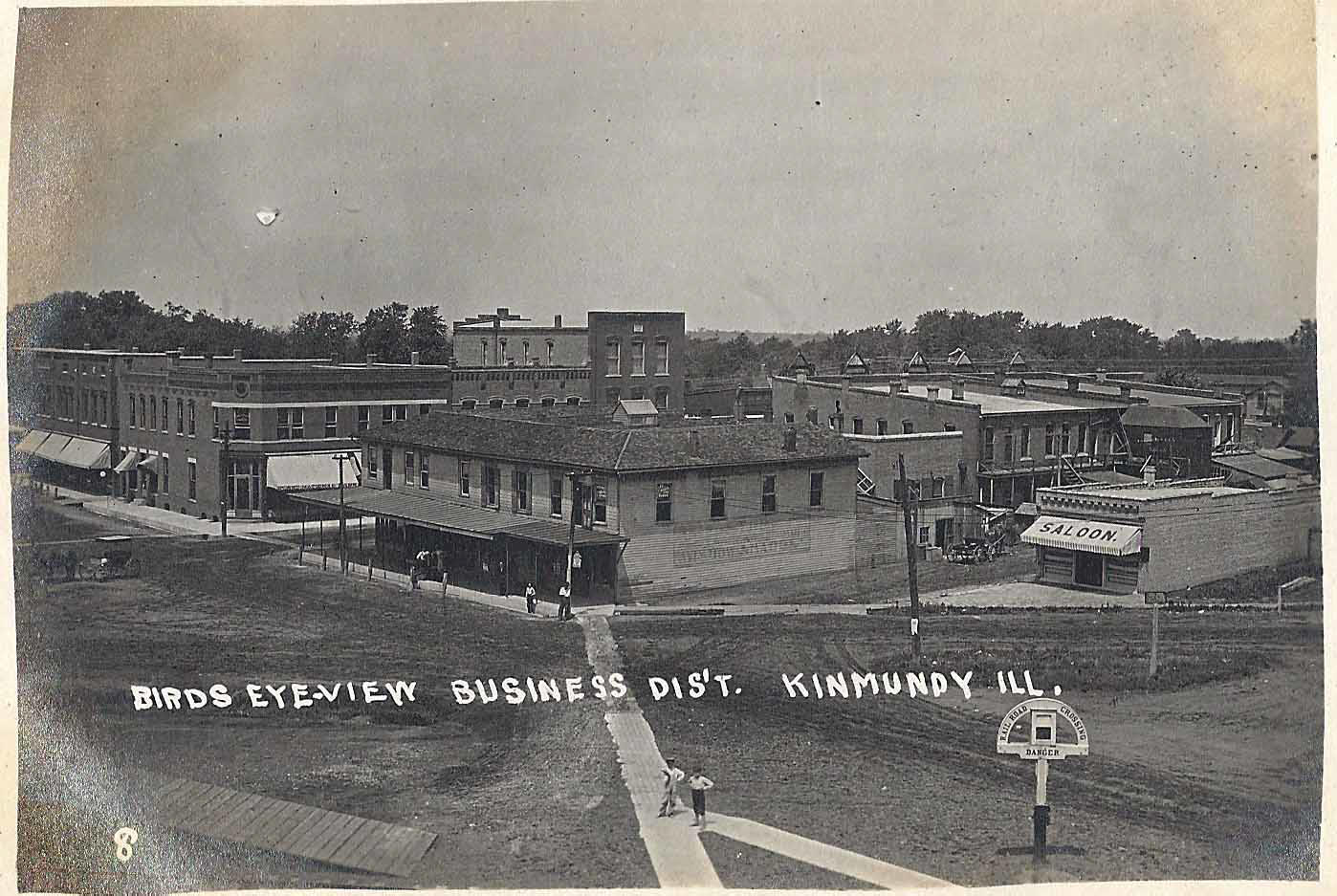
(B-20) Business District of Kinmundy taken from I.C. Depot water tower (looking northwest). In the center of the picture, 3rd street and West St. meet.
In foreground, all wooden structures burned in 1938 or 1939. Brick structure to far left burned in 1915 or 1916 (west of building -one on corner - was a
bank, and later Elwyn Cheatum business). The "Saloon" was once Doolen's Appliance Store, Phyllis See's Beauty Shop,
and now where the Penacostal Church sits.
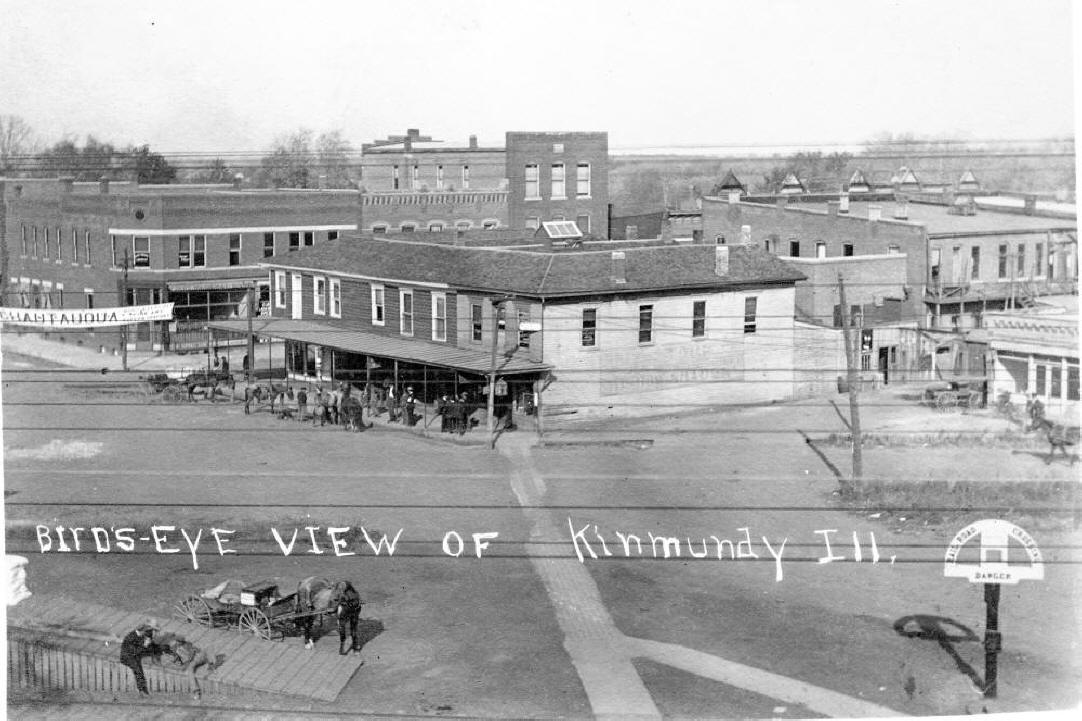
(B-85) Birds-eye View of Business District of Kinmundy along Third Street. Madison Street is on the block of the banner strung across. Taken from top of Illinois Central Depot.
%20crop.jpg)
(B-86) Birds-eye View of Business District of Kinmundy along Third Street. Taken from top of Illinois Central Depot.
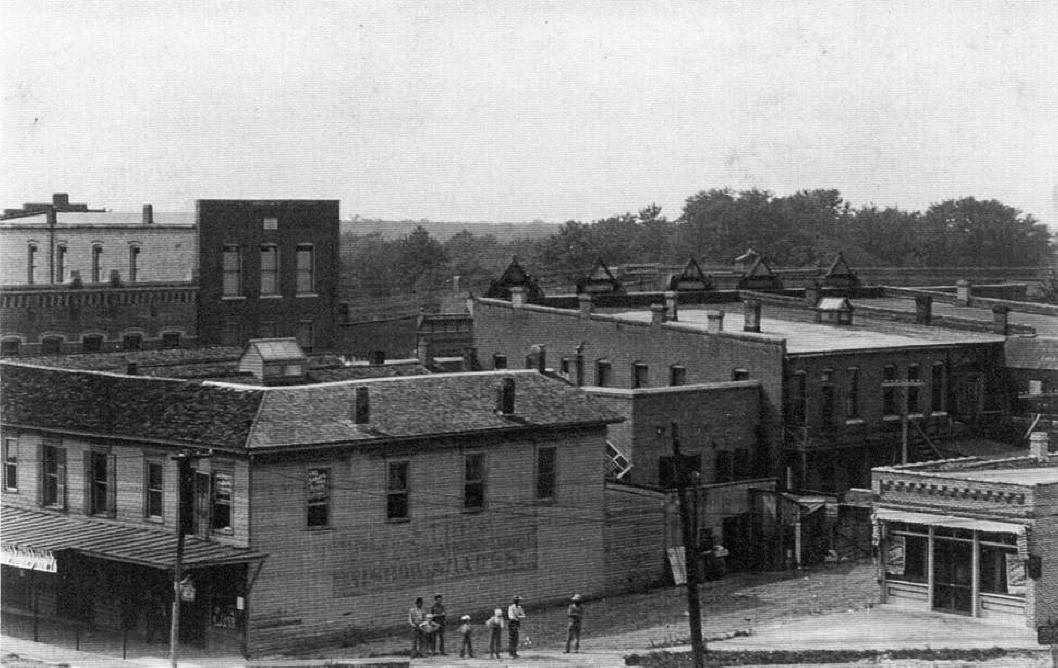
(B-56) Civil War Veterans Building and the alley east of the 200 block of South Madison St.
"The Kinmundy Express" - May 30, 1940.
"This building was one of the very first buildings built in the business district. As near as we can trace it's history, it was built in the early 1860's, and for
the past 50 years, has been considered a fire hazard, but it has seen some mighty fine brick buildings destroyed by fire across the street."
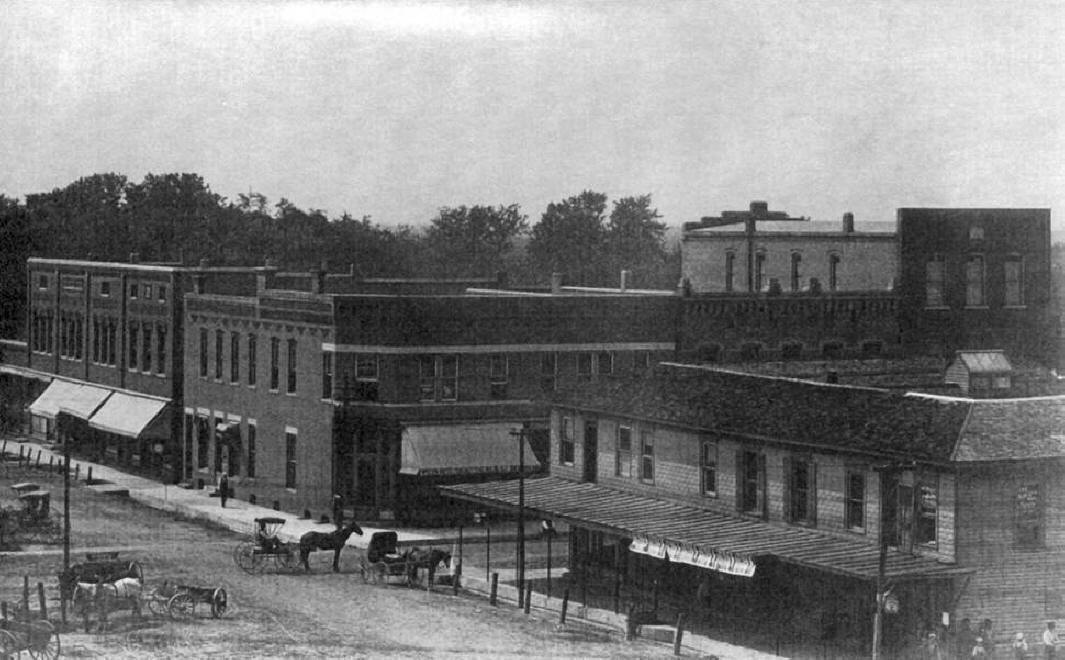
(B-57) Third Street with Madison Street in the center of the picture. Photo taken on Oct. 8, 1907.
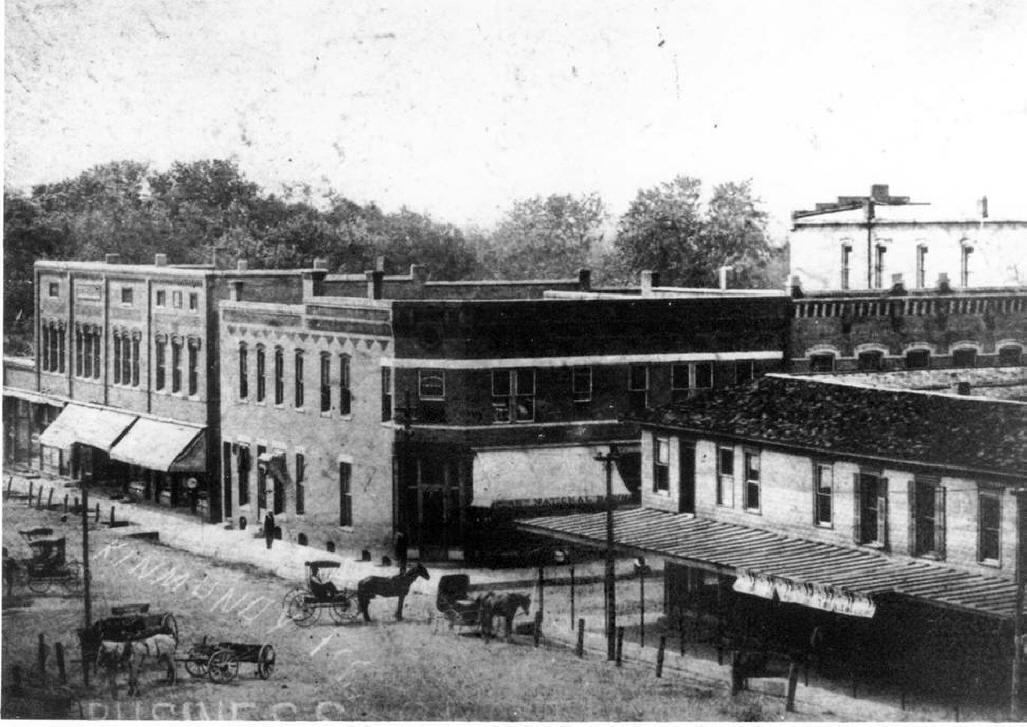
(B-58) Third Street with Madison Street in the center of the picture. Photo taken on Oct. 8, 1907.
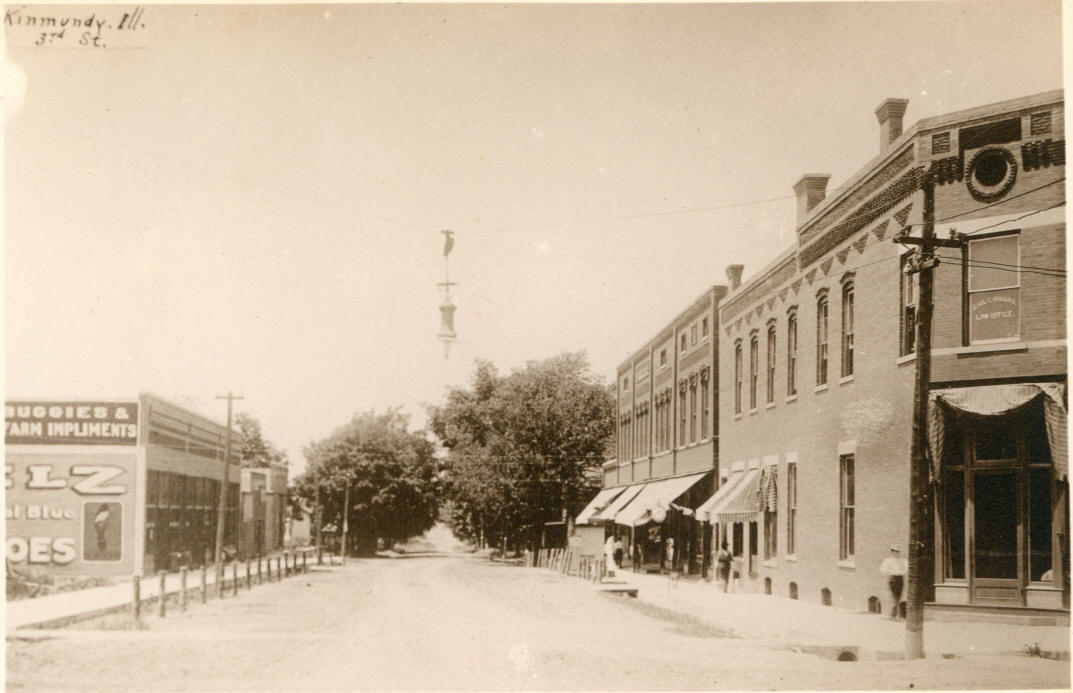
Downtown Kinmundy (100 block of West 3rd St.). Looking west on 3rd St. from corner of Madison & 3rd.
On right is the old bank, with the Law Office upstairs. This was next to the Haworth Opera House on the second floor which was above a grocery store,
Doctor's office and a Jewelry store.
On far left is Pruett's Feed Store.
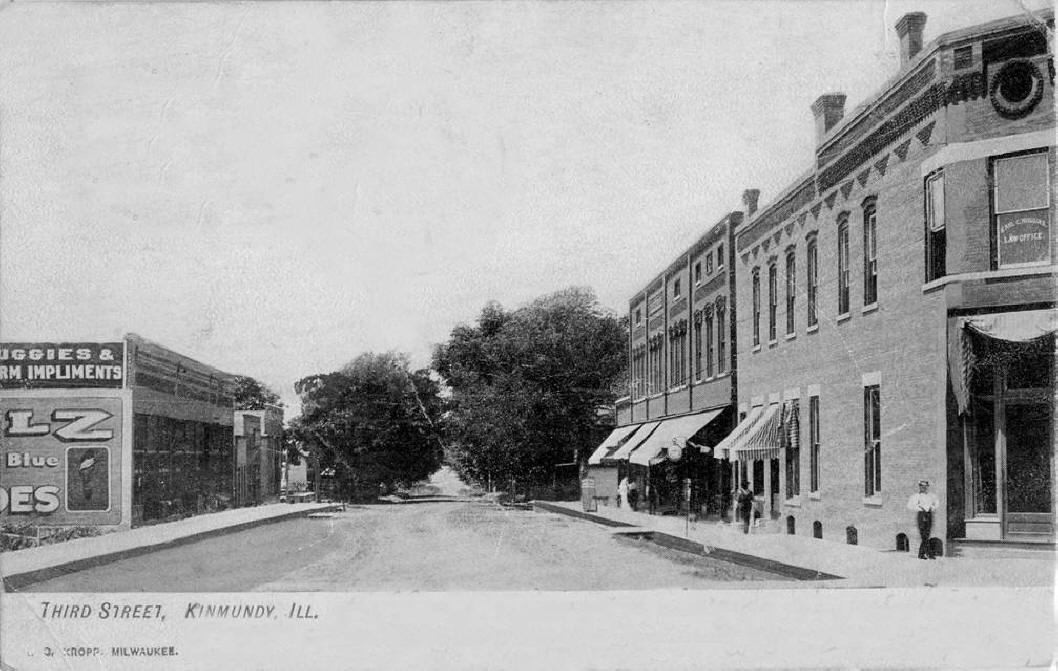
(B-31a) Downtown Kinmundy (100 block of West 3rd St.). Looking west on 3rd St. from corner of Madison & 3rd.
%20looking%20west.jpg)
(B-31dd) Downtown Kinmundy (100 block of West 3rd St.). Looking west on 3rd St. from corner of Madison & 3rd.
F.A. PRUETT and Sons, General Produce: The firm of F.A. PRUETT was founded in 1892 by the late Francis Asbury PRUETT. The business at this time consisted chiefly of buying eggs, poultry and fruit from the farmers and in turn, shipping the produce to the Chicago market via express. In the year 1902, Mr. PRUETT took his son, Charles, in as a partner, changing the firm name to F.A. PRUETT & Son. They began buying produce in larger quantities and shipping in carload lots, not only to the Chicago market, but to the New York and other eastern markets as well. They also made express shipments to these markets. In 1907, another son, Walter, was added to the firm and the firm name again changed to F.A. PRUETT & Sons. With a new member in the firm, there was room for expansion and so branch houses were established at Vernon, Farina, Tamaroa and Herrick. In later years, the houses at Herrick and Farina have been abolished and new branches set up at Centralia and Carlyle. Their specialty for the past several years has been eggs. Their business has gradually been worked up to such an extent that they are no longer forced to sell on the open market, but have customers in the east. Their peak season was in 1929 when they handled 300 carloads of eggs. This meant a turnover of more than 1 million dollars. They now have their own leased refrigerator cars with the firm name adorning the sides. Mr. F.A. PRUETT died in 1917 leaving Charles and Walter to carry on the business. In late years the jobbing of flour, feed, sugar, salt, potatoes and many other articles have been added. With the coming of the hard road, many trucks have been added to their equipment. These 2 boys, Charles Fuqua and Walter Simpson, sons of Frank Asbury and Sally FUQUA PRUETT, were born in Kinmundy Dec. 31, 1878 and Nov. 23, 1883, respectively. Both grew to manhood here and graduated from the local high school. Charles graduated from the Southern Illinois Normal University in 1899. He taught school 1 term and then went to Chicago, where he was employed by a Commission firm on South Water Street. 2 years later, his father became ill and sent for him to come home to conduct the business and he has remained here ever since. On Nov. 6, 1902, he married Miss Estella M. DOOLEN of Kinmundy. They have 4 children: Francis, Dorothy, Charles and Frederic. Charles is a member of the Masonic and Eastern Star, the M.E. Church, and is president of the Board of Trustees, and for the past 16 years been superintendent of the Sunday School; a past president of the Illinois Poultry and Egg Association; President of the First National Bank of Kinmundy; President of the Building and Loan Assoc.; and past president of the Chamber of Commerce. Walter graduated from a business school in Dixon, Ill, and immediately went into business with his father and brother. On Sept. 28, 1910, he married Miss Bertha W. STEUBER of Kinmundy, and they have 3 children: Walter B., Carl E., and Helen M. Walter is a member of the Masonic and Eastern Star; the M.E. Church and at present a member of the Board of Trustees; the Illinois Poultry and Egg Association; a member of the Board of Directors of both the First National Bank and the Kinmundy Building and Loan Association; is at present President of the Board of Education; and past president of the Kinmundy Chamber of Commerce. ("The Kinmundy Express" 50th anniversary edition - Nov. 9, 1933)
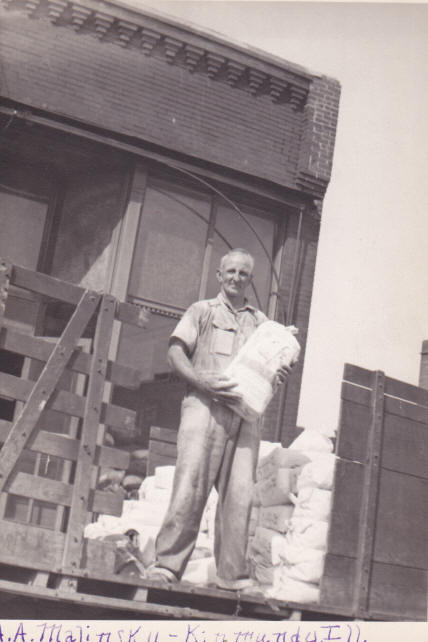
A.A. Malinsky loading feed sacks in front of former Pruett store & warehouse
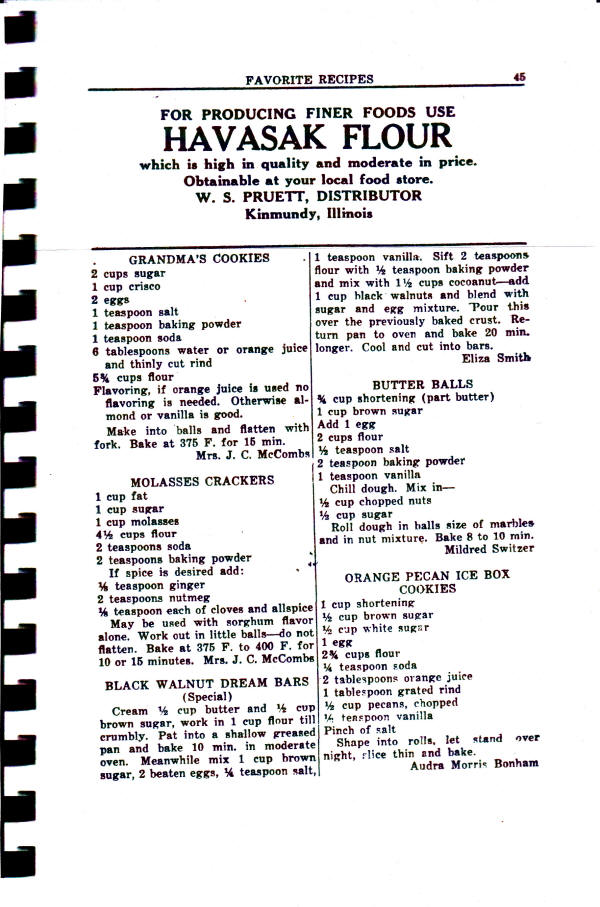
Walter Simpson Pruett flour advertisement from his feed store in a cookbook.
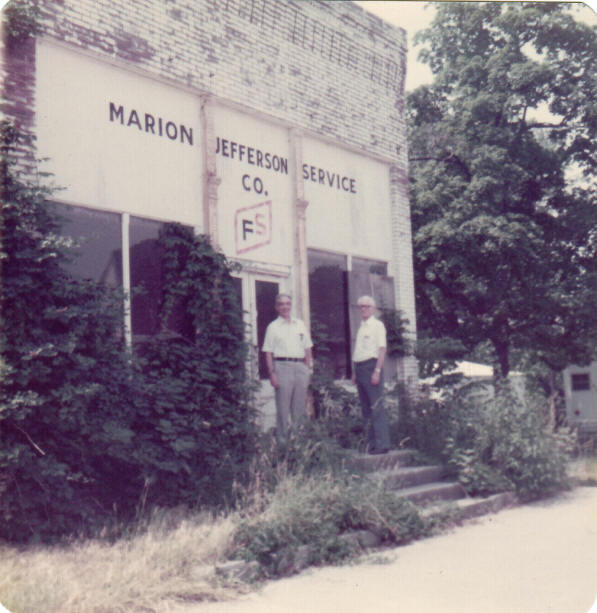
The former "F.A, Pruett & Sons" Produce Store, and known as the old Feed Store for many years.
It was owned by Francis A. Pruett and his sons, Charles F. Pruett and Walter S. Pruett.
The building sat on the corner west of the current Kinmundy Post Office.
It was last owned by J.H. Diss, and this photo was taken in 1977.
Standing on the steps are Walter B. Pruett & Carl Pruett, sons of Walter S. Pruett.
%20Pruett%20Feed%20Store%20-%20Diss%20Feed%20Store.jpg)
"The Kinmundy Express" - May 29, 1980: The old Pruett building.
%20Pruett%20Feed%20Store%20-%20Diss%20Feed%20Store.jpg)
"The Kinmundy Express" - May 29, 1980: The old Pruett building coming down.
"The Kinmundy Express" - April 16, 1908: "Corner Stone Laid: Last Monday morning at 8:30 the corner stone of the new city hall and fire engine house was laid with very appropriate ceremony, the principal speaker being Mayor Chas. F. PRUETT and Postmaster John F. DONOVAN. The contractor A.M. ALLEN, assisted by the mayor laid the corner stone, in which was treasured several valuable articles in the way of coins, business cards, etc., with a record of donors. As a whole the ceremony was a very impressive one and a larger crowd should have been present to participate in it. The new building will be two stories high, constructed of concrete building blocks, the lower story to be used as a fire engine house, and the upper story as a home for the city council. When completed it will be a very pretty and substantial building and just what is needed. The city council has met with many obstacles, trials, and tribulations since the erection was first talked of, but now as the war is over and the town has become local option territory everything is lovely and the building is being constructed."
%20looking%20northeast%20B-55.jpg)
(B-55) Corner of Monroe Street looking east.
On right is a residence; 2nd building - Dr.'s office; 3rd building - City Hall / Fire Engine House; Opera House first floor, Grocery store, and Gramley's Jewelry Store.
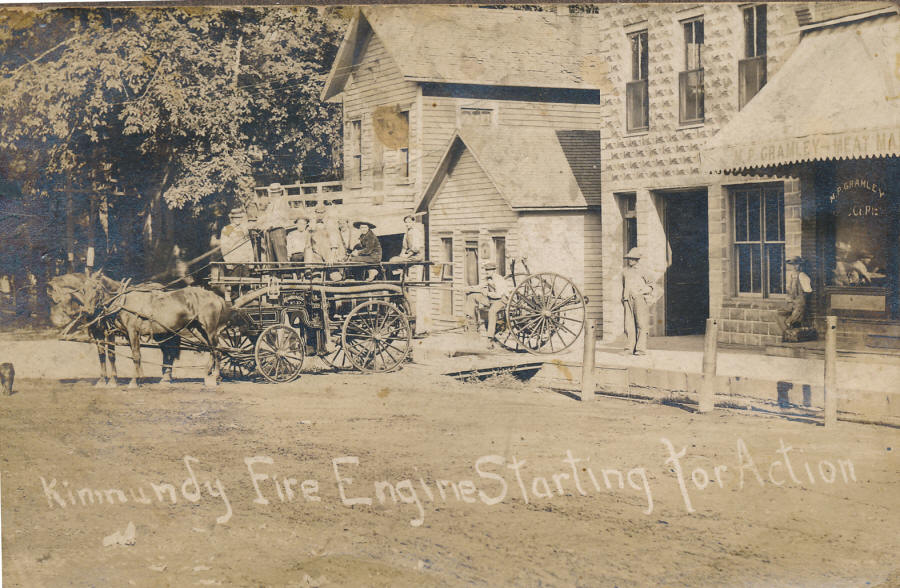
"Kinmundy Fire Engine Starting for Action"
This is along Third Street looking west, and is in the area of where the Community Center and it's parking lot sits today.
This photo would have been taken between 1904 and 1915.
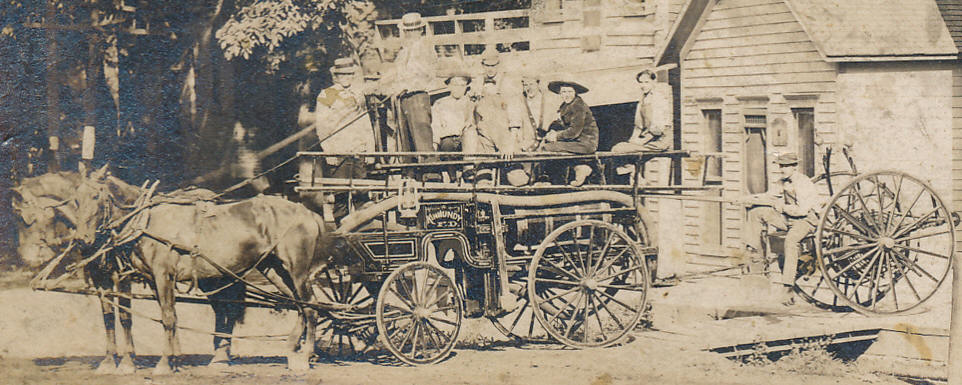
"Kinmundy Fire Engine Starting for Action"
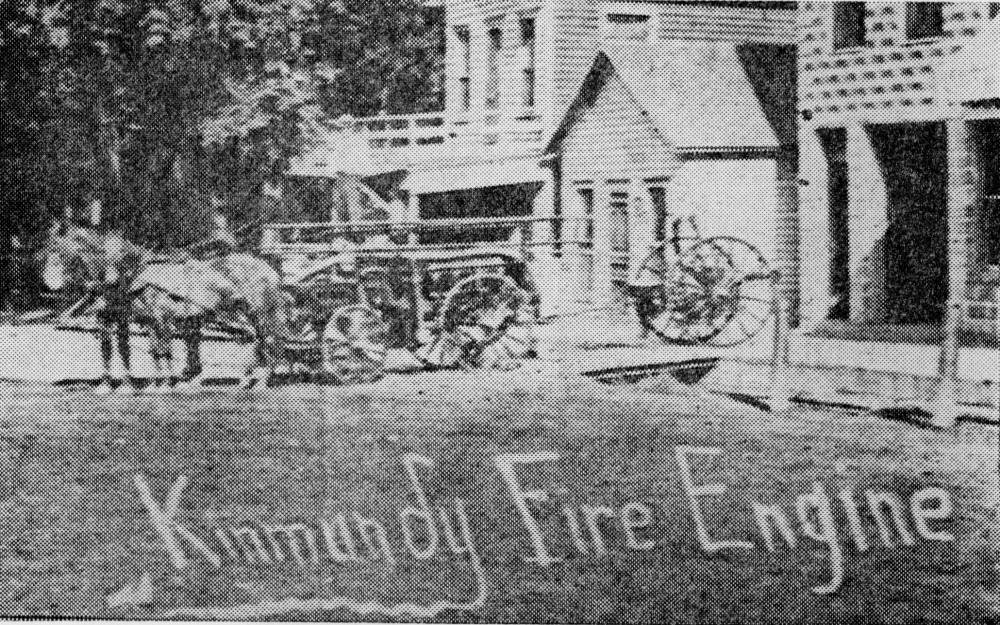
(B-95) Kinmundy Fire Engine just pulled out of the City Hall / fire engine house located on West 3rd St. (100 block on the north side of the street.
(“Kinmundy – Railway to Thruway (1857 – 1957”)
-pic.jpg)
"The Kinmundy Express" - Aug. 22, 2002 - excerpt from K-A fire district history by Don Thompson: "The above picture is the Kinmundy Fire Department engine before 1940. It is in front of the fire station that was located where today is the Kinmundy Christian Church parking lot, just west of the Kinmundy Community Center. The big house I remember as the Alf Lemay home. The jail cells were in back of the fire wagon...."
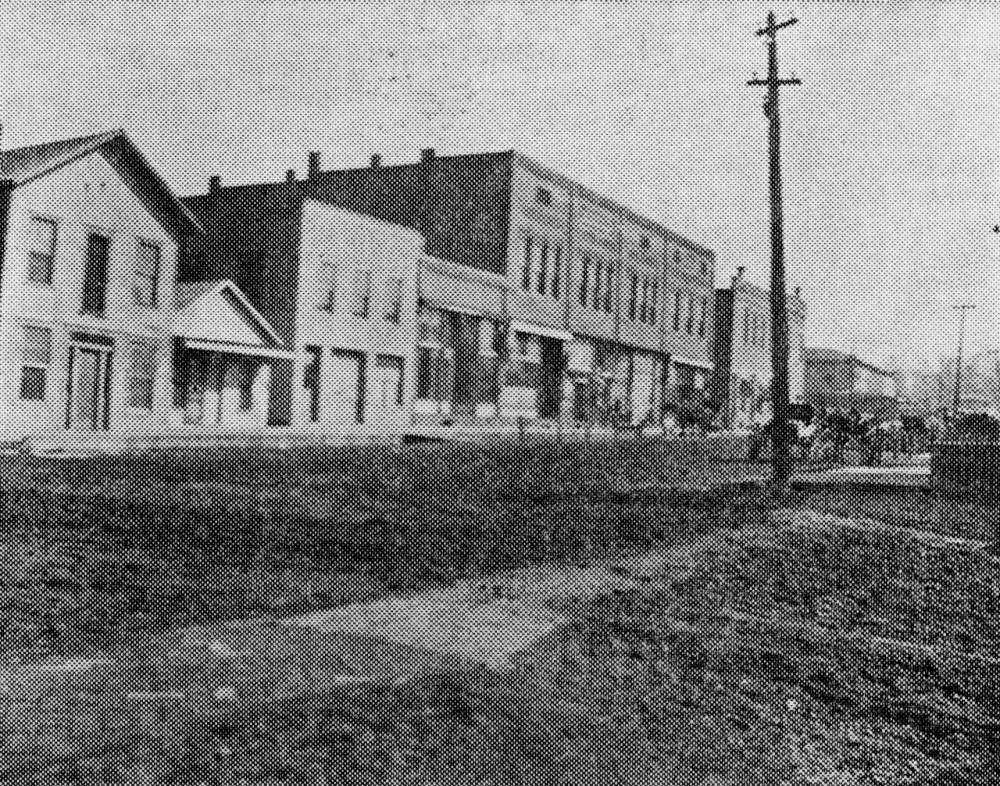
(B-124) "Corner of 3rd and Monroe, looking east from the Wetter corner where there was once an Air-dome (open air movie). Pruett's Poultry house just misses
being in the picture. The first four buildings are still there but the Opera House with Gramley's Meat Market, Dr. Camerer's office, Rice's Store, and others are gone."
(“Kinmundy – Railway to Thruway (1857 – 1957”)
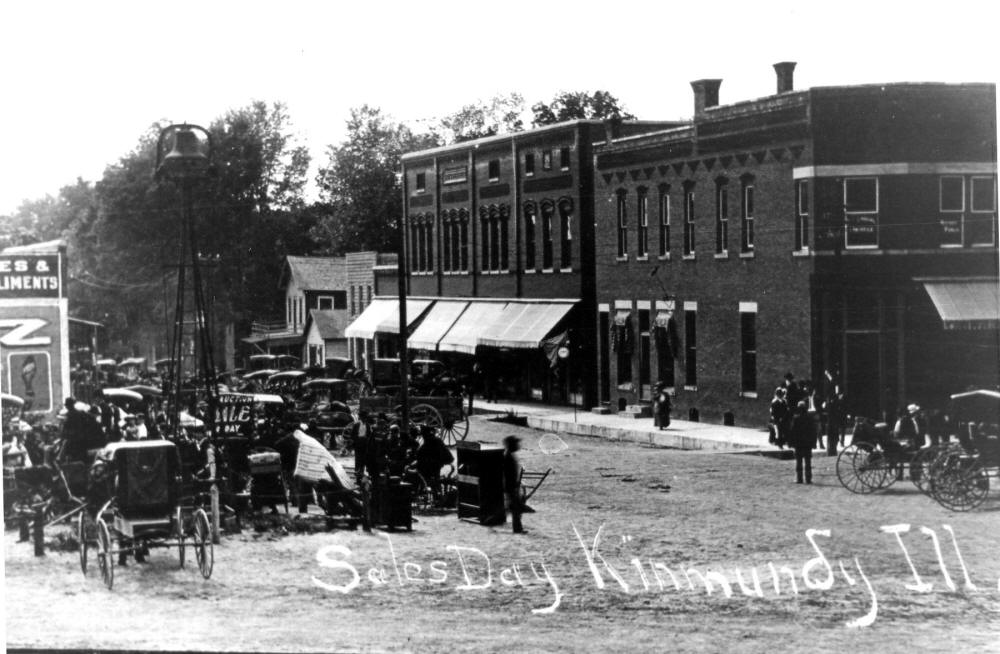
(B-84b) Sales Day in Kinmundy, Illinois. Looking west down 3rd street at Madison St. (Photographer is standing near site of bandstand to take the photo.)
“The Kinmundy Express” – Aug. 10, 1972 - “Again this week, we are giving you another ‘shot’ of the old Opera House which we mentioned six weeks ago. In this picture, you will again note some of the same buildings contained in the other picture, namely, the Elder Building housing, the First National Bank, Nelson’s Jewelry Store, and Earl HUGGINS’ Law Office. Then the next building is the Oddfellows Hall and Gray’s Opera House. Under the Oddfellows Hall was a room for a store. Under the Opera House were three rooms, two smaller and one larger. The smaller rooms were occupied by a newsstand and Dr. J.D. CAMERER’s office. The larger room contained a moving picture theater. This structure burned in January, 1916. The next building, a store building, still stands and is now occupied by the City as its City Hall. Next was the concrete block building, the City Hall, Fire House, and City Jail. Then comes the small frame building known as Dr. SMITH’s office. And then the residence of the late Mrs. Rachel LEMAY.
In the left foreground can be seen the old fire bell. It had a sound of its own and summoned the volunteers to help put out fires. Incidentally, at the time of the burning of the opera house, the city had an old ‘hand-pumper’ . So not many buildings were saved if the fire had a good start.
The occasion for this picture was a Sales Day in Kinmundy. In other words, it was a ‘community sale’. The building to the extreme left was occupied by TELFORD & WILKINSON in the implement business. It stood where our post office now stands.”
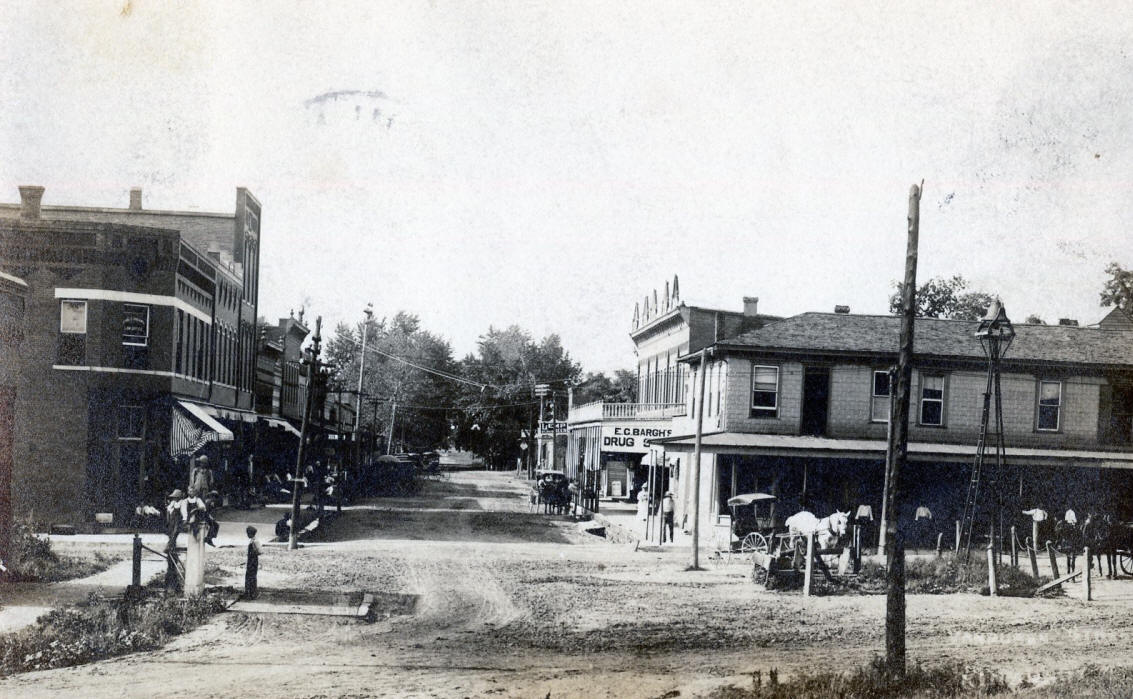
(B-46a) Madison Street scene taken Sept. 28, 1907. Looking north from about where the water plant currently stands. You can see the fire bell to the right
in the foreground. It was circled by a fence with hay inside where horses could be tied up while in town. On left in foreground, is a place to weigh grain.
H.J. Jones' horse and buggy can be seen on Madison St.
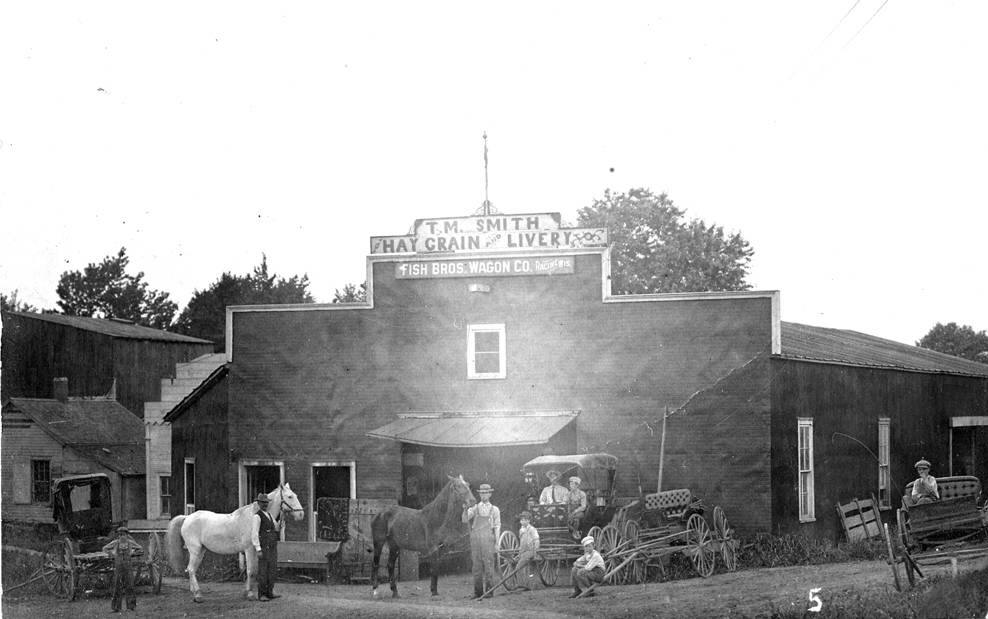
(B-63) T.M Smith Hay, Grain, and Livery - Fish Bros. Wagon Co. - Racine, Wisconsin.
This was located on the northwest corner of S. Madison and 2nd Streets. “T.M. Smith’s livery stable in the days when you could rent a horse and buggy instead of an automobile. The calaboose is to the left with the cooper shop behind.”
(“Kinmundy – Railway to Thruway (1857 – 1957”)
This was located where the City Water Plant now stands (in 2012).
T.M. SMITH, Hay, Grain, Feeds, Coal, and Implements: Thomas M. SMITH, son of Charles and Martha SMITH, was born Jan. 12, 1858 in Meacham twp., on the farm now owned by Mr. J.W. WHITTENBURG. He came to the city of Kinmundy in 1884 and purchased the Livery Stable of Henry SIMPSON. In connection with this business, he bought stock, hay and grain. In 1888 he sold the Livery Stable, but retained his stock, hay and grain business. In 1898 he again established a Livery Stable in connection with his other business. From time to time, he added other items such as implements, coal, harness, fencing, etc., also the buying of the wool and red top seed. After leaving his father’s household, he wandered west, where he herded cattle in Kansas and Oklahoma. It was this kind of work that inspired him to become a stock buyer in after years. After following this occupation for 2 years, he came back to Illinois and started farming. He married Miss Dosh BORING of Tonti on Oct. 21, 1880. She died Nov. 11, 1894. On Feb. 20, 1908 he married Miss Bessie L. KING of this city. He has 3 children: Minnie, Mattie, and Georgia. He is a member of the M.E. Church and the Woodman and I.O.O.F. Lodge. He is a member of the City Council, and has in the past been Supervisor, Twp. Treasurer, and a member of the school board. He has been in business in Kinmundy longer than any other firm. Mr. SMITH has been handicapped in his business several times, but that did not seem to hold him back. In 1904, he lost his place of business by fire, then a few years later received a broken hip. A few years later he underwent a major operation with little hope of recovery, then a year ago he had his arm broken while at the St. Louis Stock Yards buying horses. ("The Kinmundy Express" 50th anniversary edition - Nov. 9, 1933)
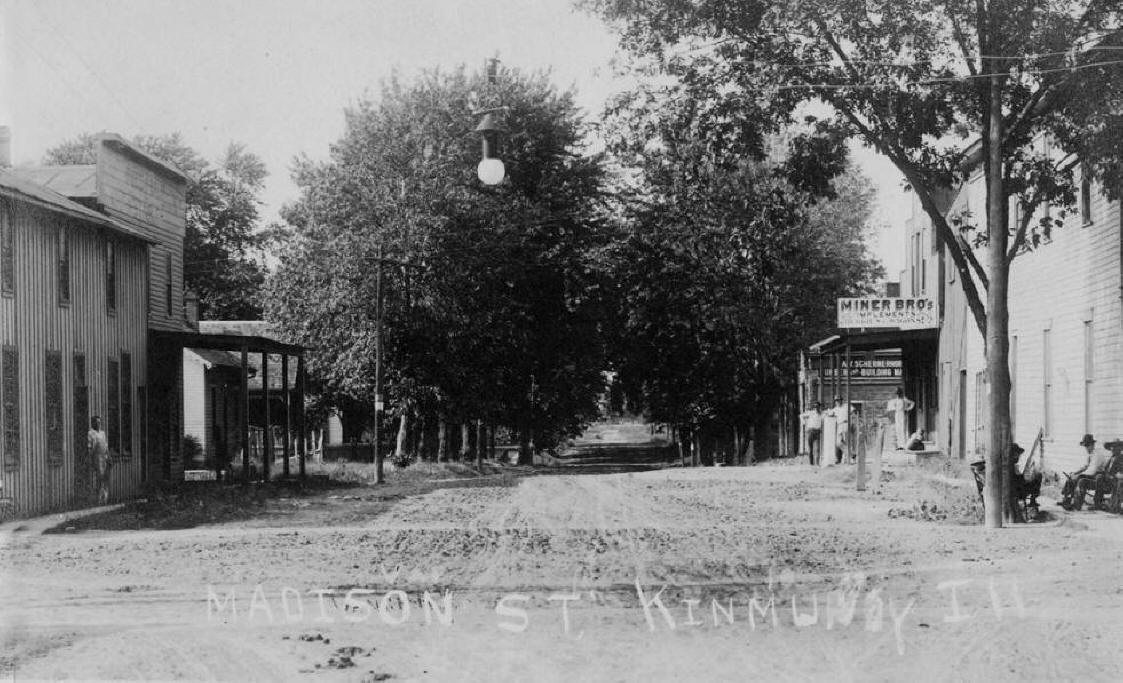
(B-10a) Corner of Madison and 2nd street (100 block of S. Madison St.) looking north.
Left side (where the bank now sits) had a livery stable on the west side.
The right side of the street, you'll see "Miner Bros.- Implements, Buggies and Wagons" and "Schermerhorn - Lumber and Building Materials"
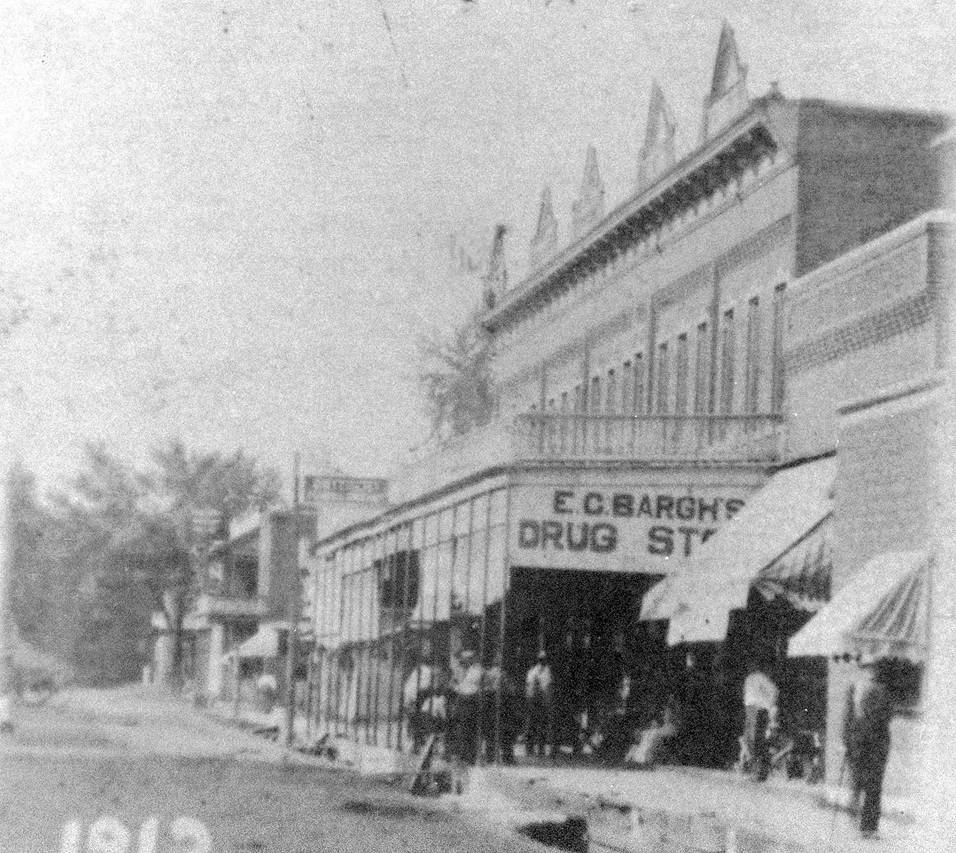
(B-35) Downtown Kinmundy at 200 block of South Madison St., looking north. Taken in 1913.
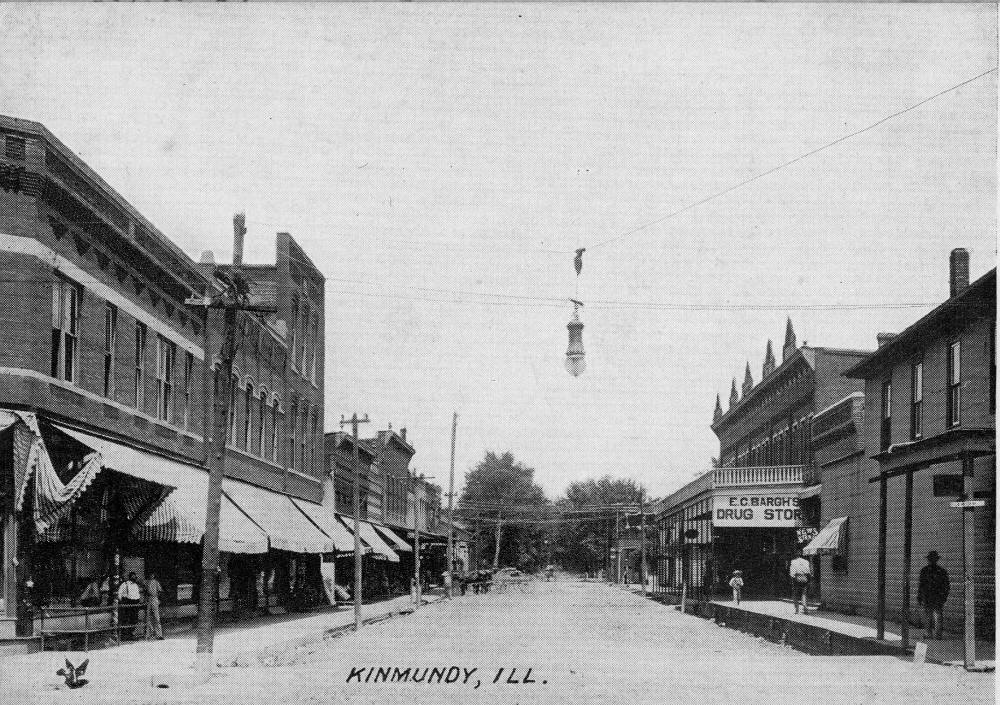
(B-45c) Madison Street. A street light is shown in center of picture.
(According to Elwyn Cheatum, Kinmundy had electricity by 1890 with our own light plant, which was used during certain hours.)
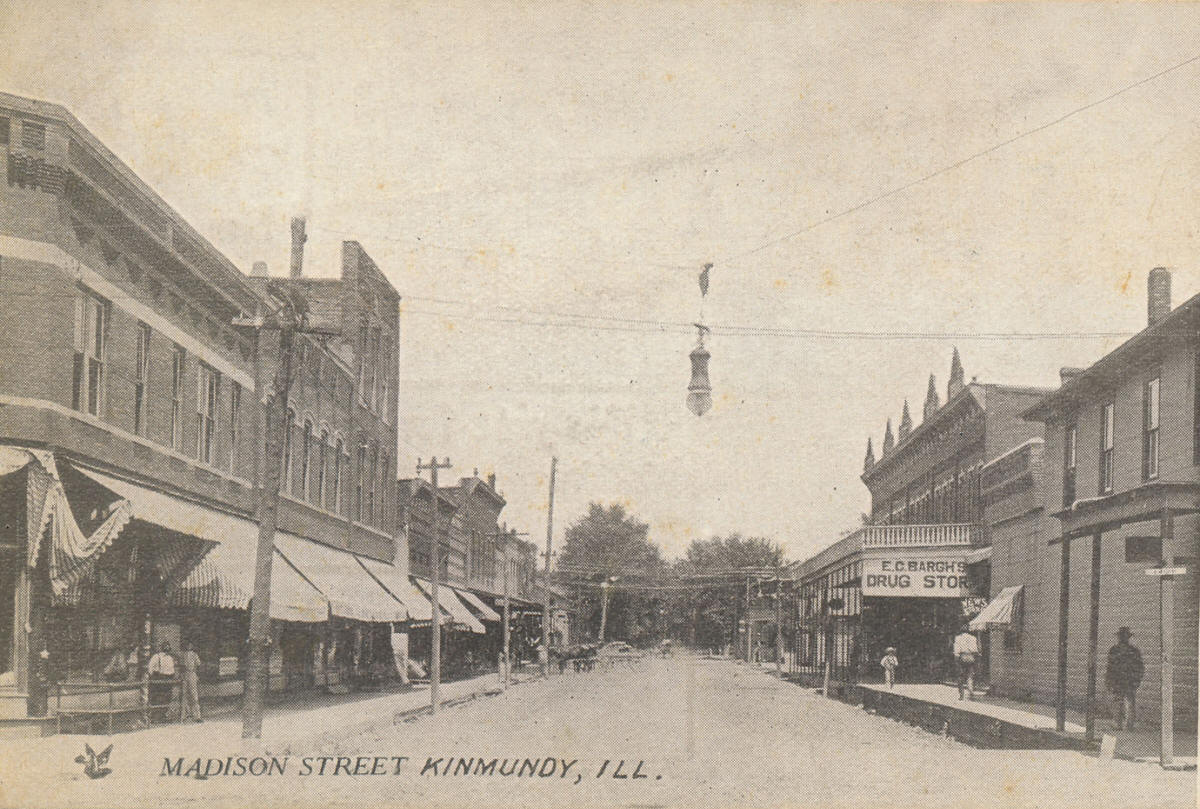
(B-45aa) Madison Street. A street light is shown in center of picture - ca 1906.
(According to Elwyn Cheatum, Kinmundy had electricity by 1890 with our own light plant, which was used during certain hours.)
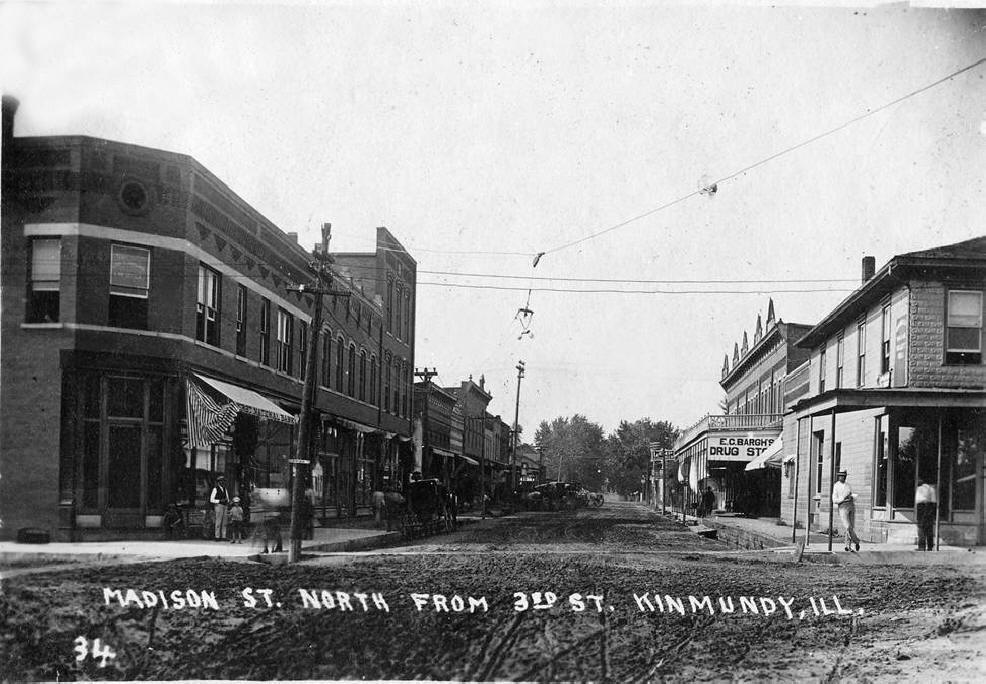
(B-34a) Downtown Kinmundy at corner of Madison and 3rd streets looking north. Photo taken in 1913.
“The streets were worse in those days and the bank wasn’t nearly so elegant, but we had a bank on each corner then.”
(“Kinmundy – Railway to Thruway (1857 – 1957”)
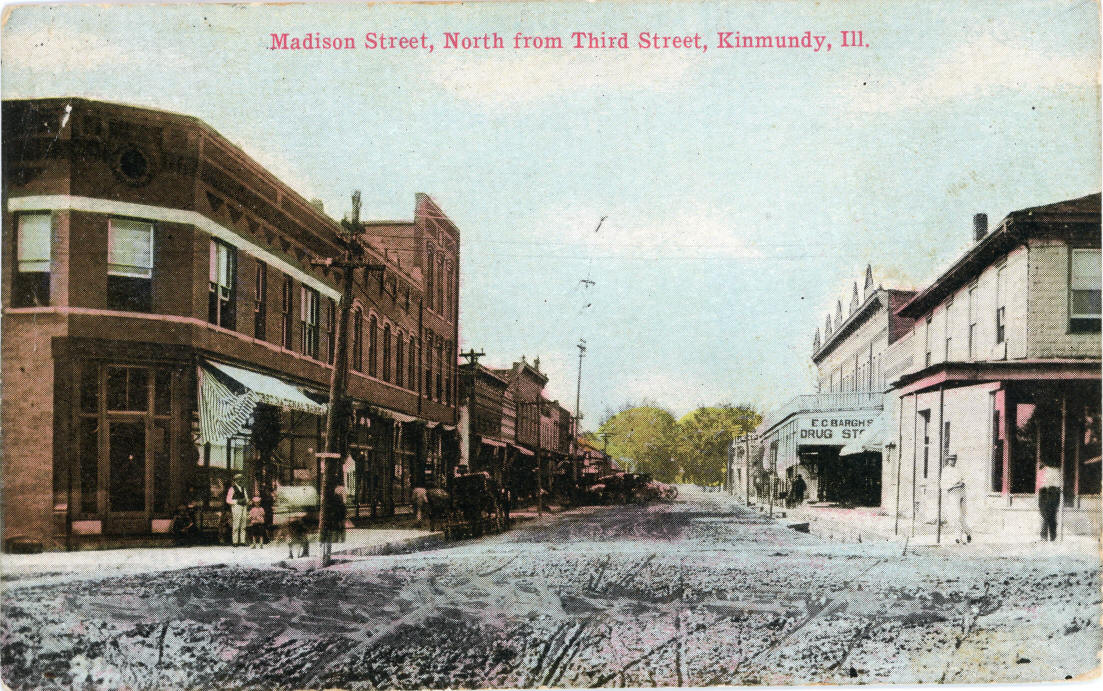
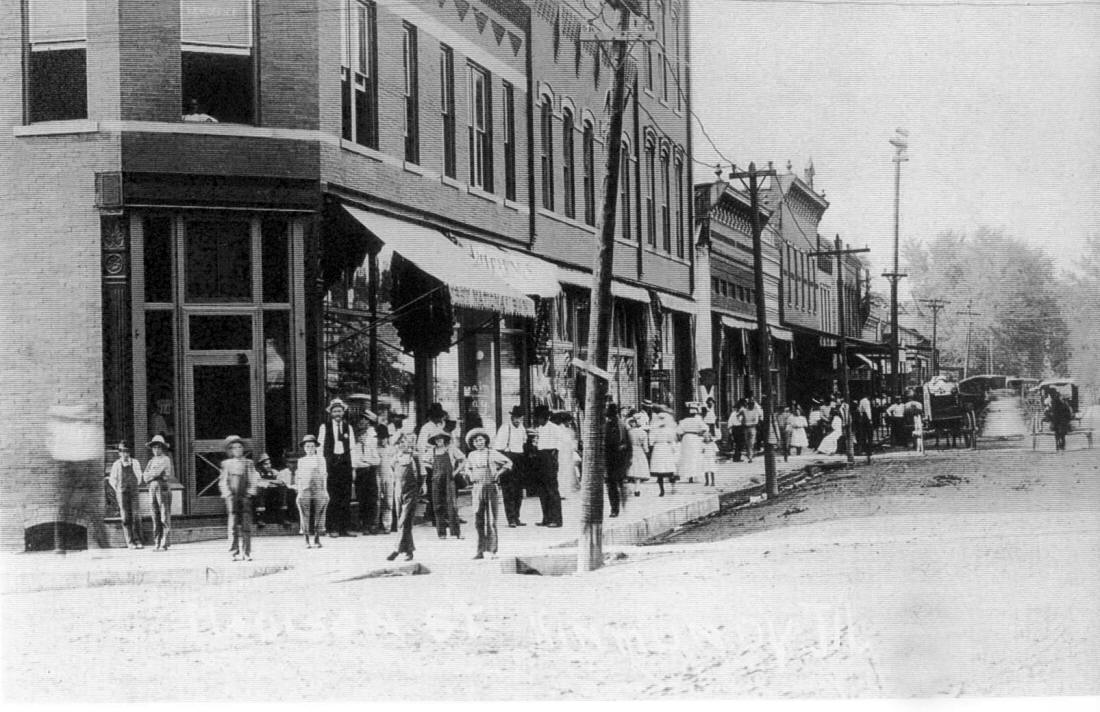
(B-36b) Corner of Madison Street and 3rd St, on the west side. The corner housed the First National Bank, next M.A.Songer (the business was owned
by the daughter of the owner of Songer Flour Mill.)
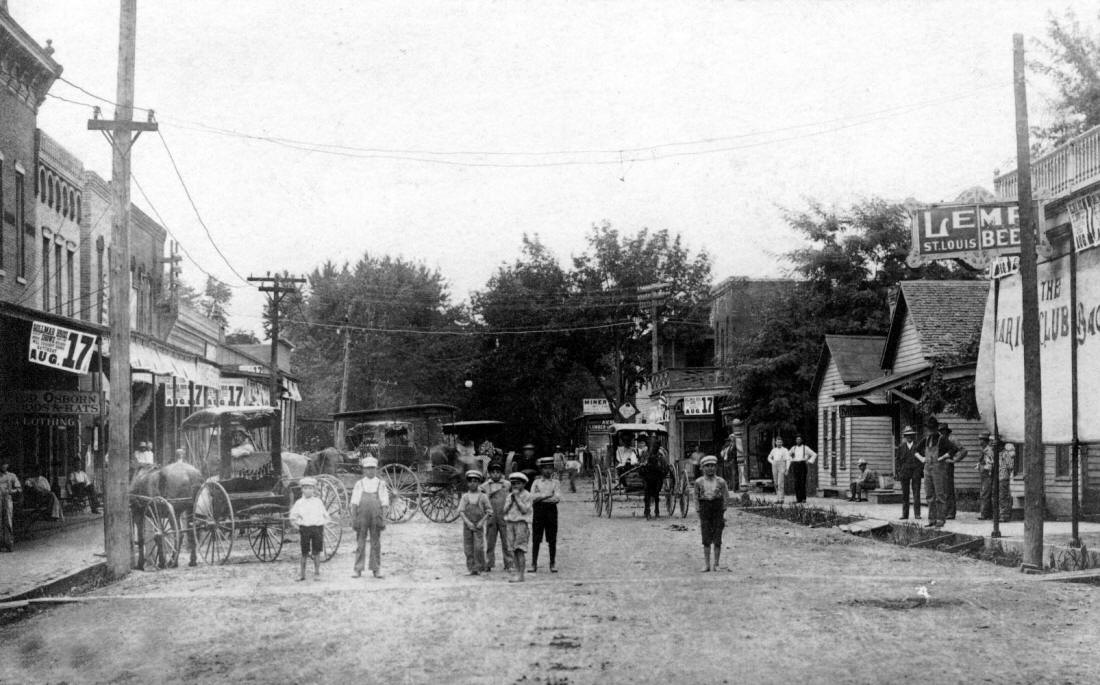
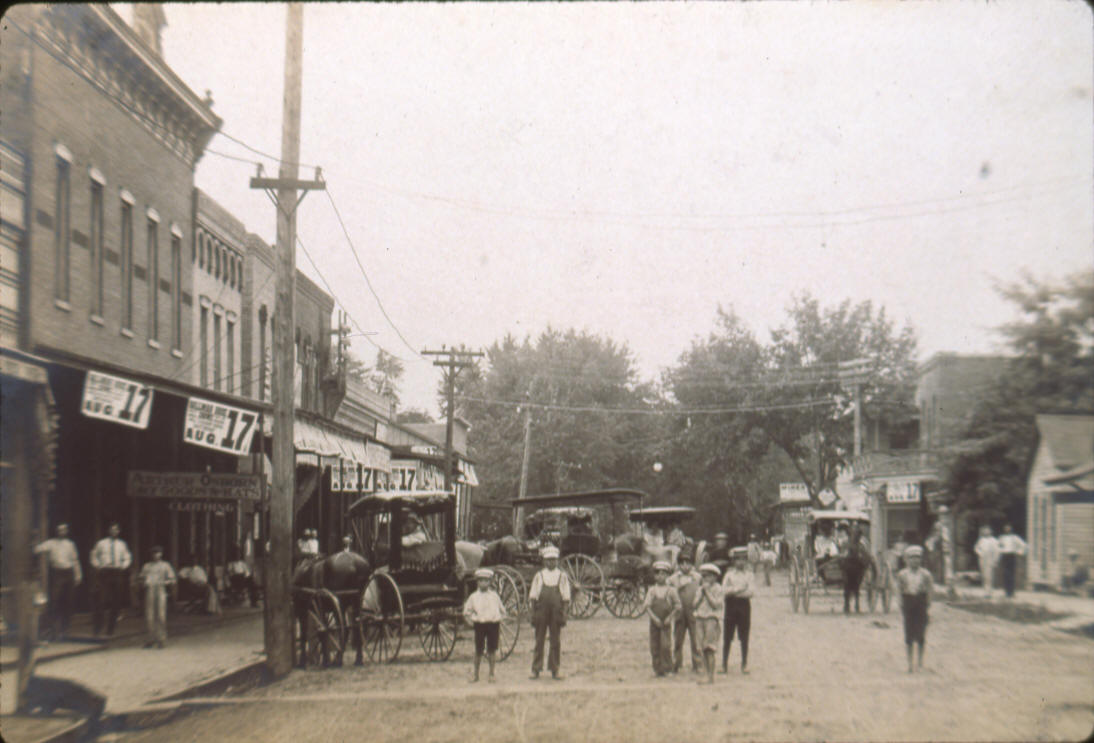
(B-37) Looking north at the 200 block of S. Madison. Flyers are posted thru town that day for a Gollmar Bros. Show to be held Aug. 17.
On the left side of the street, you can find the Osborn clothing store.
The "Lemp Brewery building" can be seen on the right side of the picture where St. Louis beer was offered. (The Lemp Brewery in St. Louis eventually
became the Falstaff Brewing Corp. in St. Louis.) Miner Bros. can be seen further down the right side of the street too.
(Note: According to the "Sesquicentennial of Marion Co., IL (1823 - 1973) in the Kinmundy section:
"From the first, there was a battle between the temperance group and those who favored saloons. We have handbills advertising huge temperance meetings
sponsored by Royal Templars of Temperance, and one time, a lady took her hatchet, like Carrie Nation, and went down and wrecked a saloon. There
was an attempt every year to vote the town dry, but it didn't really make it until about 1908, and since then liquor licenses have not been issued.")
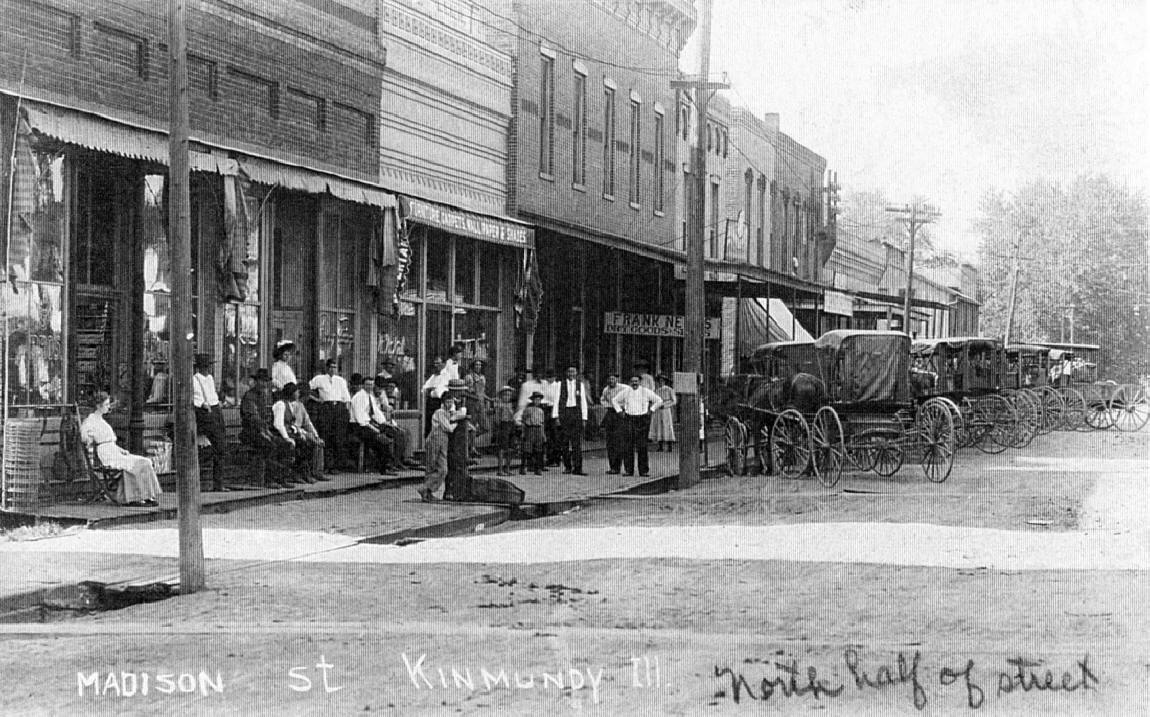
(B-38) This was a Saturday afternoon before the first war. Jennie Phillips sits in front of their store, one of the Lowe boys is in the group in front
of their store, and it looks like Bob Flanagan, the policeman, with the star on his vest in front of W.W. Neil’s. Others are not identified.
(“Kinmundy – Railway to Thruway (1857 – 1957”)
This was in the 200 block of South Madison right after the alley on the west side of the street, facing north.
The first building is a movie theater.
The second building's sign "Furniture, Carpet, Wall Paper, Stoves)
The third building had a sign "Frank Nelms Dry Goods, Shoes.
In the right center of the picture, a boy is leaning on a pump.
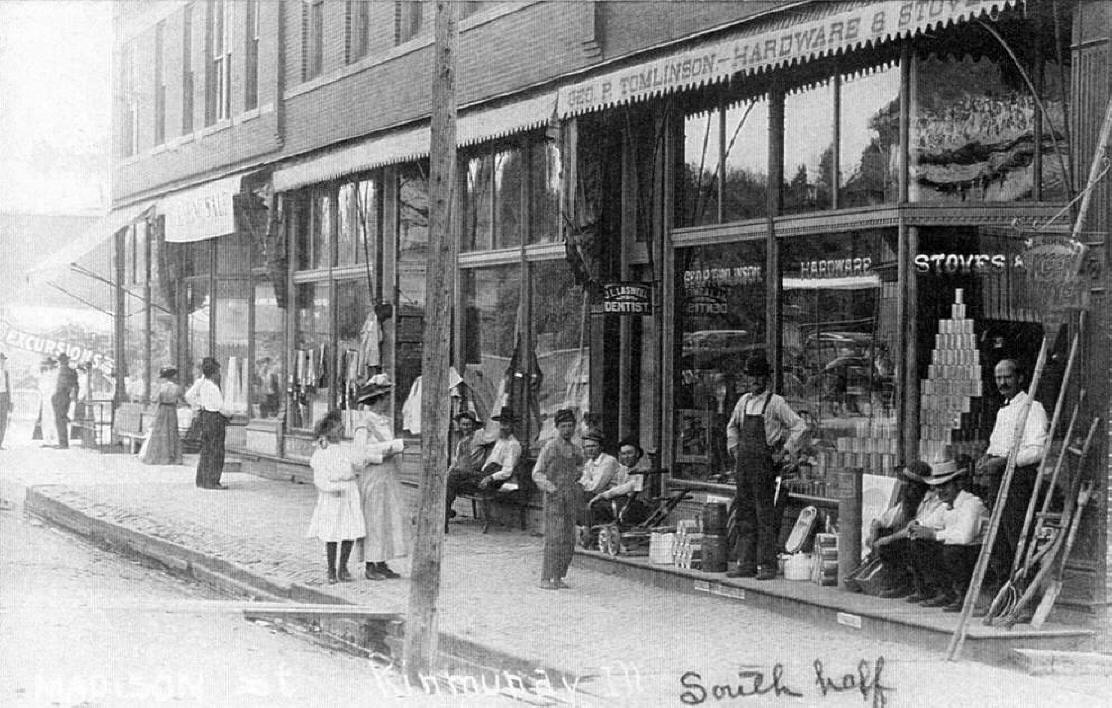
(B-39)
“Below, George Tomlinson, standing, Chas. Witwer and Noah Robnett seated, next one not identified, Doc Laswell, and someone sit on his doorstep,
and Bert Williams sits with Clabe Cockrell in front of Rohrboughs store, farther down Miss Mollie Songers, and then the bank.
Other people are not identified.” (“Kinmundy – Railway to Thruway (1857 – 1957”)
This was south half of Madison Street (200 block of South Madison right after the alley on the west side of the street).
The first building was that of George P. Tomlinson (Hardware and Stoves. (This is where the Kinmundy Food Pantry is located in 2011).
J.L. Laswell, the dentist, could be found thru the door upstairs.
Next was W.W. Lowe Hardware Store. Then M.A. Songer's, and last on the block was the First National Bank.
%20-%20better.jpg)
John F. Donovan and W.W. Neil playing checkers in W.W. Neil's store in Kinmundy.
.jpg)
C.B. ROHRBOUGH, Gents’ Furnishings and Shoes: The name of ROHRBOUGH has long been known in the business world of Kinmundy, even before Charles B. ROHRBOUGH, the business man of today, was born, and always the name has stood for high ideals and honest dealings. Charles B. ROHRBOUGH is a native of Kinmundy, having been born here Sept. 1, 1866. His father, Calendar ROHRBOUGH, a West Virginian by birth, and mother, Anna MOORE ROHRBOUGH, from Carthage, Ill. were refined, cultured people. Mr. ROHRBOUGH is a graduate of Gem City Business College, of Quincy, Ill. with the class of 1888. Before entering into business for himself he clerked in Miss M.A. SONGER’s dry goods store 11 years. In 1901 he went into business for himself, opening a store in the building in which the last State Bank did business, and dealt in shoes and gents furnishings. His business was so lucrative he soon built the commodious building, where he now is, and added dry goods and women’s ready-to-wear garments. Later in an adjoining building, he added groceries. He had by far the largest stock of goods and the most modern equipment ever brought to Kinmundy, at one time carrying a $60,000 stock. At present, Mr. ROHRBOUGH is only handling shoes and gents furnishings, having sold his dry goods and groceries. He has been Republican Committeeman for 20 years; President of the School Board for 12 years, at the time the new building was erected, also the Gym; Building and Loan Director for 26 years and its Vice President for a number of years; member of the Chamber of Commerce; distributor for the Red Cross. He is a Mason of long standing, an A.F. & A.M. and Knight Templar. Mr. ROHRBOUGH and Miss Annie G. WATSON of Fairmont, West Virginia, were married Sept. 5, 1899. Their daughters are Misses Ruth and Virginia. ("The Kinmundy Express" 50th anniversary edition - Nov. 9, 1933)
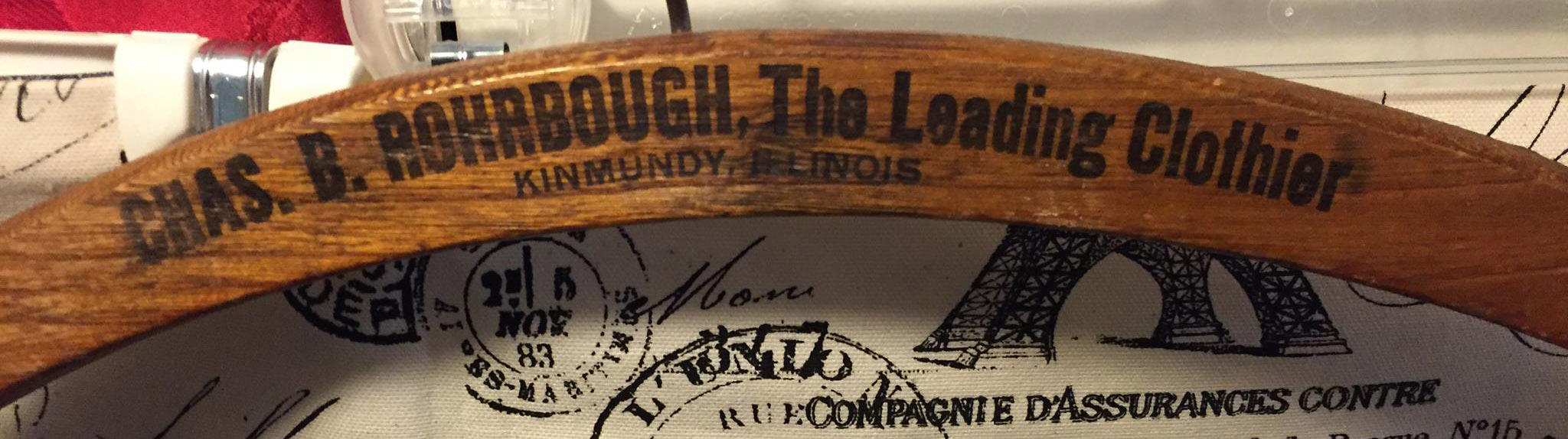
Hanger from Chas. B. Rohrbough Clothing Store
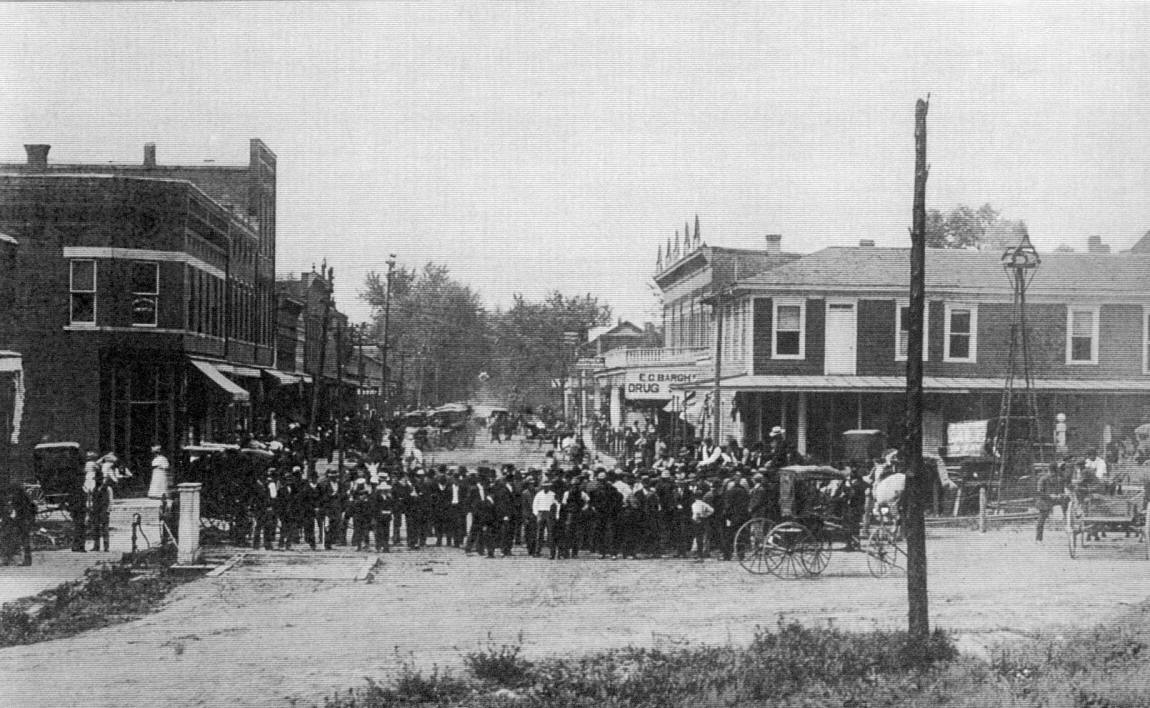
(B-48) A crowd gathers on the corner of Third and Madison (picture is facing north).
(Elwyn Cheatum believes that the Governor of Illinois was making a speech in Salem. He road south on the Illinois Central and had to transfer in Kinmundy
to the C. & E.I. to get to Salem.)
(On Dec. 12, 1907, the following article was published in "The Kinmundy Express":
"The Governor Here: Last Tuesday, Governor Chas. DENEEN, his private secretary, Mr. McINTYRE, Hon. J.J. BROWN, candidate for Sec. of State and Roy WEST, chairman of Republican State Committee, arrived in this city at 4:48 p.m. and were marched to Gray’s opera house where the local republicans had arranged a reception for the party. After a song by the High School Quartet, Gov. DENEEN was introduced tot he crowd and he talked for about 20 minutes and the address was well received by the crowd. After his address Hon. J.J. BROWN made a few brief remarks. The party were enroute to Salem and were transferring to the C. & E.I. and the Republicans here took advantage of this opportunity to pay a tribute of respect to our highest state official. The opera house was well filled and the party were given a very welcome reception. They left on the six o’clock train for Salem where a meeting was held that night and a number of our people accompanied them to that place."
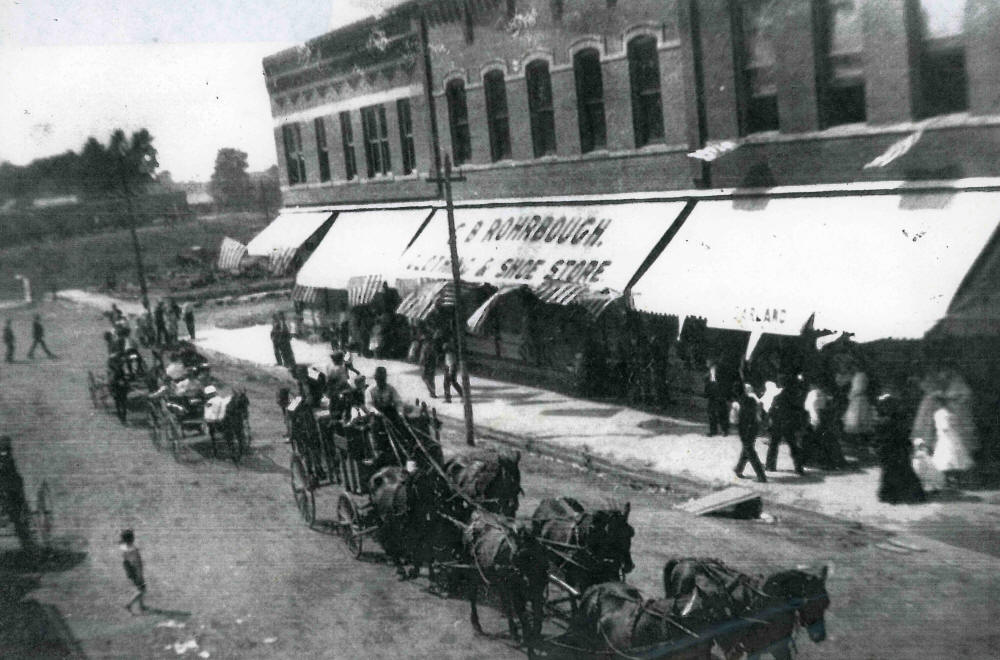
(B-33a) Downtown Kinmundy looking south on Madison Street. (Picture was possibly taken on Aug. 22, 1906)
.JPG)
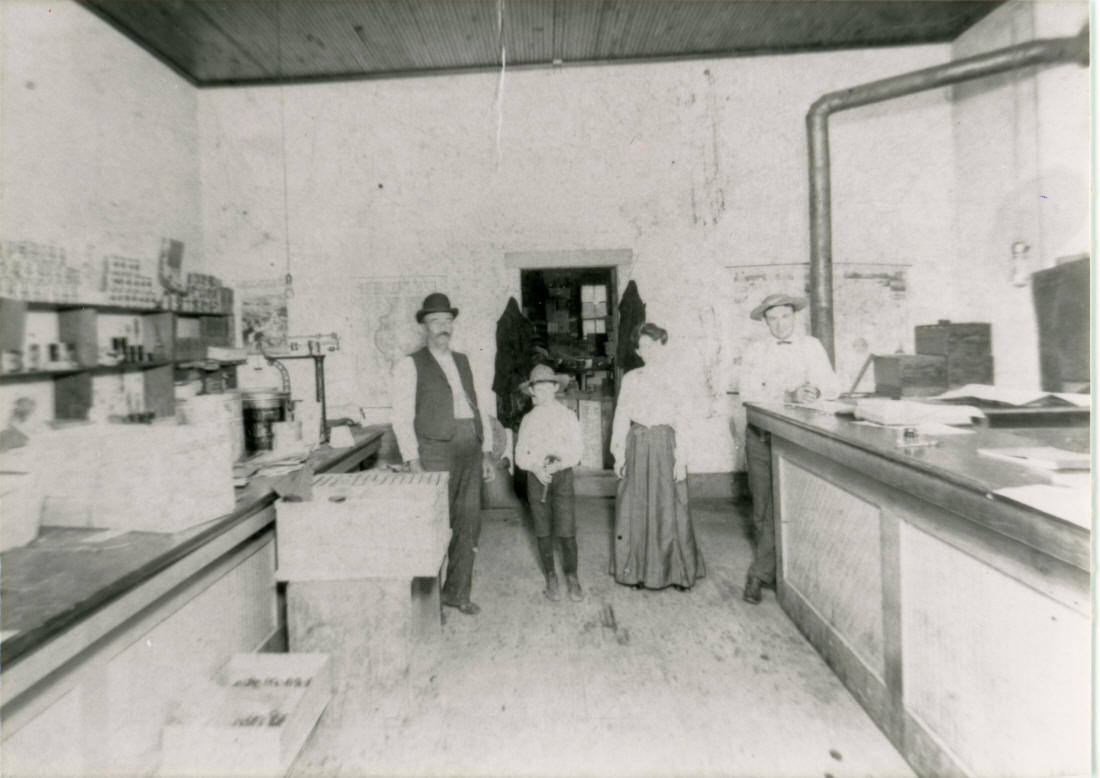
Kinmundy business (probably). (This was from a collection of slides that Elwyn Cheatum used to present which was about Kinmundy businesses and landmarks.)
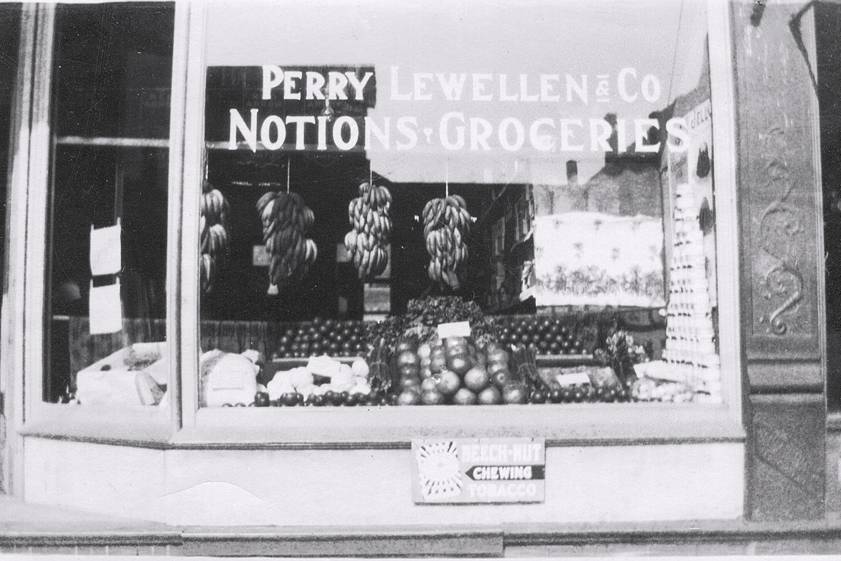
(B-128) Perry Lewellen and Co. - Notions and Groceries
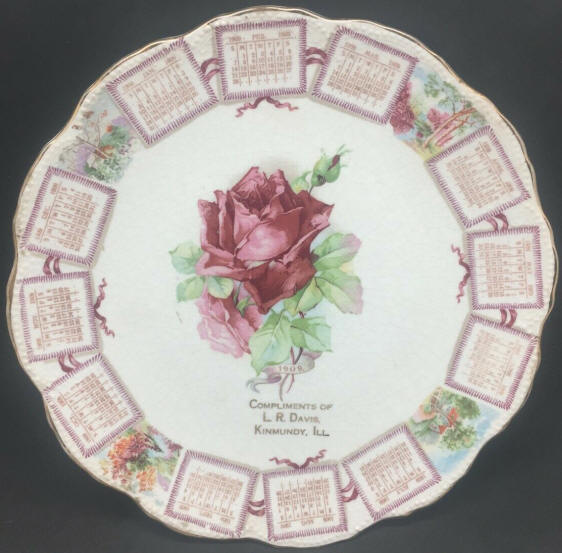
L.R. Davis Mercantile (Lewis R. Davis) - he was originally with John W. Wilson as a partner. J.W. Wilson retired from the first in March 1895, and L.R. Davis continued on with the business, for many years in the Opera House block. L.R. Davis moved his business to Salem around 1912.
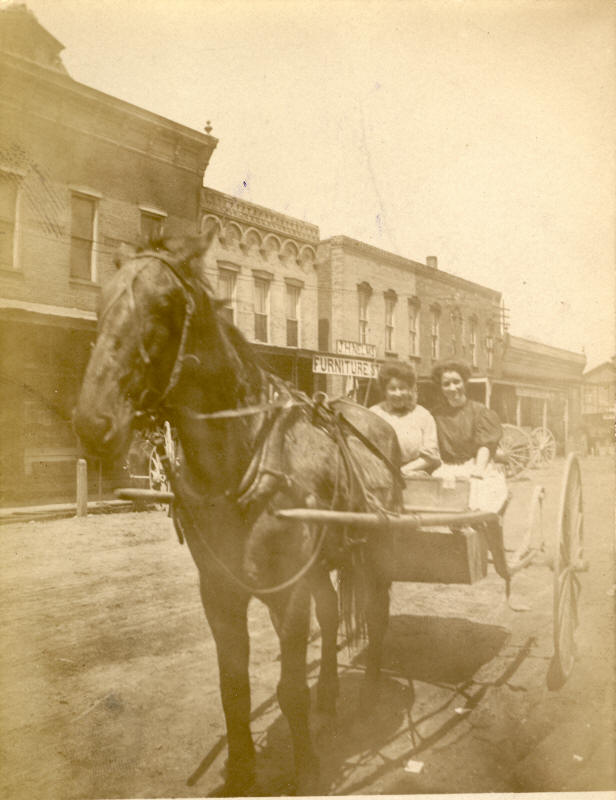
(B-127) Downtown Kinmundy
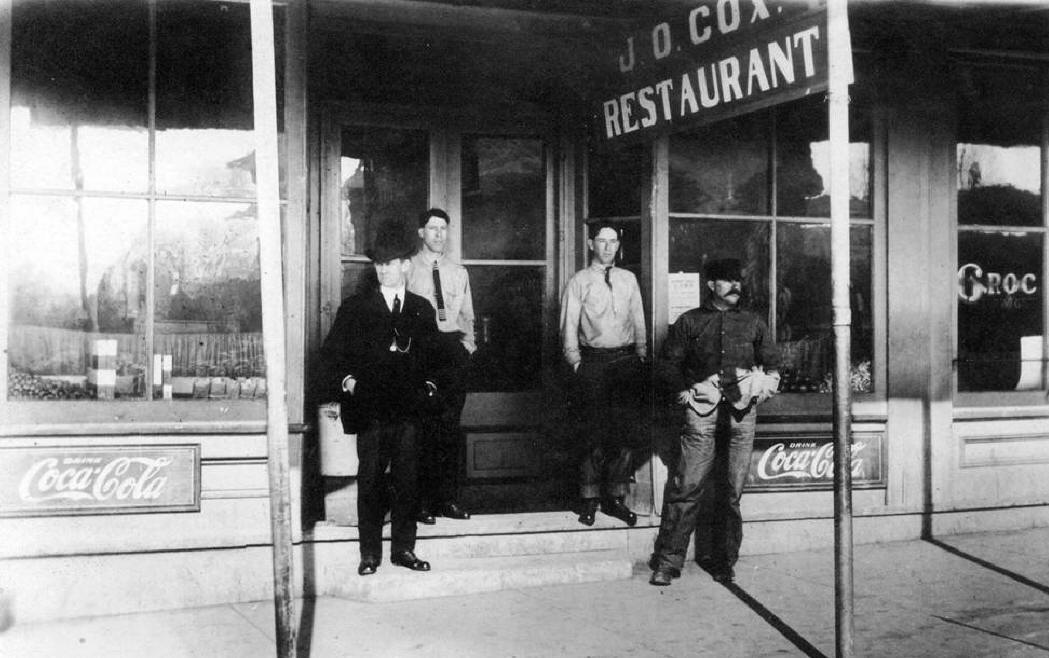
(B-49) J.O. Cox Restaurant which was located on the east side of the 200 block of South Madison Street. This later became the Post Office.
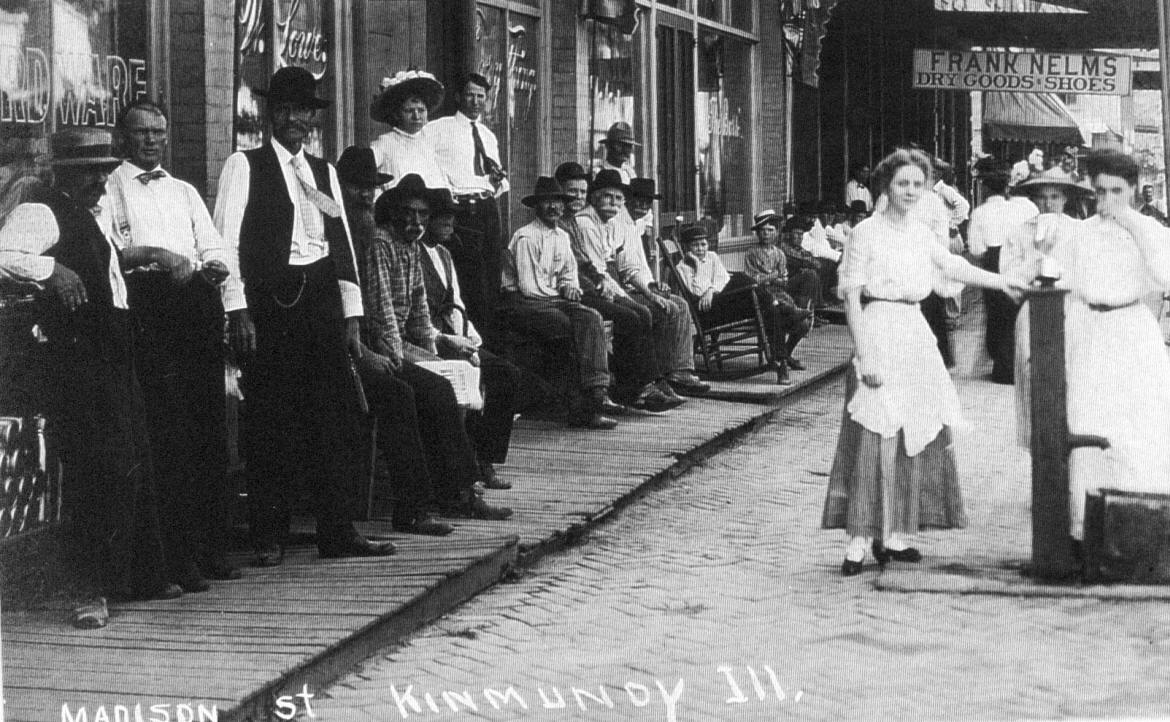
(B-50) Kinmundy residents in front of "Frank Nelms Dry Goods & Shoes" Store, and the "W.W. Lowe - Groceries, Dry Goods and Notions (opened in 1901)
(In Aug. 1906, Arthur Osborn bought out the Frank Nelms stock of merchandise, so the photo was probably taken right before that date.)
NELMS Brothers, Groceries, Shoes, Notions: The firm of NELMS Brothers was established in Kinmundy on Feb. 28, 1931. Frank E. coming here from Centralia, Ill. and Maurice B. from Everett, Wash. Although a late firm, the NELMS Brothers have been known here all of their lives. Their store is Cash and Carry, the first year dealing exclusively in groceries, later adding shoes, notions and gents furnishings. Since the establishment of this firm, they have never missed a week advertising in this paper. The senior member of the firm, Frank E., was born in Effingham Co., July 29, 1870, coming to Kinmundy that same year. His parents were John T. and Emma WINTERROWD NELMS. He received his education in the Kinmundy Schools, and began his business career as a clerk, first in the store of Myron M. DIEWERT, and later, that of the late John W. WILSON. For 18 years, he was in business for himself, in Kinmundy, carrying general stock - dry goods and groceries. After closing out his store here, he became a traveling salesman for WITWER-TATE, now GOODALE-PUFFER Grocery Co., of Centralia. He travelled for these firms for 18 years, retiring Jan. 1 of this year to devote his time to his business. Mr. NELMS is a lover and music, and nothing pleases him more than to take his guitar, and not only please his friends of the town with his music and songs but roam the county o’er and take part in school and church and social entertainments, where he is always received with great applause. The lure of fish in the spring is more than he can withstand, and the call of the quail and prairie chicken is music to his ears. He is the champion mushroom hunter of the community. He belongs to Modern Woodmen, and to the Kinmundy Chamber of Commerce. The Junior member of the firm, Maurice B., was born in Kinmundy Sept. 23, 1883. He received his education in the Kinmundy schools, and like his brother, began his business career as a clerk. His first position was with E.C. BARGH. Later he clerked for his brother, Frank, for John SWANDER, and for C.B. ROHRBOUGH. He embarked in business for himself in Hindsboro, Ill. in 1910, and was in business there for 17 years. Later he and his family moved to Everett, Wash., but after 2 years as a shoe salesman there, they came back to Illinois. Mr. NELMS married Miss Alma LASWELL of Farina, in Dec. 1904. Their 3 children are: Mrs. Armelda CUPPY of Chicago; Mrs. Maurine McLAIN of Everett, Wash.; and Mrs. Pauline MORRIS of Kinmundy. He belongs to the Modern Woodman and to the Chamber of Commerce. He has the same inclinations as his brother when it comes to fishing. With pipe in mouth and pole in hand, he can sit for hours watching for a nibble. ("The Kinmundy Express" 50th anniversary edition - Nov. 9, 1933)
W.W. LOWE, Groceries, Dry Goods and Notions: On the window of this firm is the sign, "W.W. LOWE - Everything", and "everything" is right. Dry goods, groceries, cured meats, notions, gents’ furnishings, light hardware, window shades, umbrellas, china ware, fruits, vegetables, and in fact, everything, are to be found in this store. The firm of W.W. LOWE was established in February, 1901. It succeeded the firm of (J.T.) ARNOLD & LOWE, who purchased the store in October, 1900, from C.H. HIGBEE. William Warren, son of Samuel T. and Margaret ARNOLD LOWE, was born Nov. 6, 1862, in Foster twp., where he grew to manhood. On May 7, 1885, he was married to Miss Minnie O. HEADLEY, also of Foster twp. They have 4 sons, James O., Edward R., W. Webster, and Gordon M. Mr. LOWE followed the occupation of farming until 1899 when he moved to this city. He soon became a clerk for M.A. SONGER. In October 1900, he formed a partnership with Mr. J.T. ARNOLD and they purchased the store from Mr. C.H. HIGBEE. In February 1901, he purchased Mr. ARNOLD’s interest and then, as he says, ‘laid awake for many nights wondering how he was going to meet his bills.’ Because of his genial disposition and courtesy, his honest upright dealings with every one, through the succeeding years, his business has steadily increased. To be met by Mr. LOWE in his store, one feels there is a personal interest in his customers as well as a business one. He has been director in the Kinmundy Building and Loan Association for 32 years, and treasurer for 10 years; a director of the First National Bank; and member of the Chamber of Commerce. He belongs to the Modern Woodman, and has been a Mason for 42 years, the Methodist Episcopal church from his early youth, the Board of Trustees, a Steward, and officer of the Sunday School. ("The Kinmundy Express" 50th anniversary edition - Nov. 9, 1933)
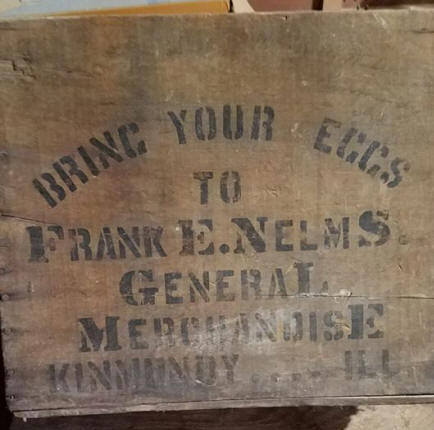
Wooden box from Frank E. Nelms General Merchandise store in Kinmundy to transport eggs
(from the Mike Williams collection)
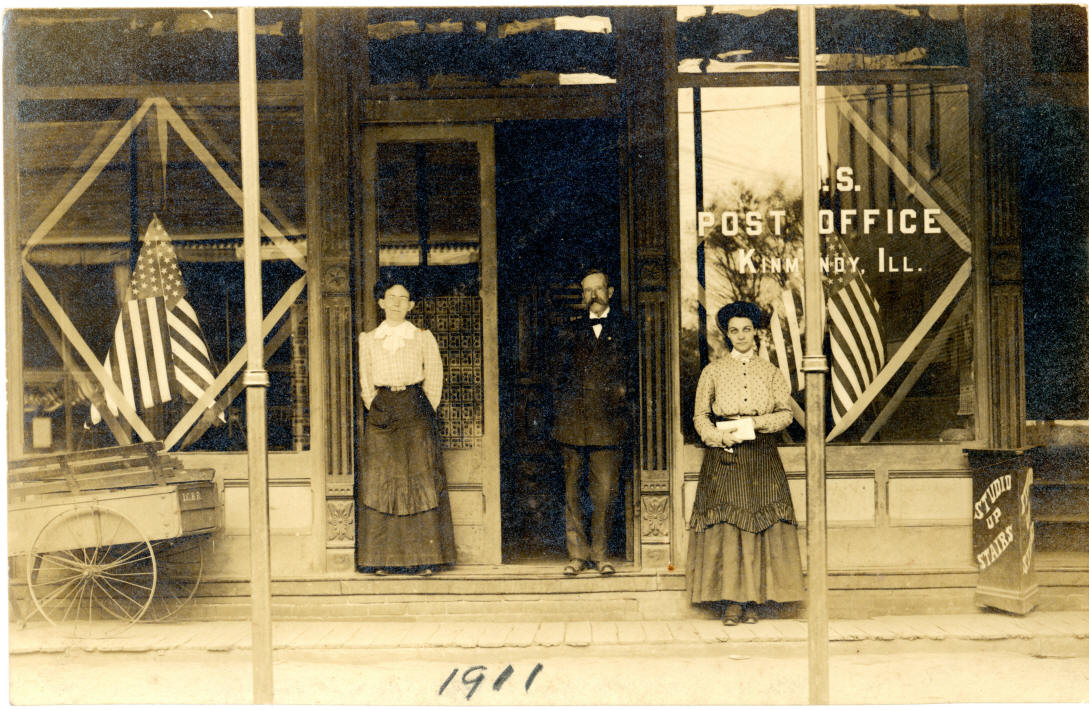
(B-51) U.S. Post Office - Kinmundy, Illinois. This building was located in the 200 block of S. Madison St, on the east side of the street.) - 1911
July 3, 1975 - "The Kinmundy Express: "Here is a picture of the Kinmundy Post Office and personnel as it was in 1910, and years before and years afterwards (except for the personnel.) This building is just south of Schwabe's Discount and Hardware. You will note that 62 years ago, our post office had two clerks, namely Miss Amy BROWN and Miss Alta BAGOTT. In the center is Mr. John F. DONOVAN, the postmaster. At the extreme left can be seen "the old mail cart". this was used to haul the mail to and from the Illinois Central depot. Mail was dispatched from this office on five Illinois Central trains and mail was received from five I.C. trains. In addition to this, mail was dispatched on three C & EI trains and received on three trains. In those days, folks were always looking for mail and always wanted it upon arrival. It was not uncommon for some families to make eight trips to the post office each day, one after each incoming mail."
"This picture was taken May 10, 1910. There was also a studio upstairs (possibly a photographer.)
The cart on the left brought mail from the I.C. Depot."
Four Years in a Country Post Office by Richard F. Lawson, copyrighted in 1899, and former postmaster of Kinmundy and Effingham postoffices.
.jpg)
.jpg)
Kinmundy Post Office flag postmark - ca 1880
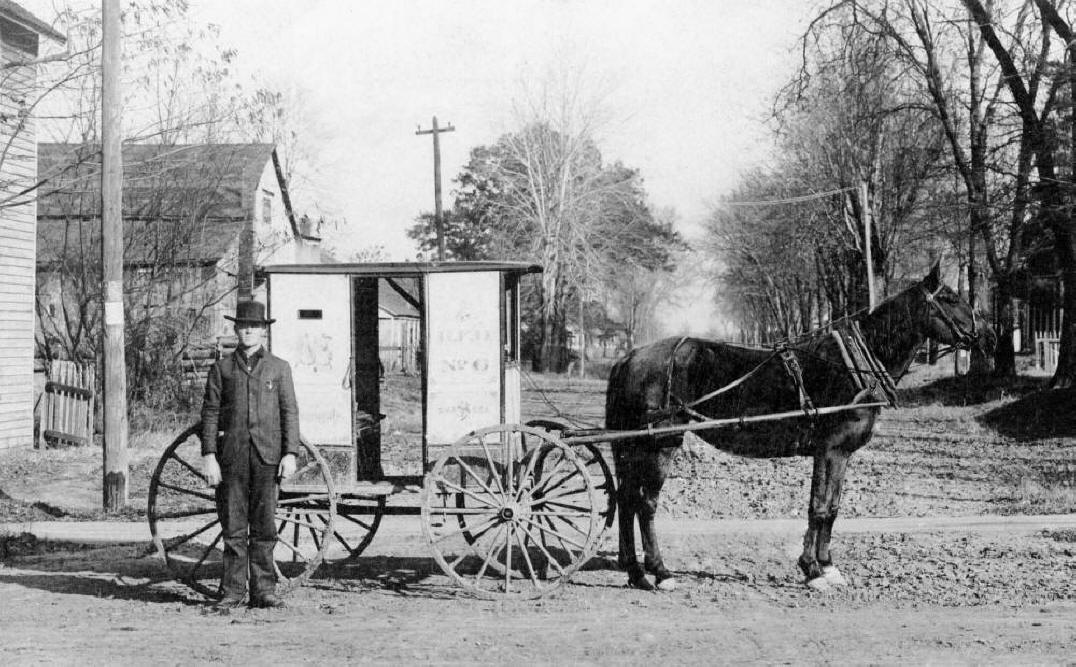
(B-66) R.F.D. Mail carrier Otis Charlton. The date on the back of the picture was Nov. 20, 1907.
The message said "Compliments of R.F.D. Carrier A. Otis Charlton."
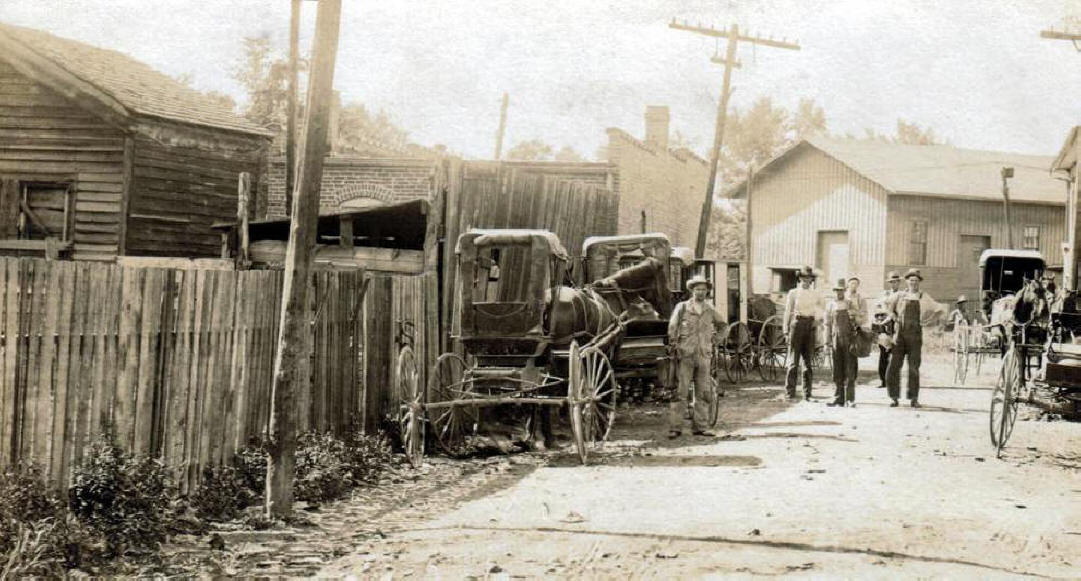
(B-59) Mail carriers - Aug. 24, 1908 Postmark. This alley is east of S. Madison St. behind the post office (200 block).
Building on the right is the I.C. Freight House.
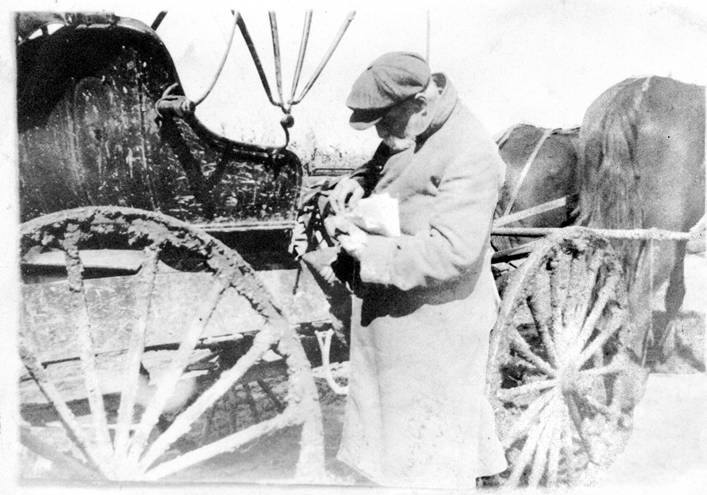
(B-149) Kinmundy Mail Carrier - William "Dick" Spencer
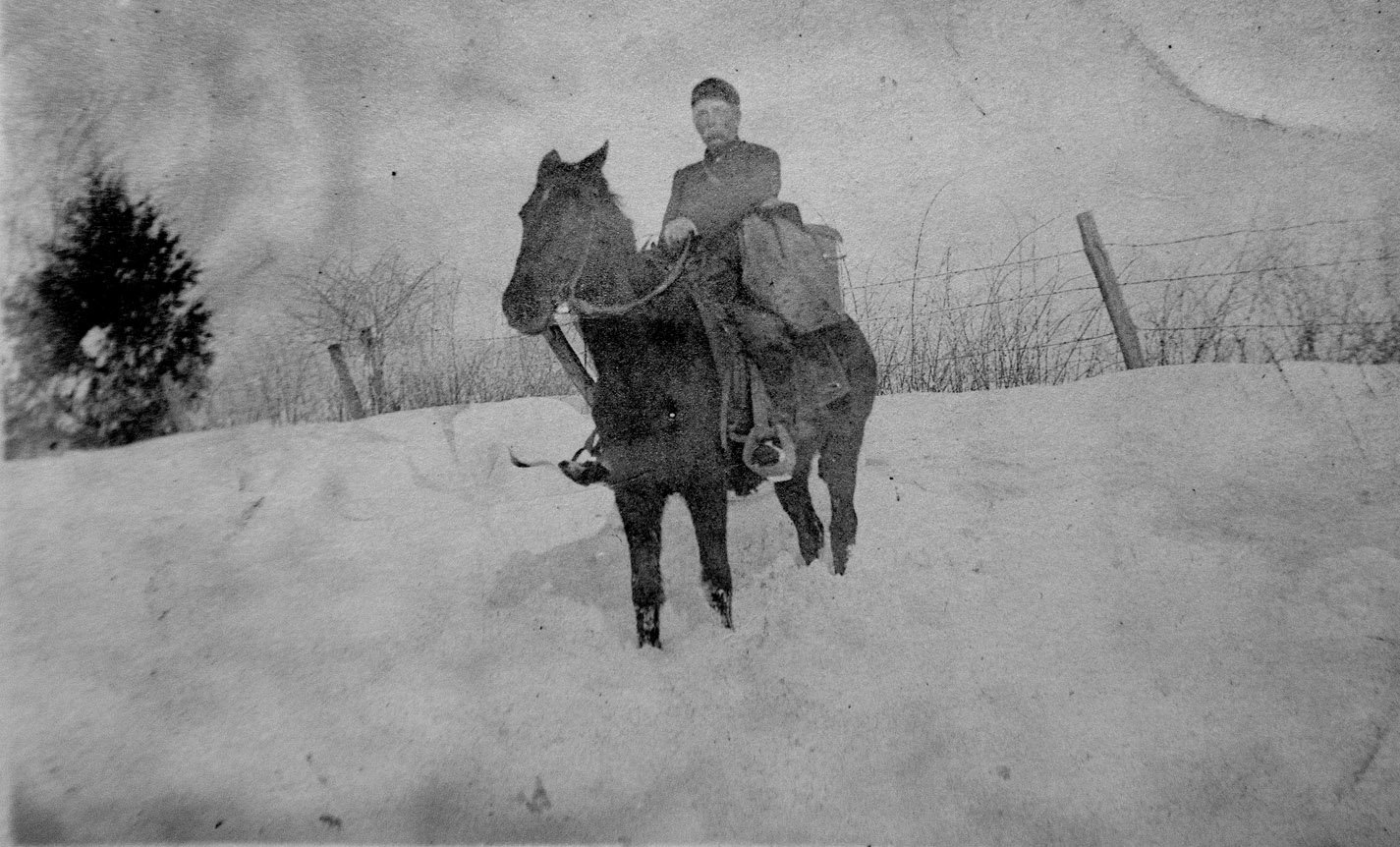
(B-155) William "Dick" Spencer - Kinmundy mail carrier - 1917
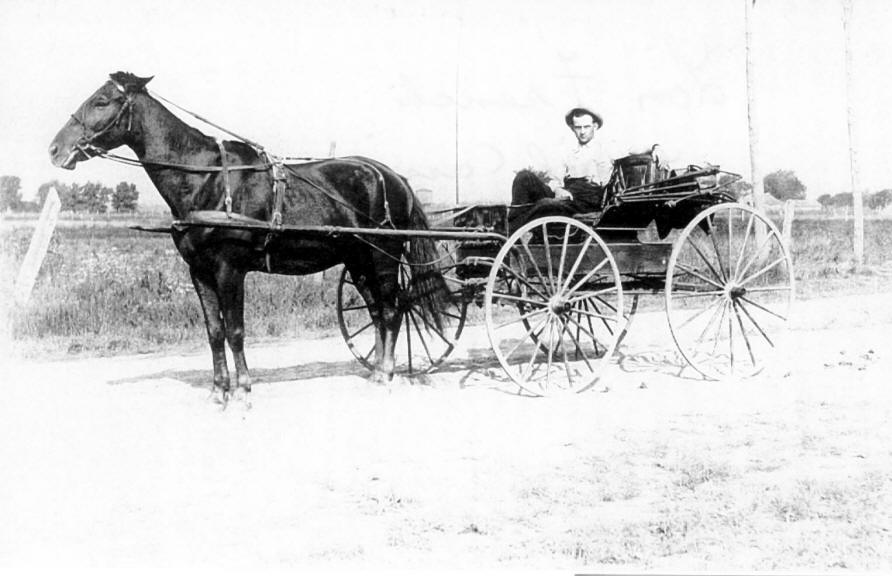
(B-44) Alonzo "Lon" French, mail carrier. He was married to Lucy Young, and son of Charles B. French.
.jpg)
Simpson's Grocery & Meat Market. Martin P. Gramley is on the right in the butcher apron, and Henry Simpson is on the left.
They were brothers-in-laws, both have married Humphrey daughters.
"The Kinmundy Journal" - Aug. 10, 1899: "W.H. Simpson, by accident the other day, poked a hole through a $60 glass plate, in the front of his grocery."
T
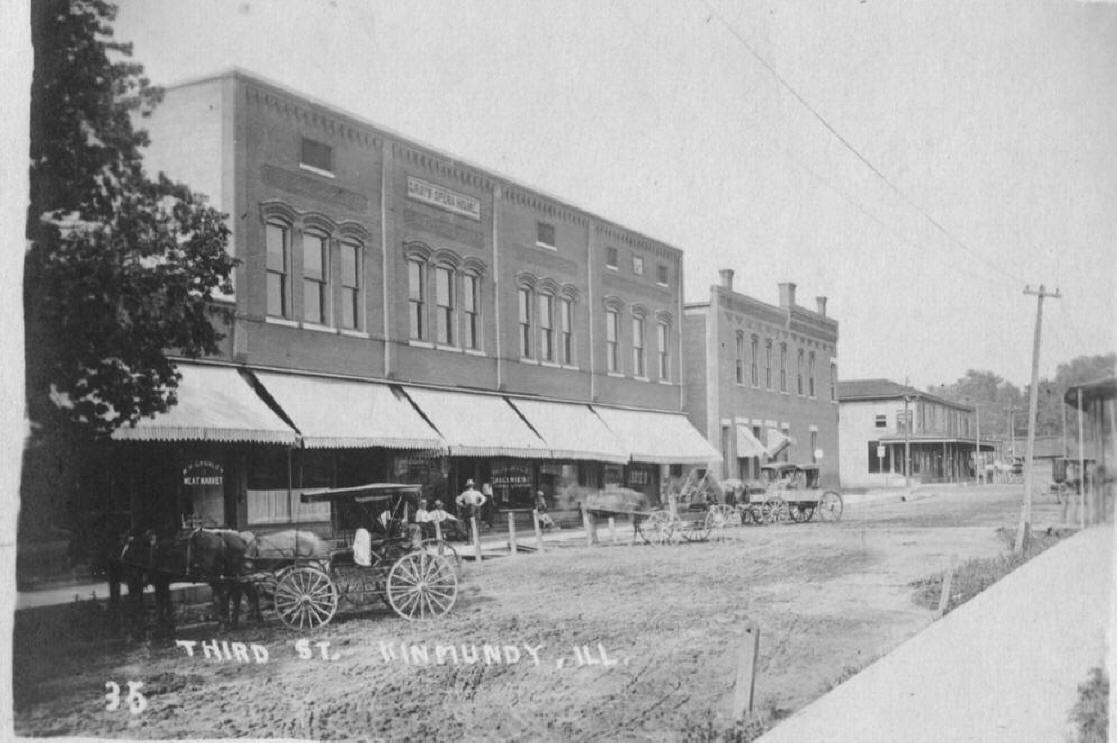
(B-30a) Hayworth Opera House (100 block of W. 3rd St.) on second floor, burned and was rebuilt after fire of 1902. The name "Gray" is on the building.
Looking east, next building was the old bank, and it was rebuilt in 1906.
this is on 3rd Street looking east – M.P.Gramley Meat Market, Gray’s Opera House, N.A. Rice Groceries.
(These buildings were on the site of what is now the Lions Community Center.)
%20looking%20east.jpg)
(B-30e) Hayworth Opera House (100 block of W. 3rd St) looking east
%20NA%20Rice%20store%20looking%20east.jpg)
Businesses underneath the Opera House and I.O.O.F Lodges along Third Street. The first is a restaurant, and the second business is "N.A. Rice - Groceries and Dry Goods" Store along with Holly Polly Ice Cream stand between the buildings and Third Street - a popular ice cream in the early 1900's. According to the obituary in "The Kinmundy Express" on Jan. 2, 1941, Nelson A. Rice married Nellie E. Pierce in 1891 in DuQuoin, IL, and they had children, Helen D. (Rice) Parks and Chauncey V. Rice,, and adopted Ruby Jo in 1918. Mr. Rice was employed by the Illinois Central Railroad at Kinmundy, Ill., for a number of years; for four years was in the mercantile business, and then moved to Hammon, Oklahoma in April 1911.
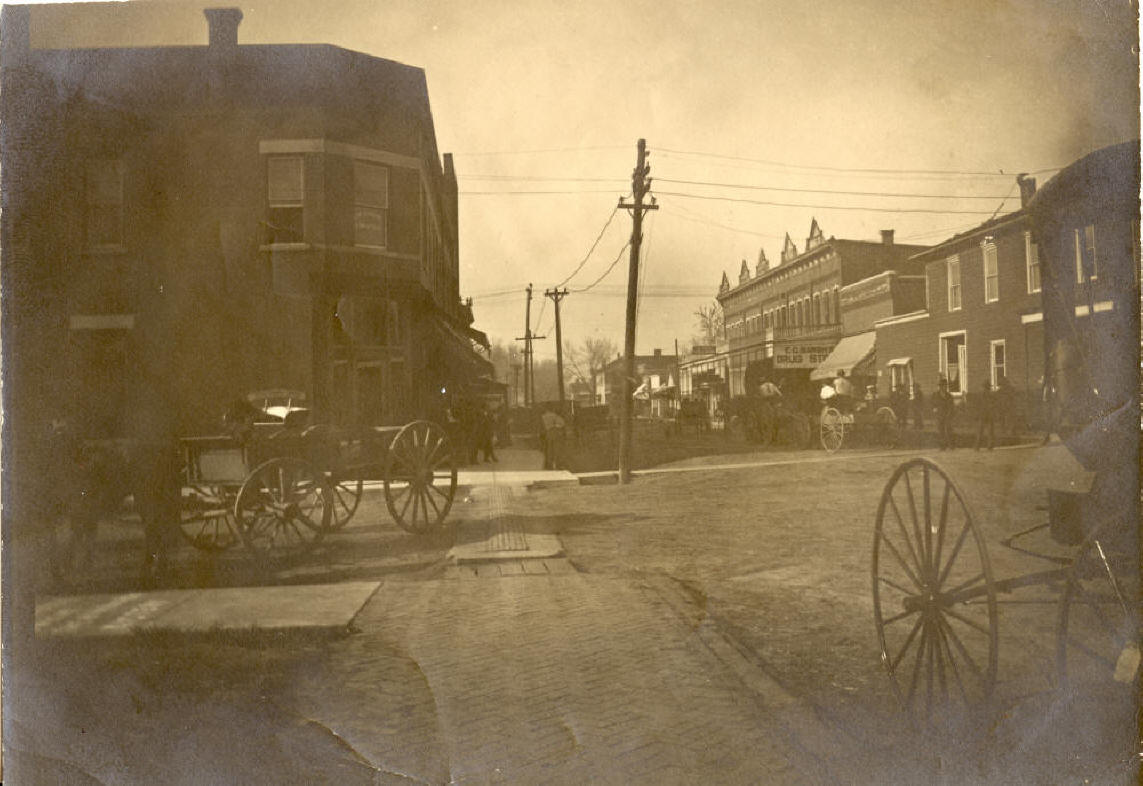
(B-78) Madison Street looking north.
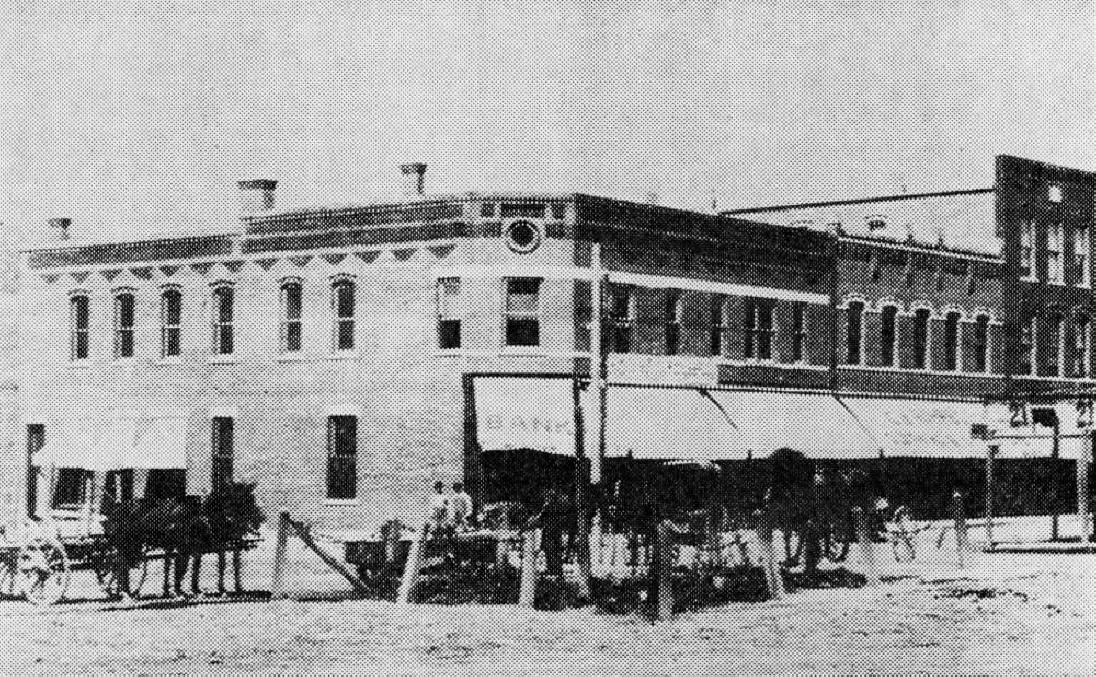
(B-98) "The watering trough in the center of the square, Madison and Third Streets. Nelson's Jewelry, the First National Bank, Miss Mollie's
Rohrbough's and the Masonic Temple." (“Kinmundy – Railway to Thruway (1857 – 1957”)
.jpg)
(B-53) Northwest corner of Madison and Third Streets. This was the new First National Bank building. The next building to the north is M.A. Songer Millinary store.
“The Kinmundy Express” – June 29, 1972 - “The above building is very familiar as it is still occupied by the First National Bank, however, it has been remodeled some since this picture was taken in 1909.
The building with the M.A. SONGER sign is now occupied by Schwabe’s Discount Store. On the extreme right you will note the corner of the ROHRBOUGH building now occupied by DEADMOND TV & Appliance.
You will also note immediately in front of the bank, an iron pipe railing to keep one from falling down a stairway which led to John GARNER’s Barber Shop under the bank. The barber pole sets on the sidewalk by the railing. The railing was covered with a “saw tooth” grill, to keep the boys from sitting on top of it, for fear some lad might tumble off the railing backwards down the stairs.
Above the bank (with windows open) was the E.C. HUGGINS Law Office. The building contains a large hall to the right of the law offices. To the left of the law office, are more office rooms.
On the extreme left of the Bank Building, you will note another door and in front on the sidewalk is a large clock suspended from a hooked pole. This was the jewelry store of Jacob NELSON.
The next building was the Opera House building which was burned out in 1916. Although it was known as GRAY’s Opera House, one-fourth of the building to the extreme right, was owned by the Independent Order of Odd Fellows, occupied as their meeting hall, and immediately under it, was a grocery store. (Note the hitch posts in front.)
Next can be seen the building which is now the City Hall and then the old City Hall, next a wooden office building recently razed, the now Mrs. Alf LEMAY home with a faint outline of the Christian Church in the background.
By the aid of a spy-glass, you might be able to recognize some of the men in the picture. We think we have identified the six gentlemen on the right, and say they are (from left to right) Frank NELMS, standing; John GARNER and Wallace T. HULTS, leaning against the railing; David BEAVER and William HAMMERS, sitting; and William MAXEY, on the crosswalk. Just in case you would like the location of this building, it is the corner of Madison and Third Streets."
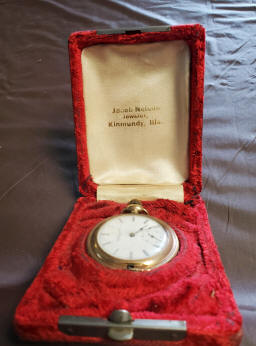
Jacob Nelson Jewelry Store
Jacob Nelson (1851-1924) - Longtime jeweler in Kinmundy. He was born in Denmark in 1851, and family were all seaman. When he found that he could not follow that trade after working on his uncle's vessel as a lad, he learned his trade, as a watch maker. In 1872, he came to the United States to Chicago without friends and could not speak the language. He found work, but was soon stricken with small pox, and laid in a quaratine hospital for 6 weeks, and was penniless. Walking the streets of Chicago, he couldn't find work. One day he came upon an advertisement in a Chicago paper from a Mr. Berthol of Kinmundy, who was a druggist, having a drug store and a small stock of jewelry. Mr. Berthol was advertising for a jewler, especially a watch repairer. Mr. Nelson came to Kinmundy in 1872 in answer to that advertisement, with only a small kit of jeweler's tools, and from this meager beginning built the business of which he and Kinmundy were proud. Honesty was the foundation of his character, and he was the architect of his own fortune. He was also one of the organizers of the First National Bank in 1902, and was elected the director at the organization meeting, which he held until 1918, and also he was one of the early stockholders of the Kinmundy Building & Loan Association. He married Lizzie Hoots in 1875, and they had 4 children.
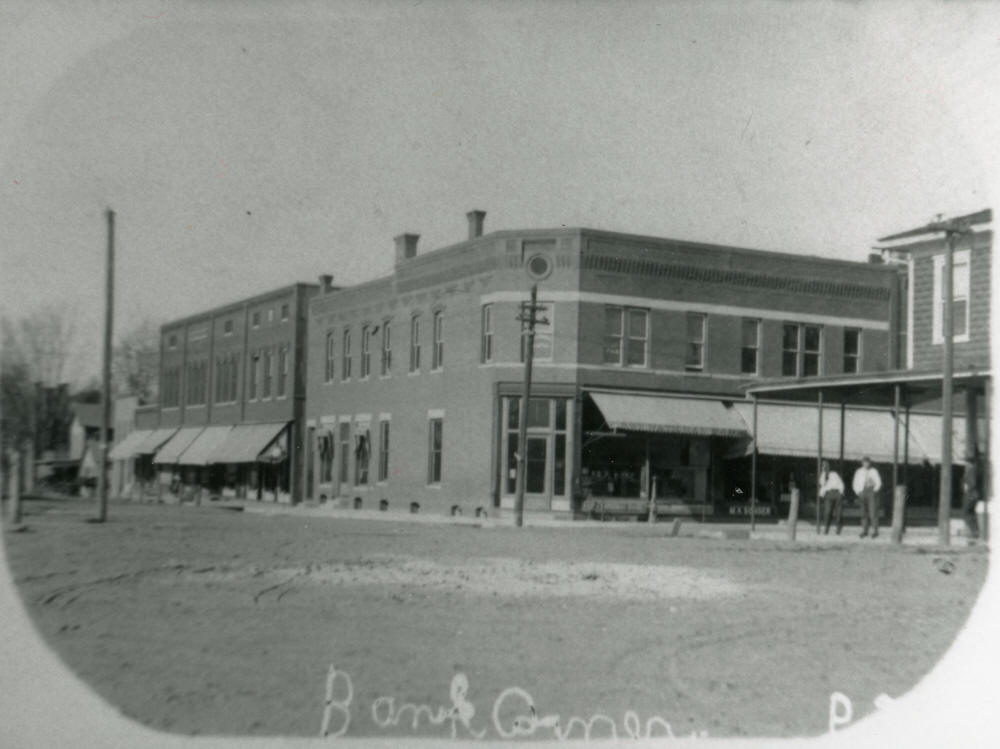
The First National Bank, Kinmundy, Ill.: Organized in Feb. 19, 1902. The first Board of Directors were: Calendar ROHRBOUGH, Richard P. McBRYDE, Michael B. BAKER, William H. WHITE, John W. VICKERY, Jacob NELSON, Alexander MILLICAN, B.W. BLAKESLEE, John J. BROWN. The first Officers and Clerical Forces: Calendar ROHRBOUGH, President; John W. VICKERY, Vice President; R.P. McBRYDE, Cashier; L.C. ROHRBOUGH, Bookkeeper. Calender ROHRBOUGH, served as President for 5 years, and was assisted by J.W. VICKERY as Vice President, who was succeeded by W.H. WHITE. Calendar ROHRBOUGH, President, was succeeded by F.A. PRUETT, and assisted by Hugo MILLER as Vice President. F.A. PRUETT, President, was succeeded by A.W. SONGER, and assisted by Wm. MORRIS as Vice President. A.W. SONGER, President was succeeded by Jacob NELSON and assisted by first Vice President, William MORRIS, and W.H. GRAY, second Vice President. Wm. MORRIS first Vice President was succeeded by Chas. F. PRUETT and W.H. GRAY, by R.C. ROBB as second Vice President. Jacob NELSON, President, was succeeded by Chas. F. PRUETT, and succeeded by Jacob NELSON, first Vice President, and R.C. ROBB, second Vice President; Jacob NELSON, first Vice President was succeeded by R.C. ROBB, and R.C. ROBB, second Vice President was succeeded by W.W. LOWE, who fill their respective chairs at the present time. R.P. McBRYDE served in the capacity as Cashier since the organization of the Bank until 1931, and was succeeded by C.R. ALDERSON, who has served to the present date. Men, who have served on the Board of Directors and their respective period of time: Calendar ROHRBOUGH (1902-06); R.P. McBRYDE (1902-21); J.W. VICKERY (1902-06); B.W. BLAKESLEE (1902-07); Jacob NELSON (1902-24); John J. BROWN (1902-05); Wm. H. WHITE (1902-04); Alexander MILLICAN (1902-04); M.B. BAKER (1902-04); W.T. WILKINSON (1904-05); W.H. WHITE (1905-06); Hugo MILLER (1905-07); F.A. PRUETT (1905-17); L.M. KAGY (1905-07); Benjamin GARRETT (1905-07); A.W. SONGER (1907-19); August BERCHELT (1907 - ); J.F. HOWELL (1907-17); Wm. MORRIS (1907-24); Benjamin GARRETT (1910-17); W.H. GRAY (1910-11); Ben M. SMITH (1913-14); C.M. SWIFT (1913-19); W.H. GRAY (1918-21); J.D. CAMERER (1918-21); C.F. PRUETT (1918- ); W.W. LOWE (1919- ); W.S. PRUETT (1919- ); Hugo MILLER (1921-31); R.C. ROBB (1921- ); J.T. ARNOLD (1921-31); W.T. WILKINSON (1925- ); C.R. ALDERSON (1925- ); J.H. NELMS (1931- ); O.K. MILLER (1931- ); H.E. MINER (1932- ); W.R. JACK (1932- ). Clerical Force and their Respective Period of Service: R.W. WALTERS, Bookkeeper from Dec. 21, 1904-1910; Nellie SCHERMERHORN, Assistant Bookkeeper from Jan. 1907 to 1909; L.J. LACEY, Assistant Bookkeeper from 1909-1910; L.E. GREEN, Assistant Bookkeeper and Assistant Cashier from 1910-1912; Herman SCHNEIDER, Assistant Bookkeeper from 1911-1913; C.R. ALDERSON, Assistant Bookkeeper, Assistant Cashier, and Cashier from 1912 to present; W.F. HOWELL, Assistant Bookkeeper from 1913-1917; F.E. JONES, Assistant Bookkeeper from 1917-1921; W.E. MORRIS, Assistant Cashier from 1921 to 1925; F.A. ROGERS, Bookkeeper from 1921 to 1932; A.H. MILLER, Bookkeeper from 1925 to present; F.E. JONES, Bookkeeper from 1932 to present. Aug. 1906, the Hammond State Bank was consolidated with the First National Bank of Kinmundy. On March 7, 1931, the deposit liability of the State Bank of Kinmundy, was assumed by the First National Bank, Kinmundy. Board of Directors now serving: Chas. F. PRUETT, R.C. ROBB, W.W. LOWE, August BORCHELT, W.S. PRUETT, John H. NELMS, W.T. WILKINSON, O.K. MILLER, H.E. MINER, W.R. JACK, C.R. ALDERSON. Officers: Chas F. PRUETT - President; R.C. ROBB - 1st Vice President; W.W. LOWE - 2nd Vice President; C.R. ALDERSON - Cashier. Clerical: A.H. MILLER - Bookkeeper; F.E. JONES - Bookkeeper. ("The Kinmundy Express" 50th anniversary edition - Nov. 9, 1933)
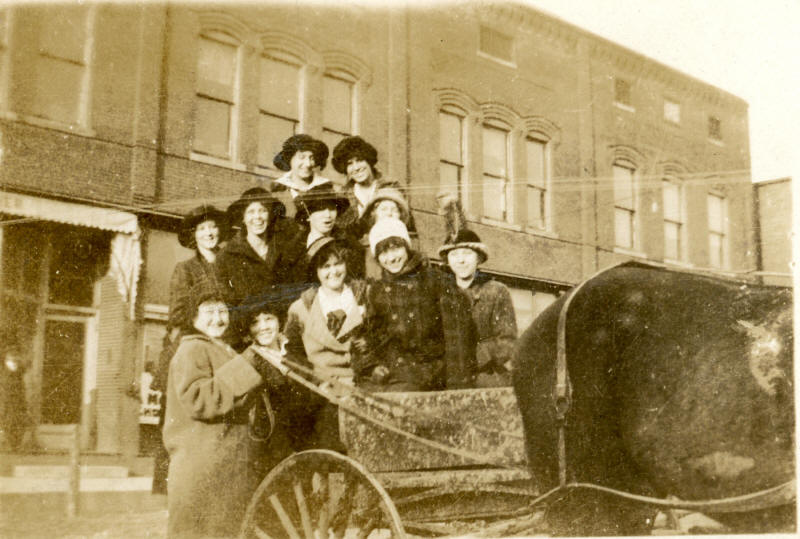
1915 - Some of the Kinmundy High School girls in front of the Opera House:
3rd year: Mary (Morgan) Thrasher, Mildred Ross, Mary Buswell, Mable (Green) Kampman
4th year: Helen Morgan, Lois (Nelms) Robb, Mary (Gramley) Garrett, Alice (Sexton) Mangner
2nd year: Minnie (Doolen) Gunderson, Dorcas (Harvey) Miller, Ethelyn Rohrbough, Emma Doolen, Rochelle Brown
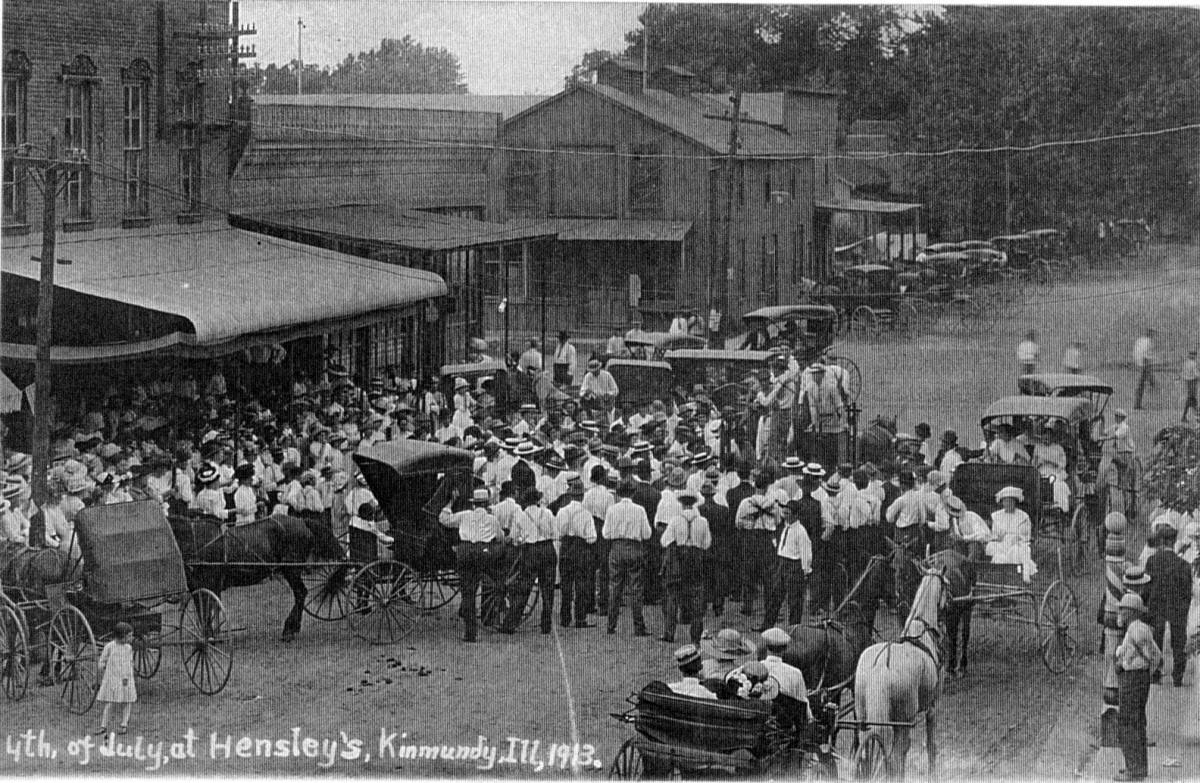
(B-64) Hensley's - July 4, 1913.
“This was Hensley’s store, also known as the Company store. Next was Matthew’s Harness Shop, and the big corner building housed
Dunlap’s Seed Store, Dr. H.L. Hanna’s office, Allen’s Carpenter Shop, Ellis Woolf’s Tin Shop, and others.” (“Kinmundy – Railway to Thruway (1857 – 1957”)
“The Kinmundy Express” – July 6, 1972 - “This week, we give you a 4th of July scene on “Main” Street in Kinmundy 59 years ago. We cannot identify any of the individuals in the picture. The Hensley store, mentioned in the picture, stood across the street from our office, which is now a vacant space between the former Crain’s Café and the former Dunlap Building. You will note the DUNLAP, or MATTHEWS Building, as it was then called.
The HENSLEY Store was formerly known as the “Company Store” and was owned by C.E. HULL, who also owned and operated the coal mine. Frank HENSLEY managed the store and afterwards took it over.
Above the HENSLEY store can be seen cross-arms and insulators which reminds us that Mr. HULL built the first telephone system in Kinmundy and the central office was in the upper story of this building. At the time of this picture, the central office had been moved to the second story of the Masonic Building by William B. ROSS. In 1920 the HULL building collapsed one Sunday afternoon. It was unoccupied at the time save for an upstairs apartment being lived in by Mr. and Mrs. Claude PARKER, who were uninjured in the collapse. They were sitting in rocking chairs at the time and after the collapse, they were still sitting in their chairs, only down lower.
The barber pole on the extreme right stands on the sidewalk in front of the Otis PENETON Barber Shop, now the Kinmundy Building & Loan Association.
The building in the background is the MATTHEWS & DUNLAP Seed House. It was the only firm around these parts to buy redtop seed from the farmers. They cleaned the seed and shipped it to market. After serving its purpose as a seed house, the building stood vacant for a few years and then purchased by Dr. H.L. HANNA, who remodeled it and had his veterinary office therein. After moving his office to his home, he razed the building and erected two houses on the site. These homes now belong to Mr. and Mrs. W.R. DOOLEN and Mrs. George COLE.
This scene was evidently only a small portion of the crowd in Kinmundy on that day. The following article will verify this. It was taken from our files, dated July 13, 1913, and written by the editor, F.O. GRISSOM:
July 13, 1913 - "The Kinmundy Express" - "As advertised, Kinmundy celebrated the National Holiday in a patriotic, safe and sane manner. The day was an ideal one for the celebration and the crowd in attendance was the largest in the history of the city. The day passed without an accident of any importance and the crowd was in all respects civil and the police were not needed. The people commenced to arrive from the country and surrounding towns by five o’clock in the morning and by nine o’clock the streets were crowded. At ten o’clock the St. Peter Band headed the procession and marched to the beautiful shady park, where everything was in readiness for the comfort of the visitors. After the usual opening ceremonies, Uncle Thomas E. Merritt, of Salem, addressed the large crowd in his usual good natured and able manner. Our people are always glad of an opportunity to hear this speaker, as he is so well known to the older ones that they expect him on days of this kind. Mr. Merritt has passed his eighty-first milestone and says he has not missed making a 4th of July address in fifty years and on some years he has made two. He enjoys unusually good health for a man of his age and says he is about as good as ever with the exception of his eyes. In the afternoon, Congressman Martin D. Foster, of Olney, was the principal speaker. For an hour or more he spoke in a very able and earnest manner. Mr. Foster has made other addresses in this city, but this time he had an opportunity to be heard by more people than ever before. His talk was entertaining, instructive, and enjoyed by all. This was the first time in five years that Congressman Foster had addressed a Kinmundy 4th of July crowd and he enjoyed the day very much meeting his many friends. Our people were fortunate in securing such an able man for this occasion and he came all the way from the National Capitol to be here on that day and deliver the afternoon address. At five o’clock the crowd assembled around the big balloon to see the ascension and parachute leap. The manager, C.N. Hunt, of Springfield, had some trouble in filling the balloon on account of the wind and the ascension was not made quite on time, but the crowd waited patiently and at 5:30, the ascension was over and Prof. Jones, the rider, was landed in safety. This was one of the prettiest ascensions ever made in this part of the country and the best part of it all was that no one was hurt and nothing happened to mar the pleasure of anyone. An attraction of this kind is old, but at the same time is always new and attracts the crowd. It seems that the majority of the people yearn to see something dangerous. In the evening, the fireworks committee entertained the crowd before dark with a large number of small balloons. The fireworks display was one of the best ever witnessed in Kinmundy and the thousands who remained were well pleased with the exhibit. During this part of the program, a horse was frightened and a buggy broken and this is the only accident that happened during the day to our knowledge. Taking everything into consideration and the amount of money that was available for the celebration, the program was one of the most successful ever held in Kinmundy. The music furnished by “The Big Eight” was enjoyed by the crowd and the people were very surprised to know that Kinmundy afforded such talent."Dr. H.L. HANNA, Graduate Licensed Veterinarian, Approved and Accredited by the Bureau of Animal Industry: Homer L. HANNA, Doctor of Veterinary Medicine, has been a greater asset to our community than many of our readers think for. He has saved thousands of dollars worth of livestock for our farmers. You know animals are just like human beings. They get sick and meet with accidents just the same as we do and consequently need a doctor. Our subject is the only veterinarian for miles around. Consequently, he has a large territory and his practice keeps him very busy. Dr. HANNA gained his medical education under some very adverse circumstances. He was just a farmer, making a living for his wife and children, but he felt as though this community needed a veterinarian. This line of work appealed to him, and by he and his family making several sacrifices, he attended school during the winter months and farmed during the summer. In 1918 he graduated from the Terre Haute Veterinary College and began to practice in Kinmundy. Dr. HANNA has saved the lives of many an animal as well as many a flock of poultry. He has been very instrumental in the eradication of bovine tuberculosis in this territory and has placed Marion County on the accredited list. Homer L., son of David R. and Mary LANDRUM HANNA, was born in Kinmundy twp., Dec. 24, 1877. He gained his education in the country schools and the Terre Haute Veterinary College. In 1895, he was married to Miss Martha J. GRAY of Kinmundy. He sustained a great loss in the passing of this good woman. In 1930, he was married to Mrs. Nora GUST of Kinmundy, but owing to misunderstandings, this marriage was a failure. A few weeks ago he was married to Mrs. Esther GEORGE of Centralia, but formerly of this city. Dr. HANNA has 11 children, namely, Bertha, Gail, Clyde, Paul, Mary, Ruth, Leone, Ada, Dwight, Bobby and Beauford. He also has 3 step children, namely, Mrs. Florence JASPER, Mrs. Eva RUPE, and Mrs. Lyda BALDRIDGE. Dr. HANNA has quite a fascination for horses, especially race horses and at present, is the owner of 4 standard bred horses, which have made some fine records. ("The Kinmundy Express" 50th anniversary edition - Nov. 9, 1933)
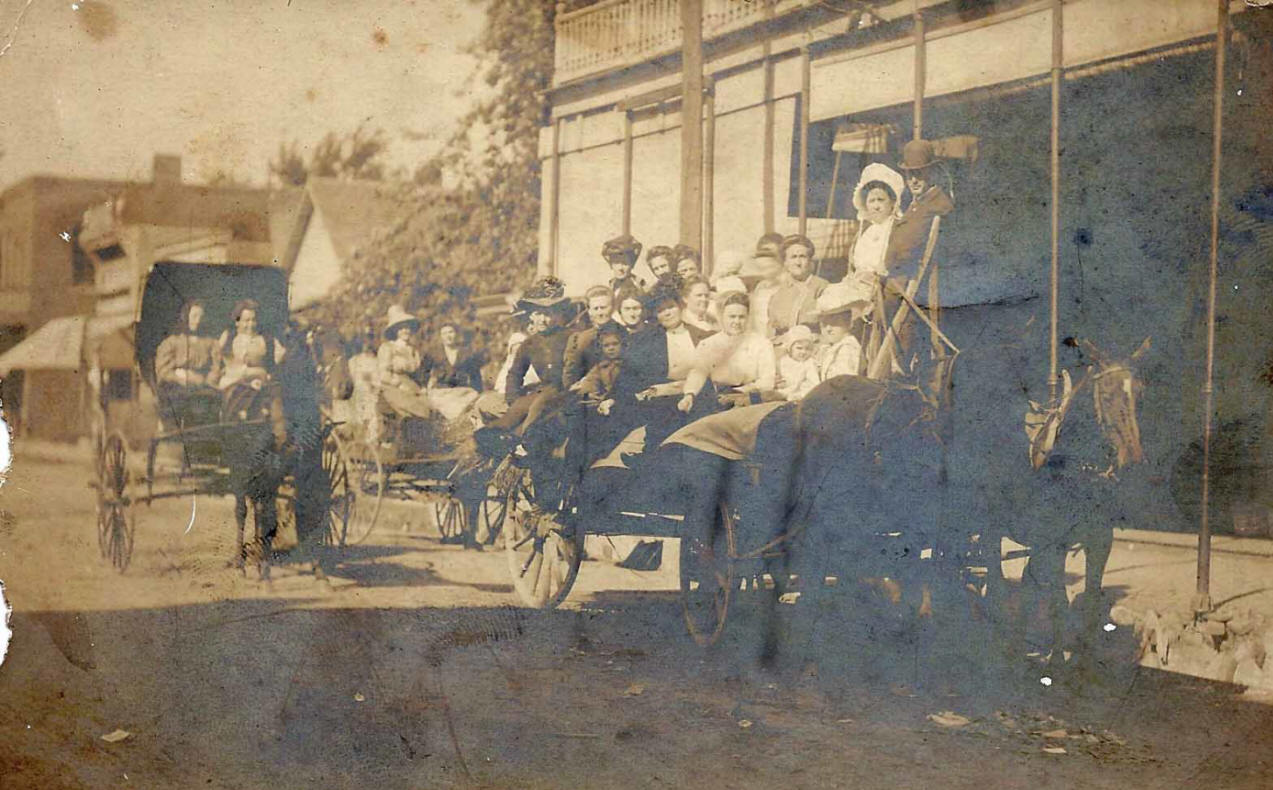
(B-47b) In the background in above picture, Killie's grocery, Cox's Restaurant, the tree in front of Mrs. Dennis' house and millinery shop, and the barber shop.
The far right corner was Wetter's saloon, later the newspaper office, but later a vacant lot.
(Information from “Kinmundy – Railway to Thruway (1857 – 1957”)
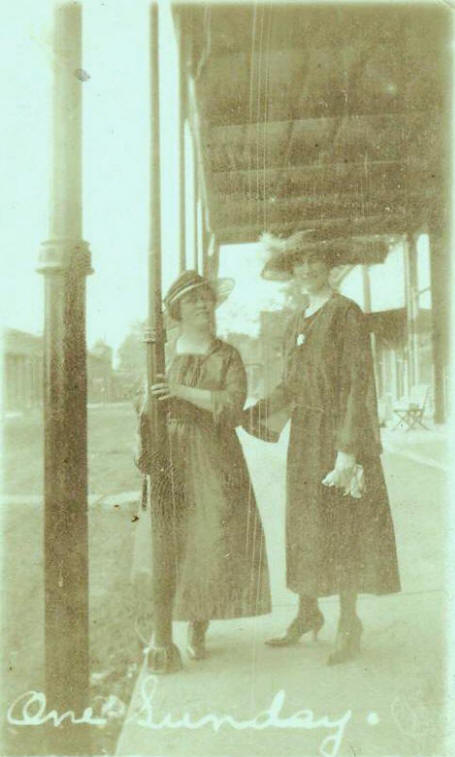
(B-120) Downtown Kinmundy with Bertha Curry and Pauline Johnson
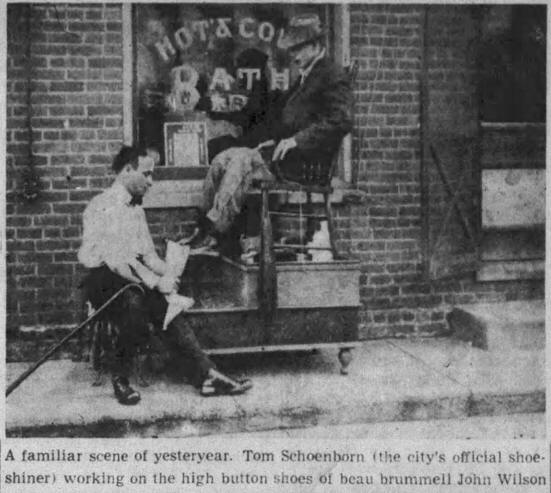
Tom Schoenborn (the city's official shoeshiner) working on the high button shoes of John Wilson.
"Tom was born in Kinmundy Dec. 31, 1878. Here he attended school and here he grew to manhood under a great handicap. When 2 years of age, he was taken ill with a fever which left both legs underdeveloped. While still a child, he moved around with the aid of a small wagon and by walking with his hands. After growing to manhood, he was able to walk with the aid of a cane. His last few years were spent in a wheel Chair. For a Livelihood, Tom Shined shoes in his younger days. Then the younger fellow referred to him as "Tom Shine". He left about 1919 for Kingsley, Iowa, where he prospered at his vocation until ill health began to overtake him."
- "The Kinmundy Express" - Aug. 3, 1950: (From Zatso column): "I recall when Otis PENETON had a shop in the building which is now occupied by the Building & Loan Association. He had three chairs. Otis worked one chair, John HAMMER worked the second one, and John CURRY worked the third one. They were kept busy most of the time in spite of there being four other shops in town. Tom SCHOENBORN was the shoe-shine boy and general flunky. He was kept pretty busy shining shoes and selling baths. You see, in those days, there weren’t very many bath tubs. So if a young fellow wanted to be extra clean, he went to the barber shop for a bath.”
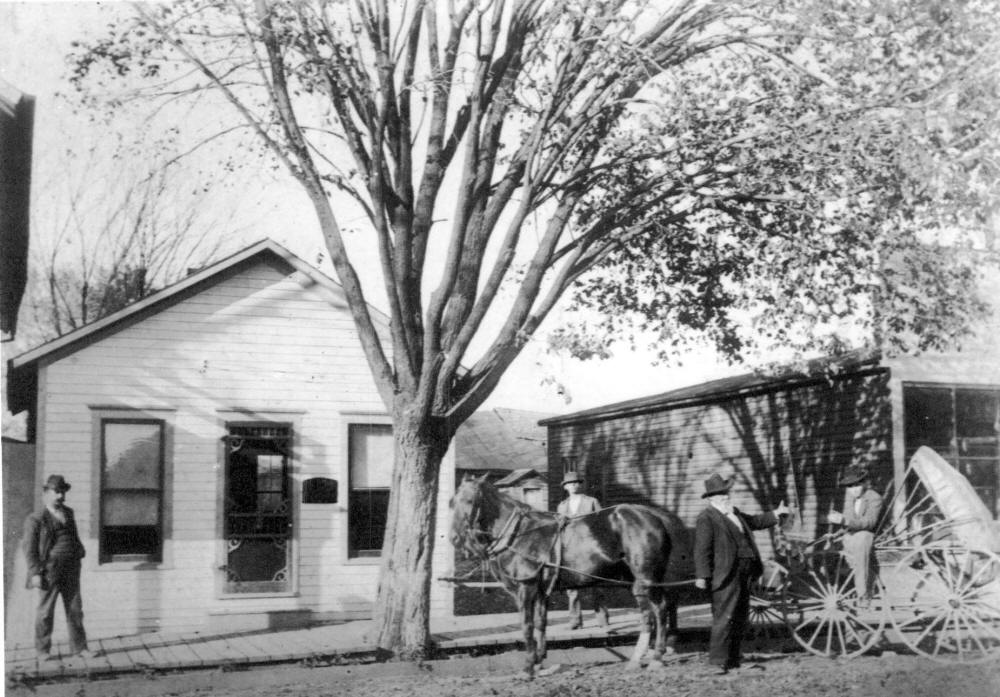
(B-81) "Doc" Smith talking to Clay DeVore in the buggy. This is in front of Smith's office which still stands on West Third Street (in 1957).
Looks like Jim Posey in the background. The other man is not identified. (“Kinmundy – Railway to Thruway (1857 – 1957”)
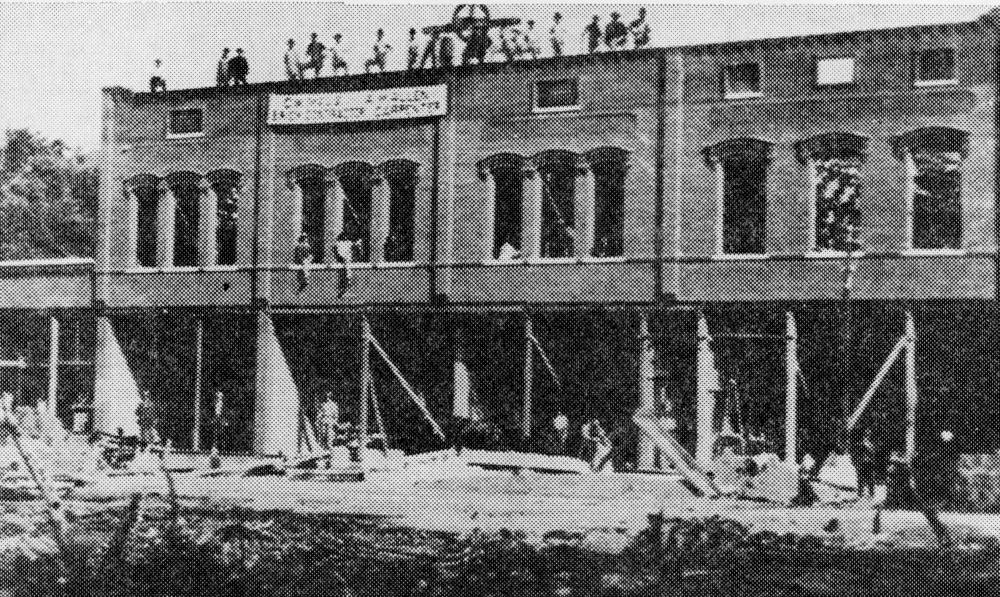
(B-97) Rebuilding the opera house after the fire of 1903.
(“Kinmundy – Railway to Thruway (1857 – 1957”)
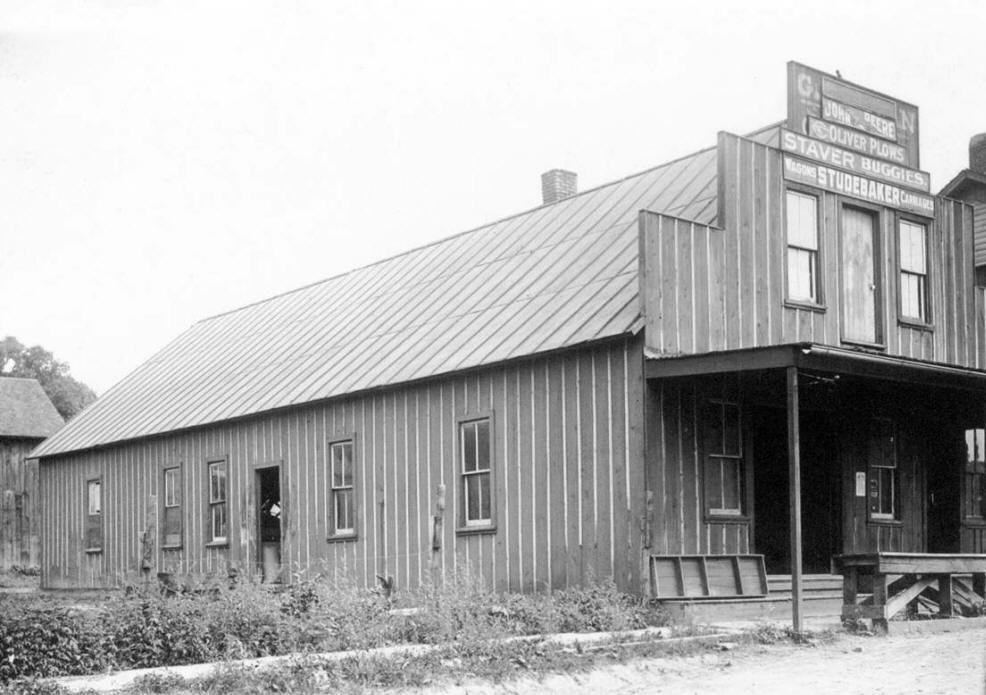
(B-75) White
Feed Store owned by George white - circa 1911.
Located at the 100 block of Madison Street.
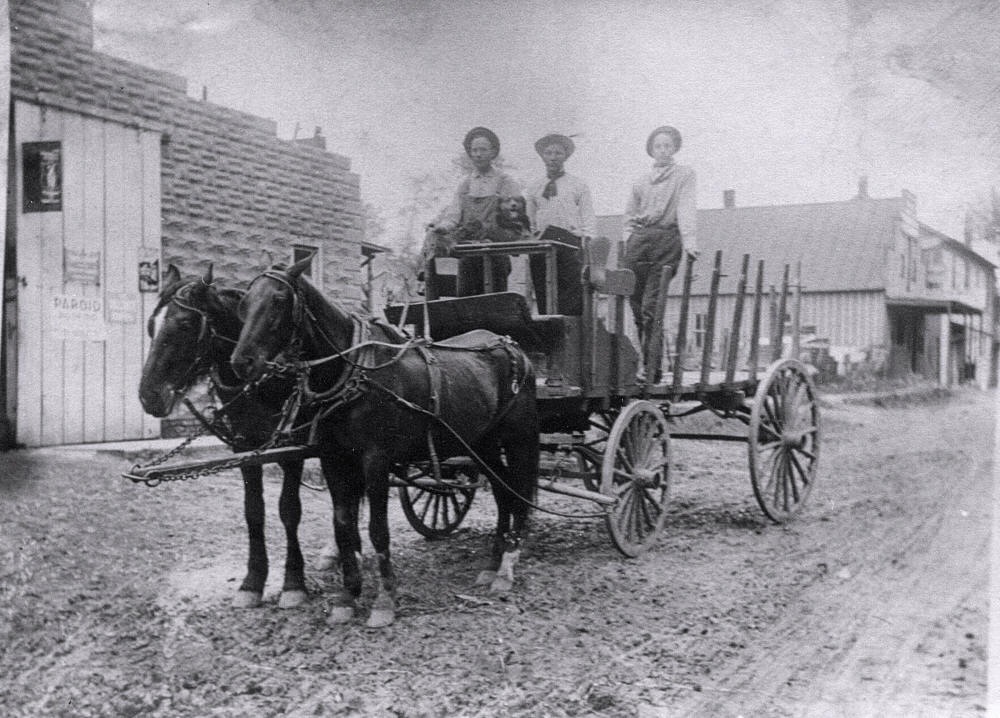
(B-76) White's Feed Store is back on the left side.
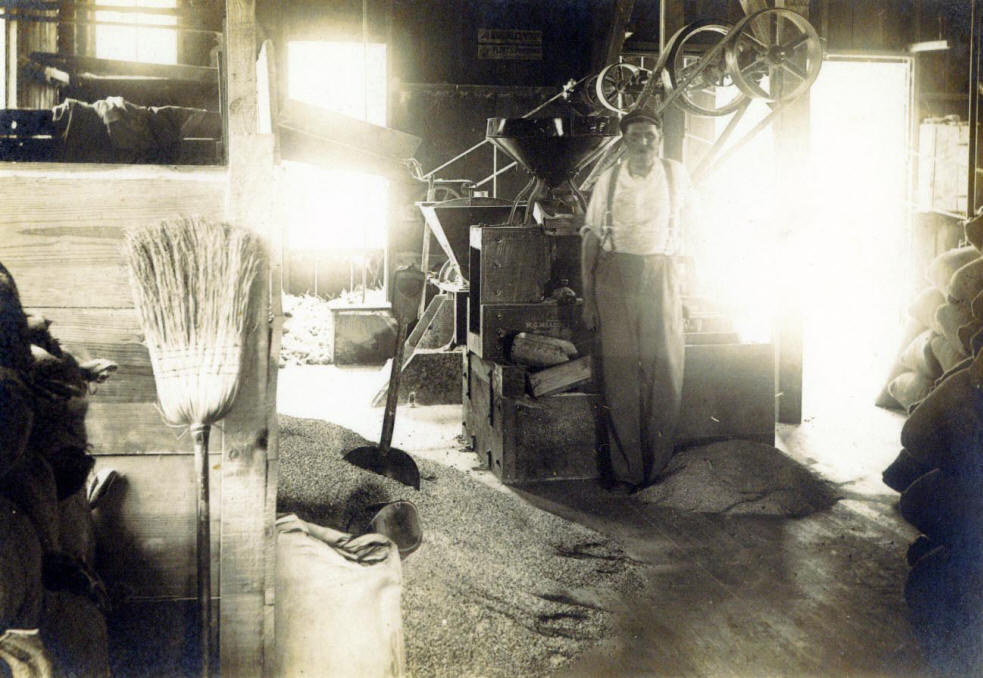
(B-146) George Washington White’s Feed Store (Glen White’s grandfather). They made feed there.
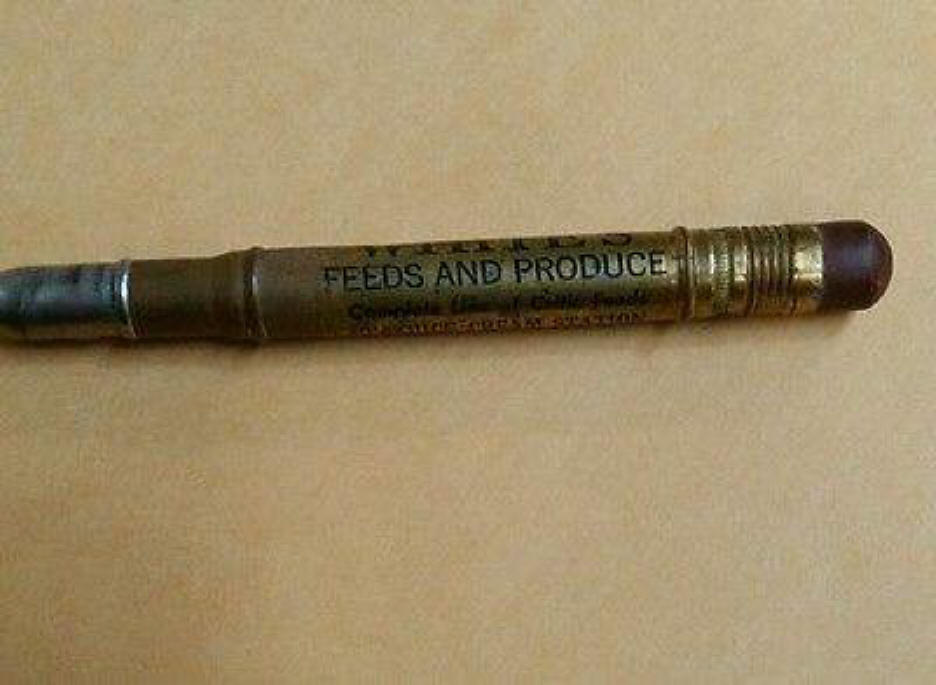
Pencil from White's Feeds and Produce
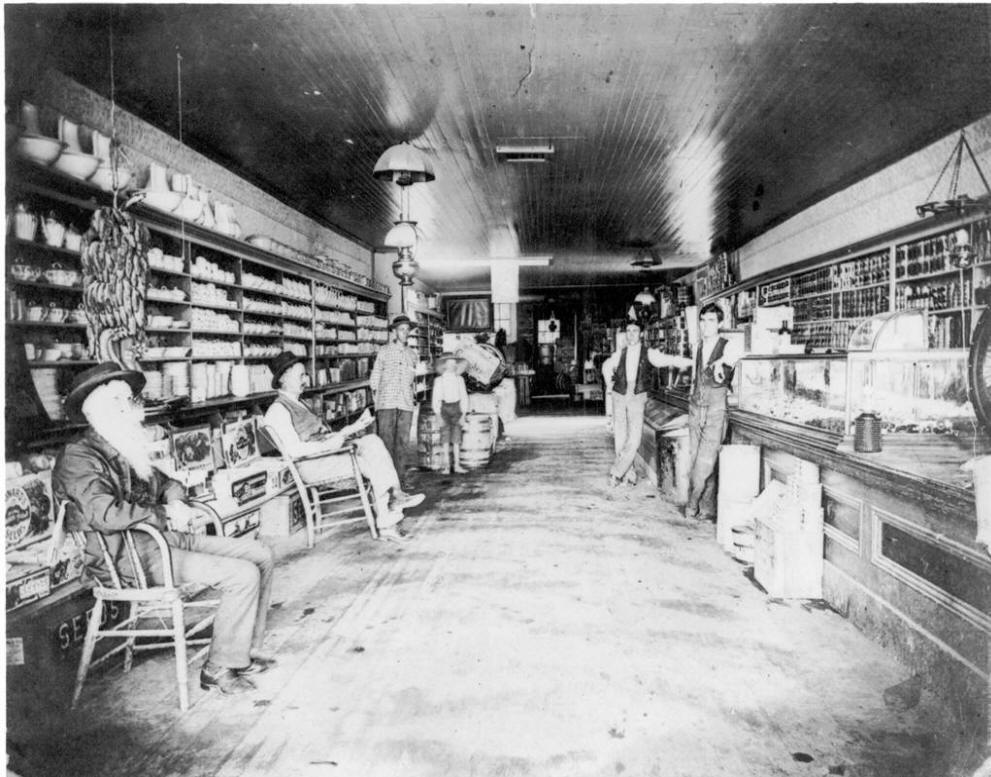
(B-148) “Dan Gunn’s store on 3rd street about 1898. Seated are William Coleman (night watchman) and Abe Songer,
Standing: Tolley Mendenhall, unidentified boy, Homer Foster, and Fred Killie”
(“Kinmundy – Railway to Thruway (1857 – 1957”)
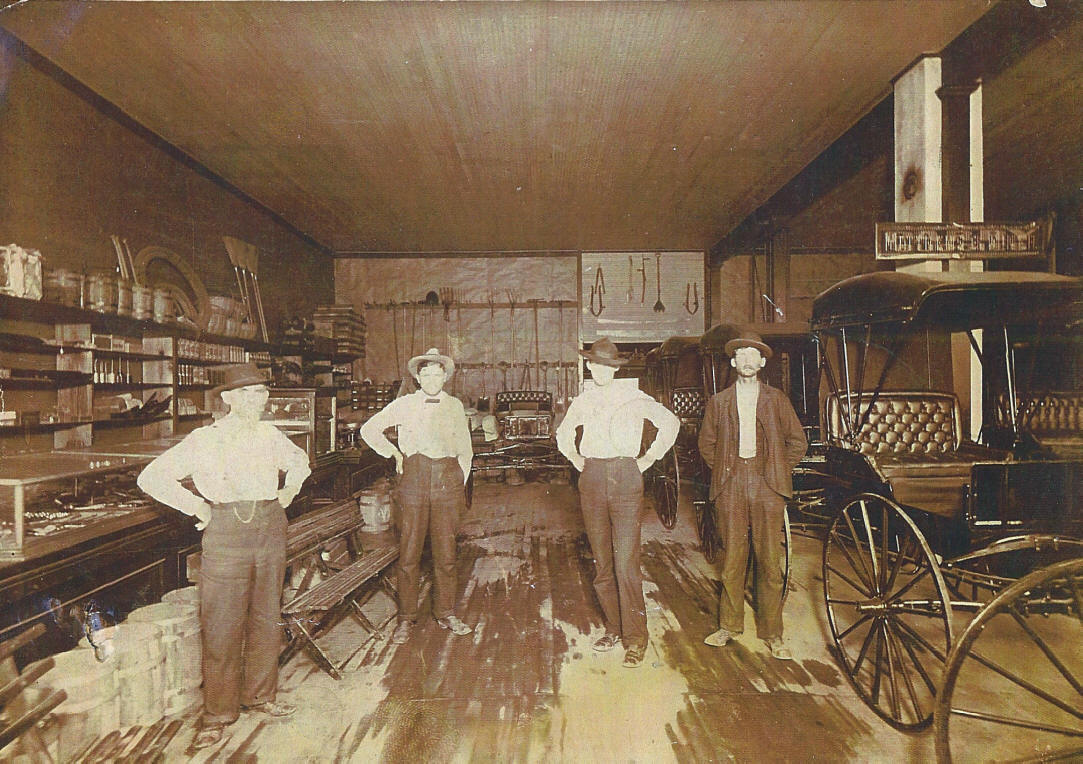
(B-160) Leander C. Mathews Store - 1905. Mr. Mathews is on the far left.
This building was later used for A.C. and Carl Dunlap's Plumbing and Sheet Metal store.
It sat on the corner was the new bank later was built.
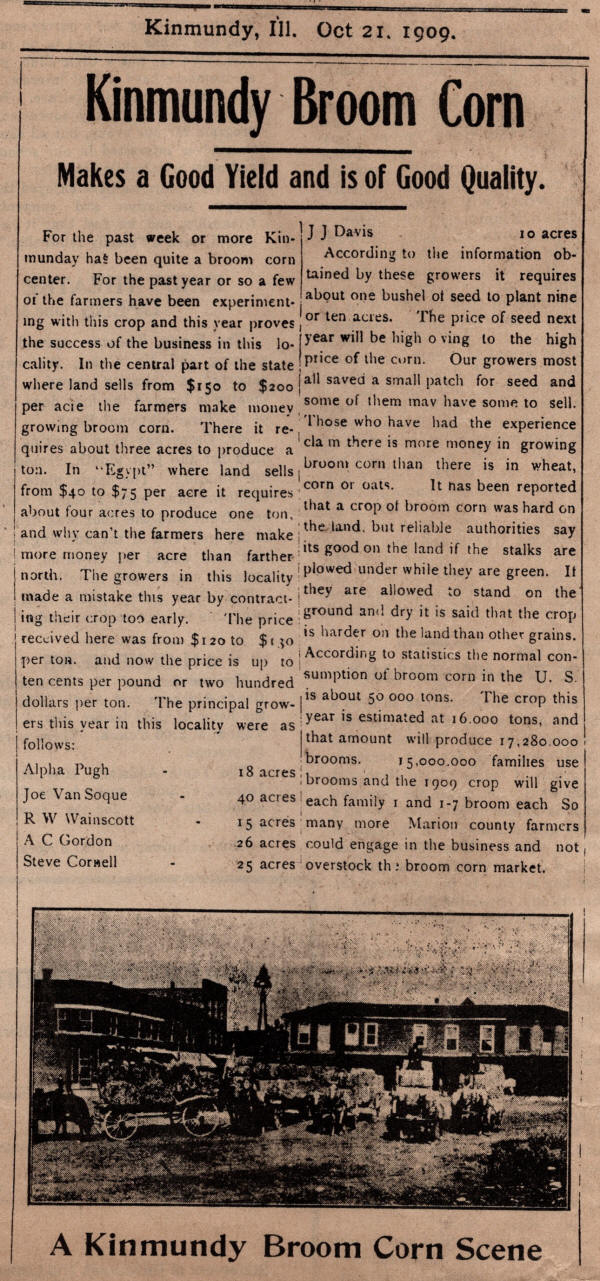
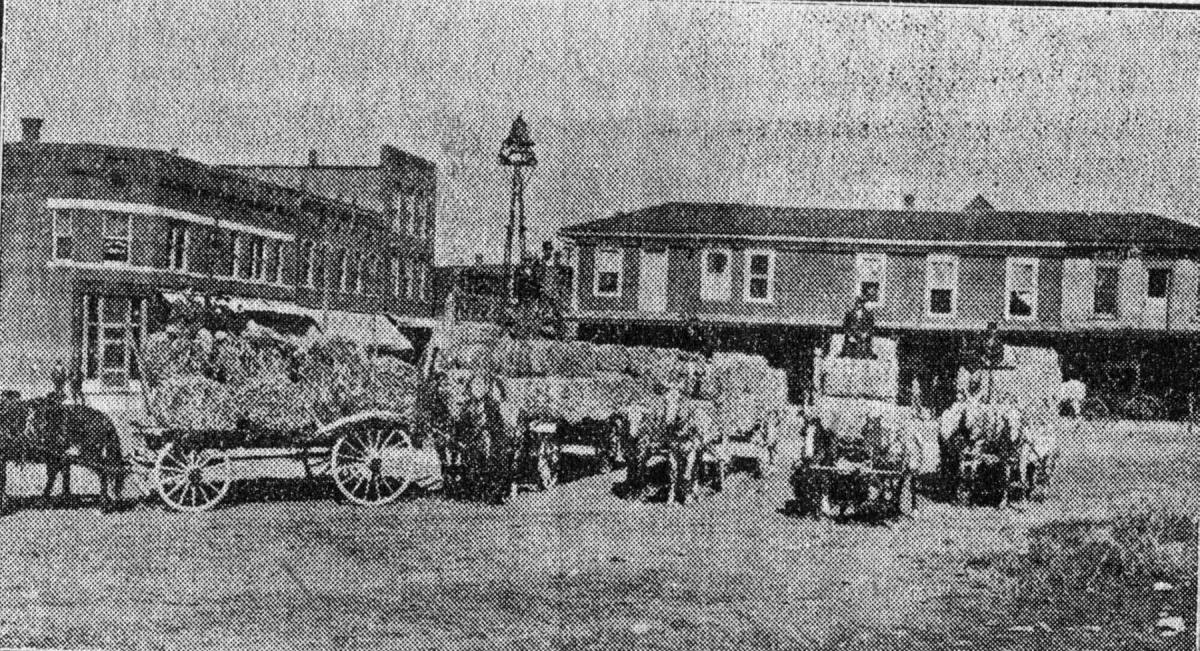
(B-71) “Kinmundy Broom Corn Wagons” – “The Kinmundy Express - Oct. 21, 1909
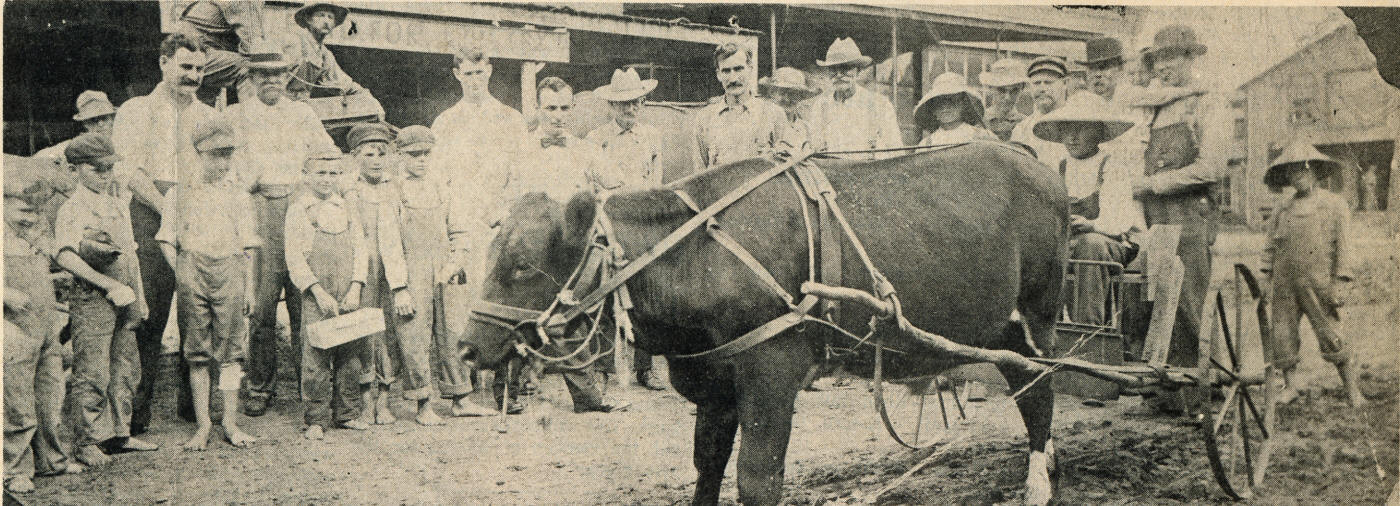
(B-169) "When the Jasper Boys Drove to Town": (Reprinted in "The Kinmundy Express" - Apr. 22, 1948")
"A familiar scene on Main Street here in Kinmundy Forty Years Ago"
"Yes sir, the picture below was taken right in Kinmundy on Main Street forty years ago. We call it Main Street because most of the business houses are located on this street and always have been. The real name is Madison Street. And this picture was taken right in front of the Company Store which served the people of this community for several years and about twenty years ago, crumbled to the ground. At the time this picture was taken, this store was managed by Frank Hensley.
But if you will notice in the background, the Matthews Building still stands and is familiar to all of us. It is now occupied by A.C. Dunlap and Son.
Now before reading any further, look at the picture and see if you can identify any of the men and boys.
This picture was sent to us by the Honorable Thomas Schoenborn, Town Clerk of Salisbury township, Sangamon Co., Illinois. It was sent to him by Mrs. Ellis Wolfe of Centralia, who found it among her archives a few weeks ago.
August Jasper, living northeast of this city, produced three steers one year. He also produced three husky farm lads, namely John, Arthur, and Chris. And these boys, being typical farm lads, broke two of these steers to ride and one to drive. This was their past time on Sunday afternoons and rainy days. And they were pretty well broke, both the steers and the boys. You can plainly see that it took some genius minds to concoct a cart of this kind as well as some harness to fit this purpose.
But in time, all steers outlive their usefulness and must go the way their owners intend them to go, over the meat block. So August Jasper made a deal with Frank Hensley and the Hensley Store became the new owner of the steer. And he was promptly delivered to town in this fashion.
Myron Hammer confesses to us that he and his brother, John, who were the butchers for Frank Hensley played the part of the villans and killed this steer. Now Chris Jasper didn't tell us, but we'll bet anything the three Jasper boys didn't eat beef for a whole year.
We did not learn who snapped this picture but we rather surmise it was taken by O.N. Tyner, who was doing photography at that time. The picture was rather brown with age so we copied it in order to get a clear cut.
Now that you have looked it over and made your guess here are the names of the men and boys reading left to right: The two boys on the extreme left have not been identified. The next three boys are Stafford Buswell, Laverne Gray and Harold Boughers. In the wagon standing is Ira Conant and seated is August Jasper. The head in the left background is Rube Downs. Then you see John Nelms, John Doolen, John Hammer, Tom Schoenborn, William Bouseman, Frank Nelms, O.P. "Farmer" Jones, William Hammer, Arthur Jasper, Clifford Downs, Frank Climer, O.P. Vallow, and the next gentleman is Albert Dunlap and his son Carl. The lad at the extreem right is Raymond Gardner and the boy driving the steer is John Jasper. Did you have them all right?"
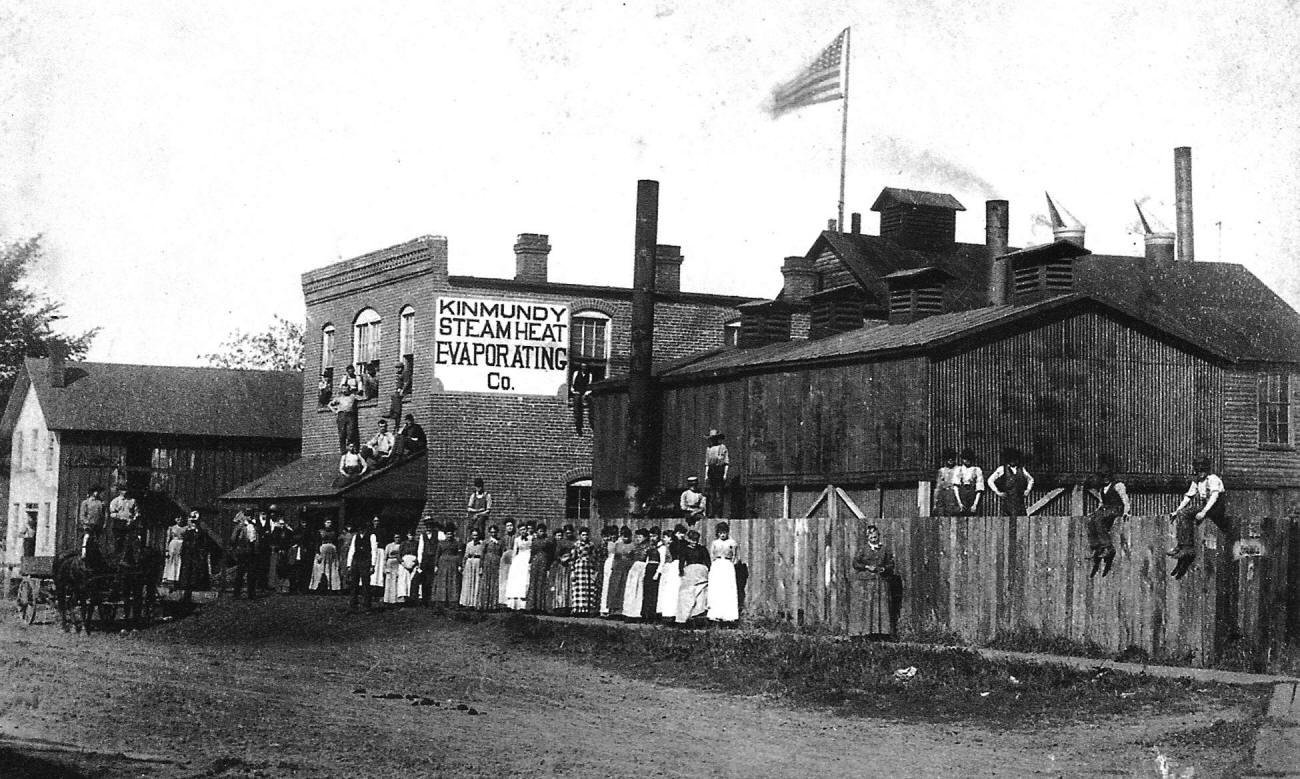
(B-65c) Kinmundy Steam Heat Evaporating Co. located in the 100 block of East Second Street. There were 2 or 3 in town at one time.
"The Mendenhall Evaporator was started on July 4, 1890, and in 1891 F.A. Pruett started one. In those days before freezers, drying fruit was a big business.
Frost's Lumber yard in the background. These both burned in the 90s. The Mendenhall family and employees are shown."
(“Kinmundy – Railway to Thruway (1857 – 1957”)
This building was located on the northeast corner of Jefferson and 2nd (which was where Carl Dunlap later built a house in the 1940s) according to Dorothy (Dunlap) Geiler.
.jpg)
Kinmundy Fruit Package Factory
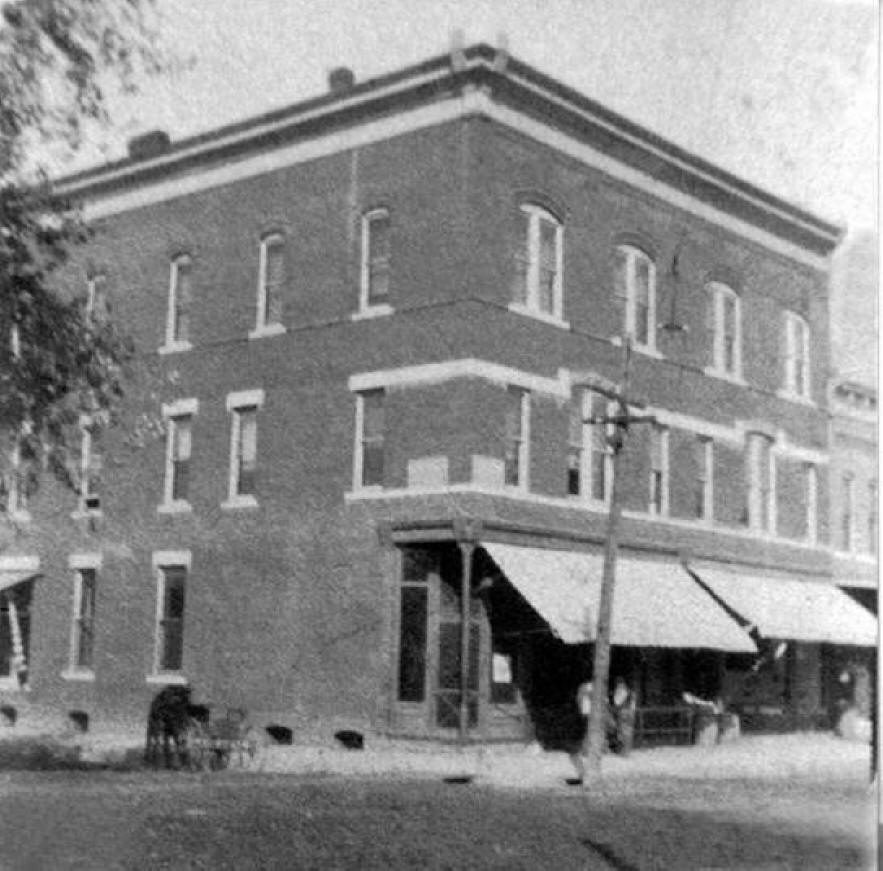
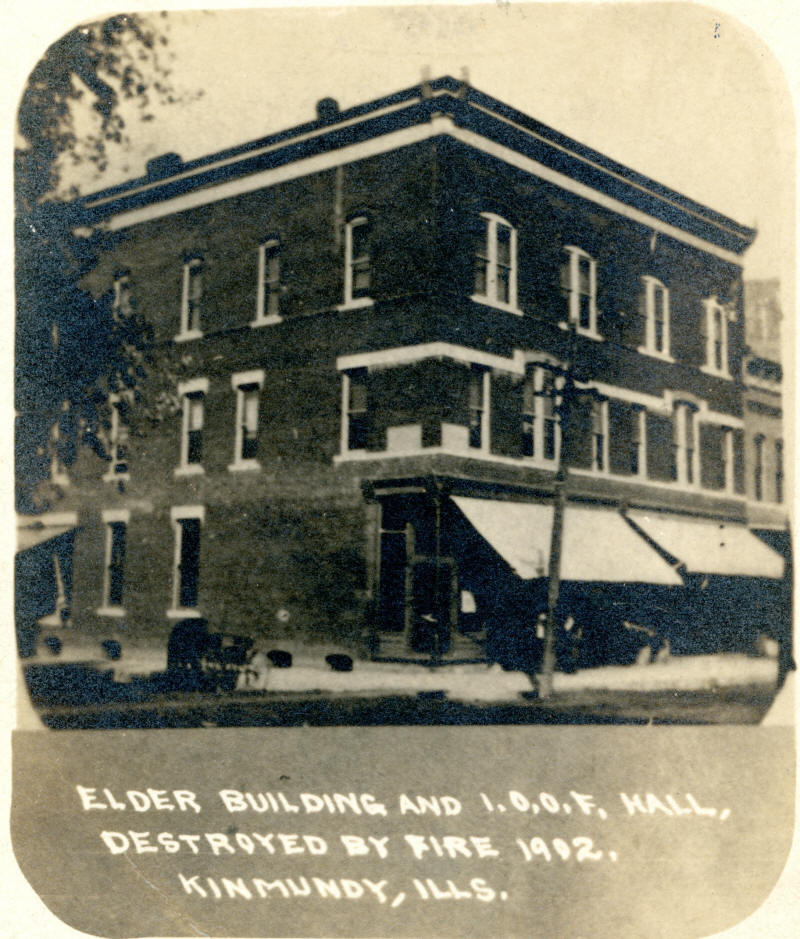
(B-52a) The Elder Building & I.O.O.F. on the corner of Madison and 3rd street.
On March 19, 1902, the First National Bank of Kinmundy opened for business on the corner of Madison and Third Streets.
In 1902/1903, this building was destroyed by fire, however, it was rebuilt and the First National Bank was rebuilt in 1906 as 2 story.
This picture was taken between 1890-1900.
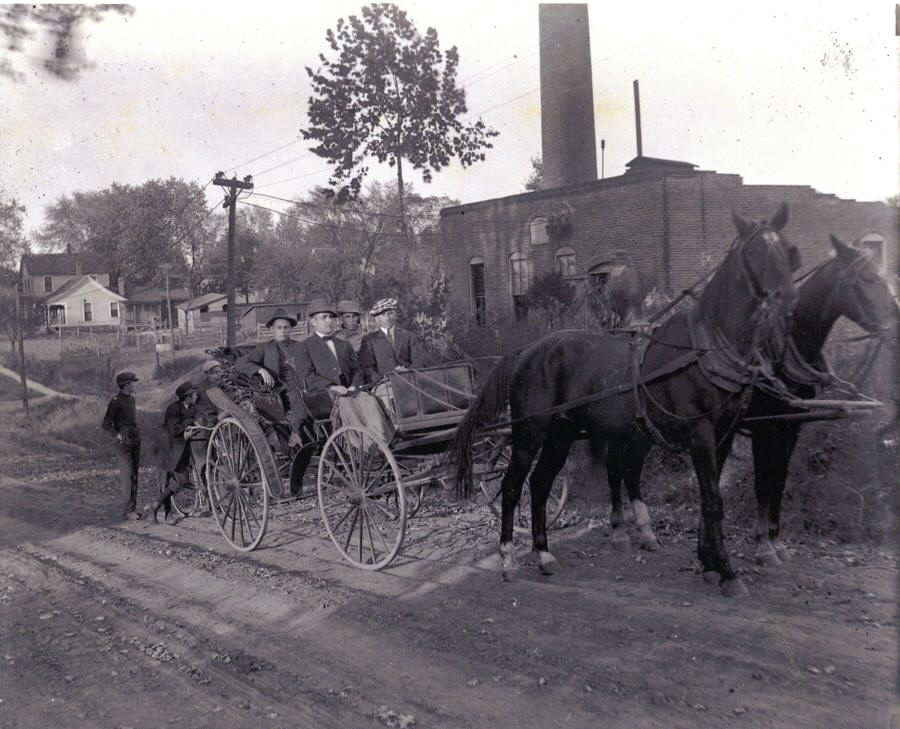
Horses and carriage in front of old Kinmundy Light plant located on South Jefferson Street between 4th and 5th Streets
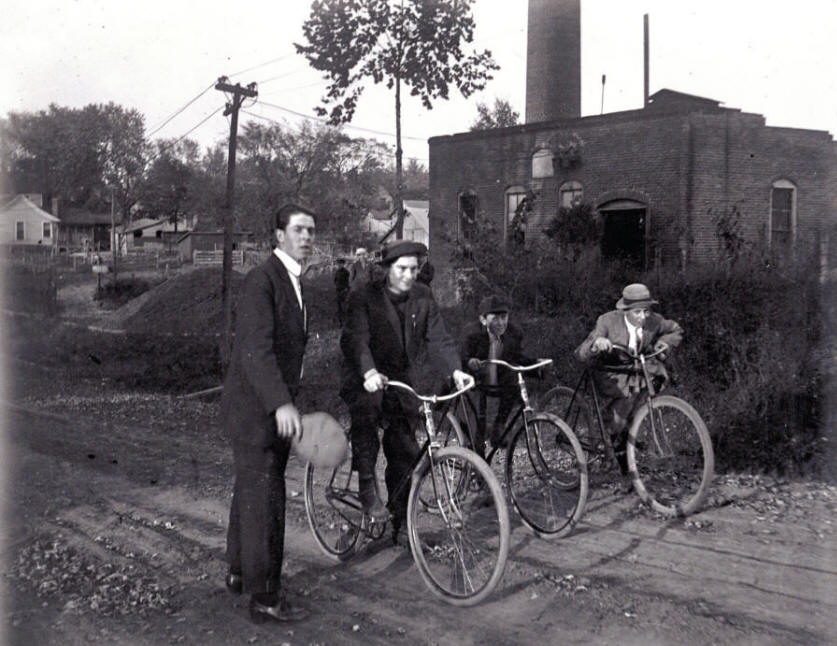
Bicyclists in front of old Kinmundy Light plant located on South Jefferson Street between 4th and 5th Streets
%20B-42%20-%20Elwyn%20Cheatum%20slide.jpg)
(B-42) Kinmundy Light Plant (400 block of S. Jefferson) on east side of the street. This is now a vacant lot.
From the Kinmundy Centennial book: "The old light plant, whose whistle sounded for all the fires and wrecks, as well as the basketball victories.
It furnished electricity from dusk to 10 or 11 p.m.. You were supposed to be home by then. You heated your irons, and cooked on coal or wood
stoves, and cooled with ice, so you didn't need electricity in the daytime."
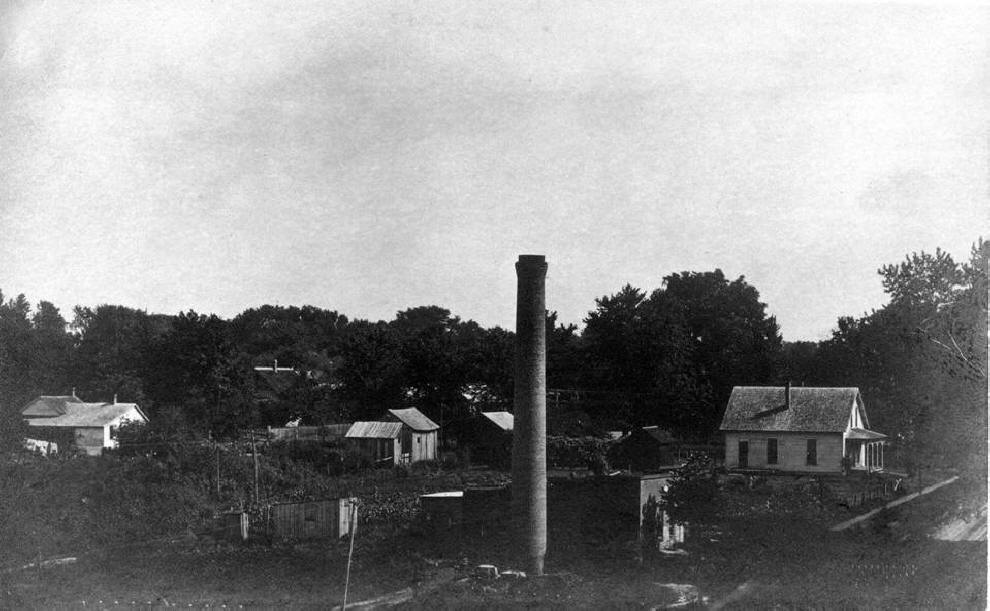
(B-43) Kinmundy Light Plant (400 block of S. Jefferson) - distant view
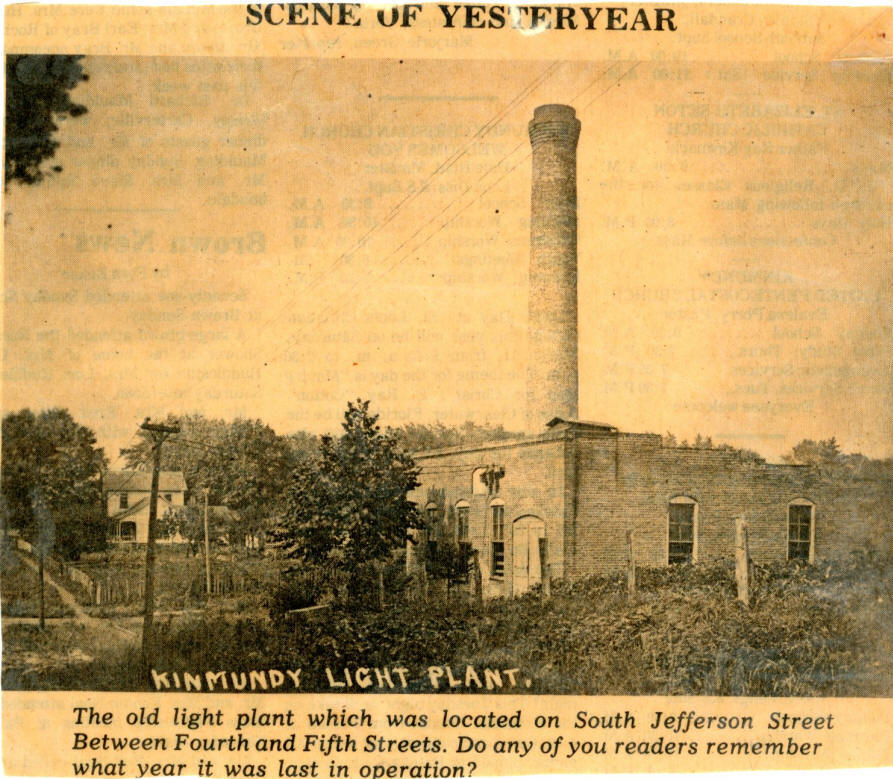
Kinmundy Light plant located on South Jefferson Street between 4th and 5th Streets
%20B-93.jpg)
(B-93) Kinmundy Light Plant
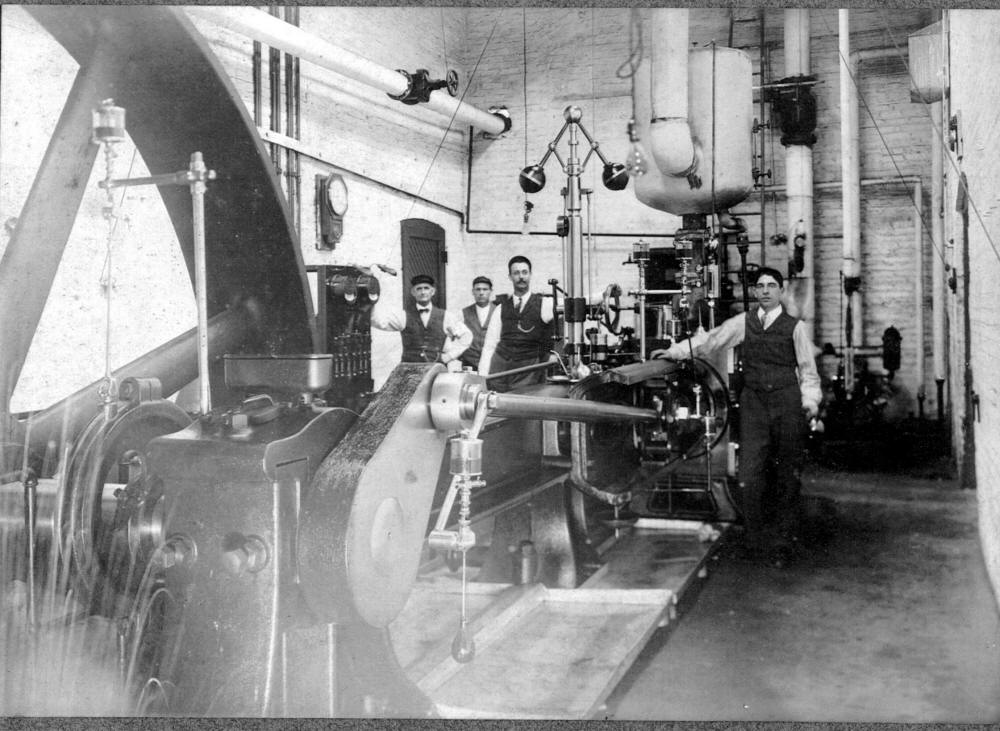
(B-110) Utility photo
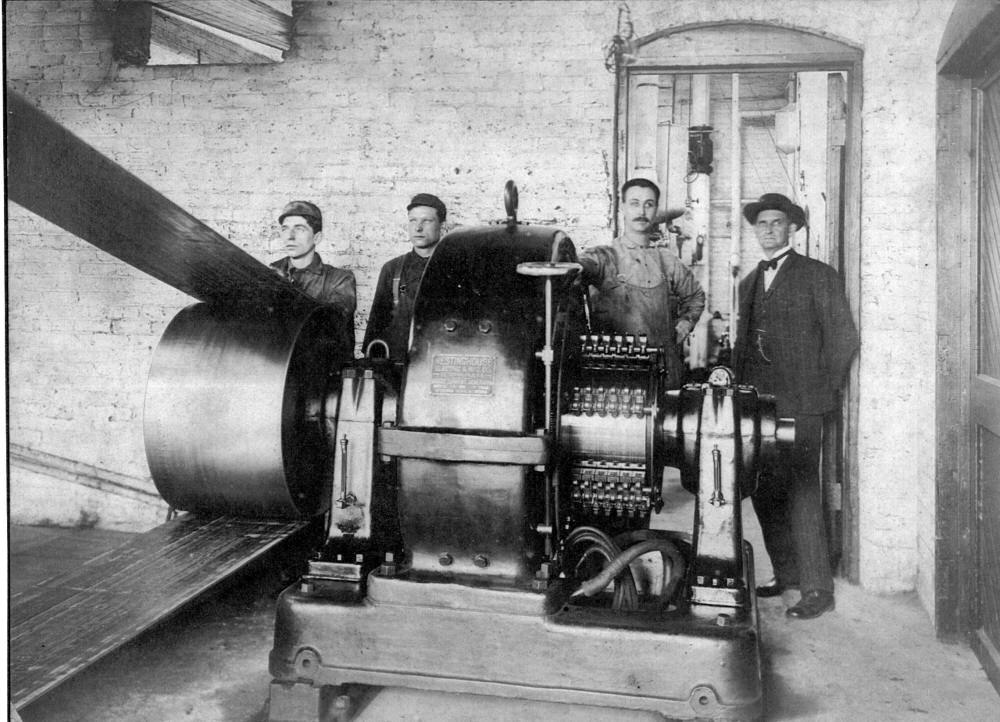
(B-111) Utility Photo
"Centralia Sentinel" - Aug. 1, 1872
(Kinmundy Items column - July 30, 1872) - "Improvements - SONGER Bros. are erecting a three story frame addition to their Flouring mill, to be covered with heavy sheet iron, on all sides, in order to make it fire proof. Considerable credit is due them for their enterprising spirit."
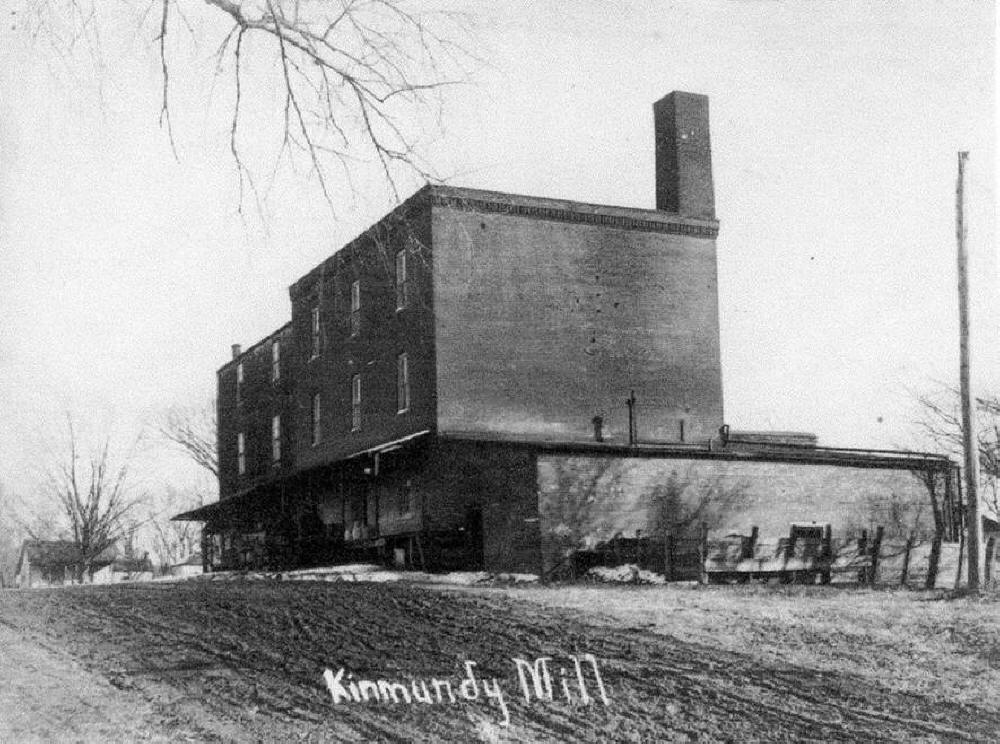
(B-40) Songer Mill located at the 200 block of W. Sycamore St. Later this became Ingram's Mill.
“The old Songer mill, which was built in 1868, and made flour and corn meal till milling became the specialized business it now is.
The Ingram brothers ran it many years and now Ingram sons ship the grain for the community. They are descendants of the first
James Harvey Gray.”
(“Kinmundy – Railway to Thruway (1857 – 1957”)
c.jpg)
Centralia Sentinel newspaper article during the Kinmundy Centennial - 1957
%20color%20B-40f.jpg)
(B-41f) Kinmundy Milling Co. - Songer / Ingram Families
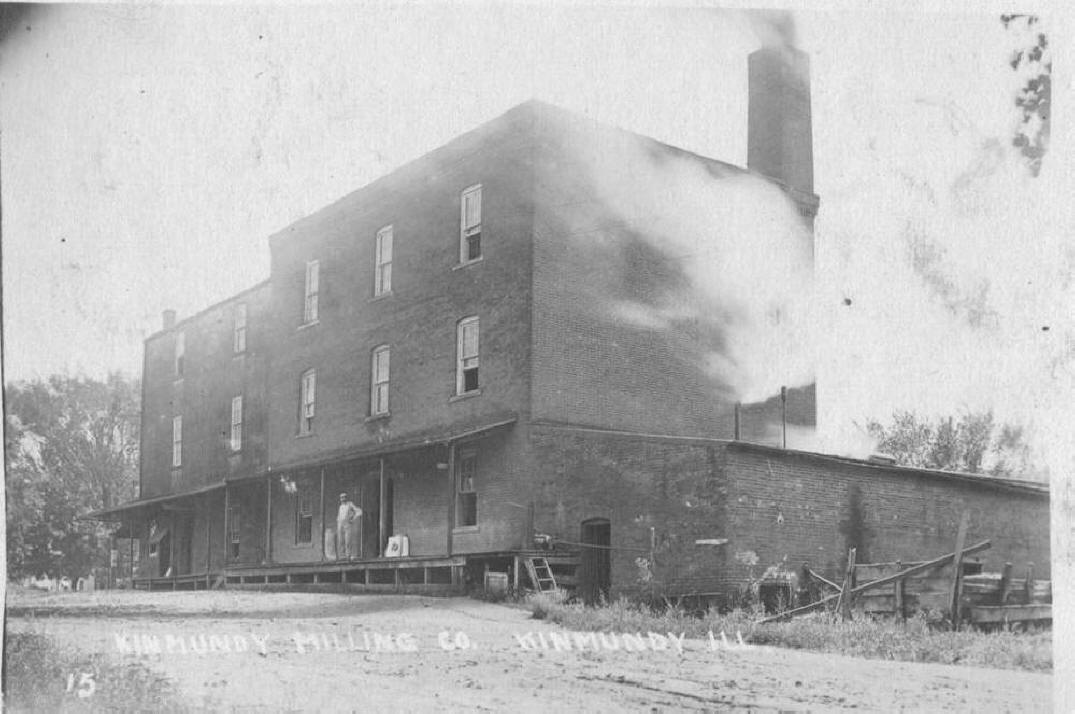
(B-41b) Kinmundy Milling Co. - Songer / Ingram Families
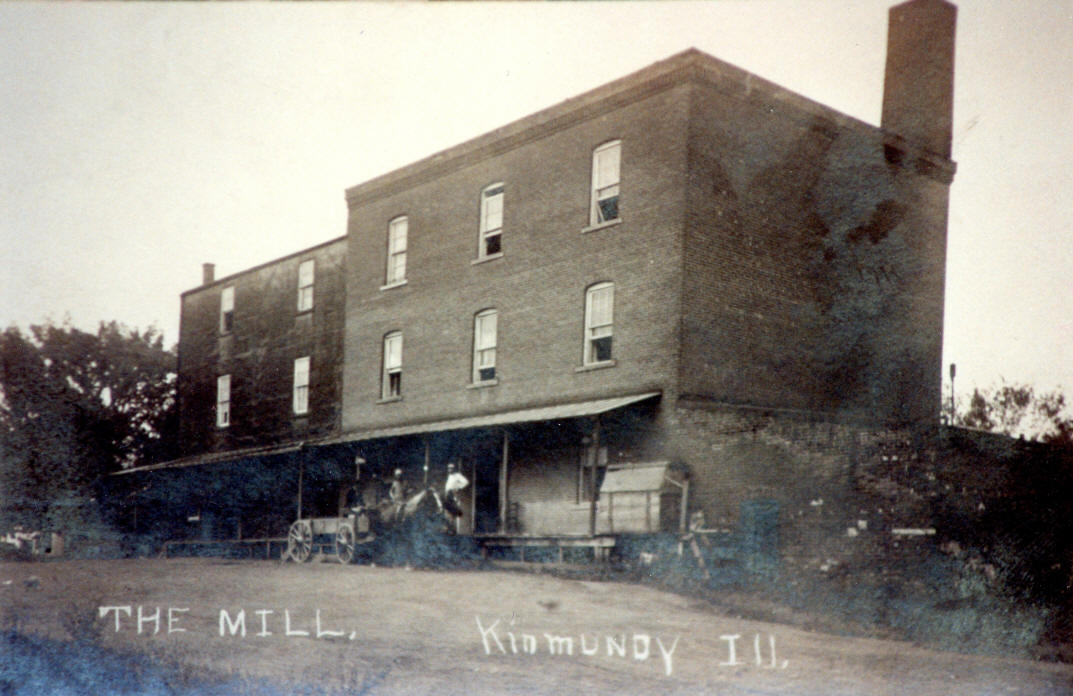
Kinmundy Milling Co. - Songer / Ingram Families
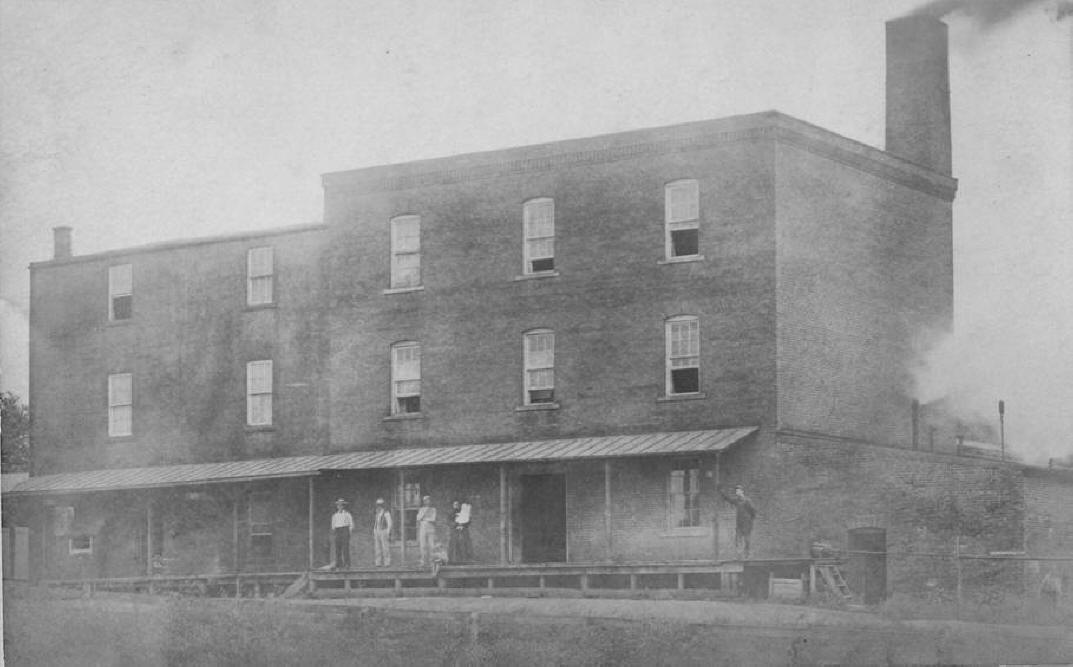
(B-41e) Kinmundy Milling Co. - Songer / Ingram Families
INGRAM’s Mill, Flour and Feed Merchants: This firm was established in 1928 by R.L. INGRAM and his sons, Elwin, Dwight and Joe. This mill was built in 1867 by Giles and Abe SONGER. This was the pride and joy of Kinmundy in those days. Farmers came from miles around to have their wheat and corn milled. After the death of Giles SONGER, the business was carried on by his brother, Abe. In April 1907, it was acquired by Mr. W.C. INGRAM and his 2 sons, R.L. and I.D., with a few shares of stock scattered about town. In 1913, all of the stock was taken over by W.C. INGRAM, Robert L. INGRAM, and Nellie HOUSTON. And then in 1928, Robert L. INGRAM and his sons became the owner of it. The old mill has made many a barrel of flour for southern Illinois, but with the passing of soft wheat flour, so passed the main output of this mill. In days gone by, it furnished much employment for our city but now it is being operated by Mr. INGRAM and his 3 sons. The main output now is corn meal. They also grind and mix feeds. They are in the jobbing business now on a large scale, wholesaling and retailing several different commodities besides flour and feed. Robert L., son of William C. and Mary GRAY INGRAM, was born in Kinmundy on March 26, 1880. On Feb. 20, 1907, he was married to Miss Agnes EAGLESON of Calhoun, Ill. in Seattle, Wash. They have 3 children: Elwin, Dwight and Joe. Mr. INGRAM’s entire life has been spent in this community with the exception of a few years spent on the Pacific Coast where he bought grain for the Portland Milling Co. Before going west, he worked for his father and grandfather, uncle Harvey GRAY. He is a member of the Masonic Order, served Kinmundy as it’s Mayor for 4 years, was alderman for 8 years, was a member of the Board of Education for 15 years, and is now serving his 13th year as director of the Kinmundy Building and Loan Association. ("The Kinmundy Express" 50th anniversary edition - Nov. 9, 1933)
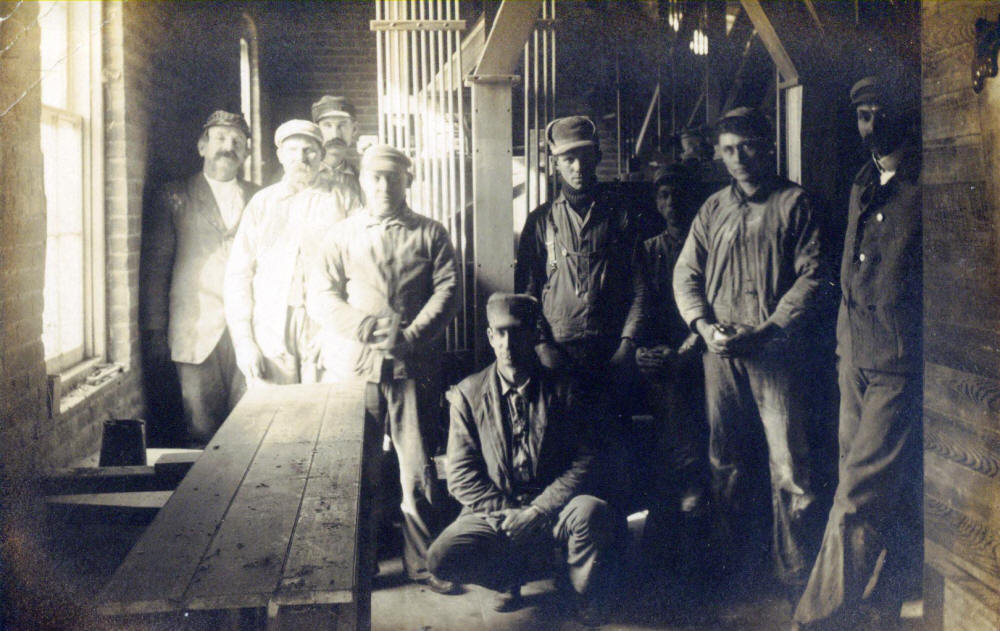
(B-145) Ingram's Flour Mill
(It appears to be Isaac Denton Ingram squatting in the front)
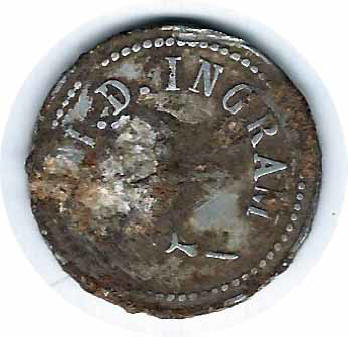
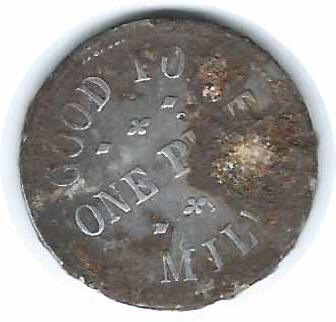
Token for I.D. Ingram business (front and back)
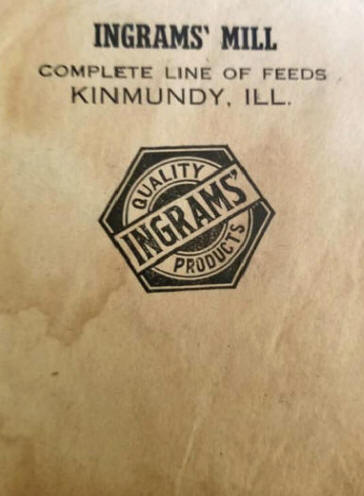
Ingram's Mill
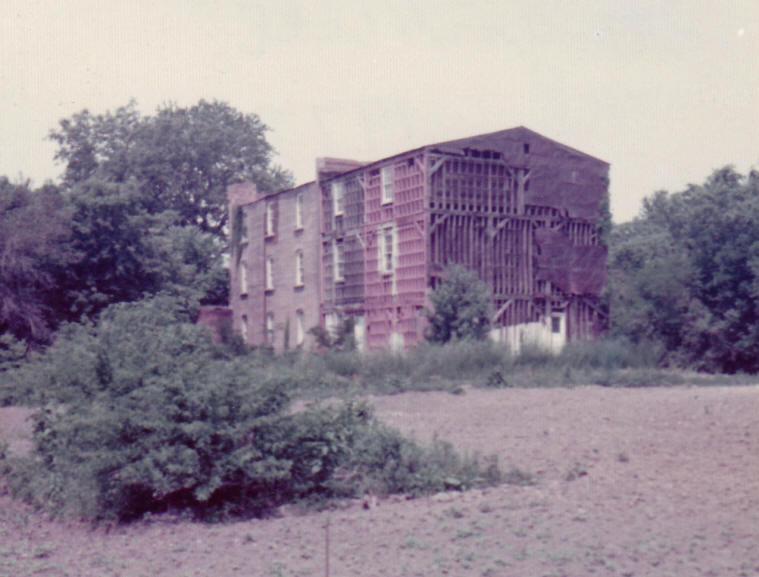
Songer Mill / Ingram's Mill - photo taken from back in 1977.
Sam Jones in front of the Old Mill Pond of Ingram's Mill
%20fix.jpg)
Ingram Mill in Kinmundy by Dean Love (Marion County, Illinois 1976 Calendar)
.jpg)
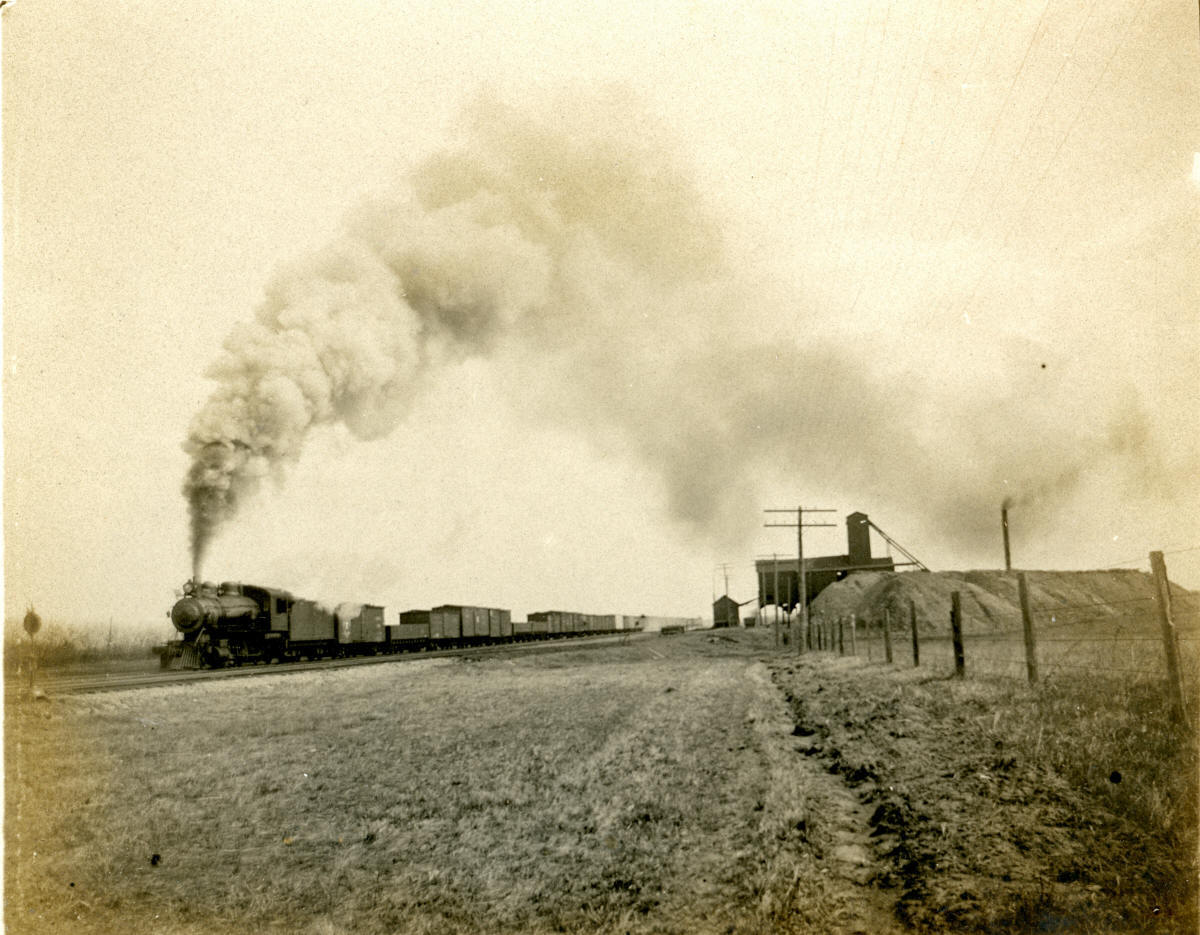
From the Kinmundy Centennial book in 1957:
"23" passing the old coal mine. The Illinois Central south-bound came in at 5:23 p.m. and you came back on it from a day spent in Farina. The pupils from Alma went home from school on it instead of buses."
.jpg)
(B-100) The Kinmundy Coal Mine which was located ¼ mile north of the grade school (810 E. 1st St.) just east of I.C. railroad tracks. It was a leading industry for 20 years.
This coal mine operated from 1884 – 1905 & closed because of high coast of operating/ not cost effective. It went down 863 ft. & was 5 ft. thick.
There was never a mine disaster or serious injury.
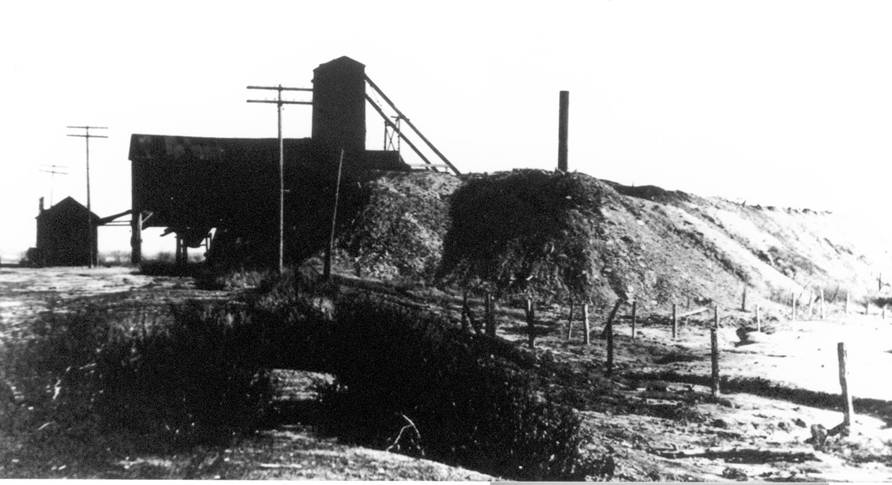
(B-101) Kinmundy Coal Mine Parallel to tracts looking north. This was the place where cars pulled under spout to dump coal.
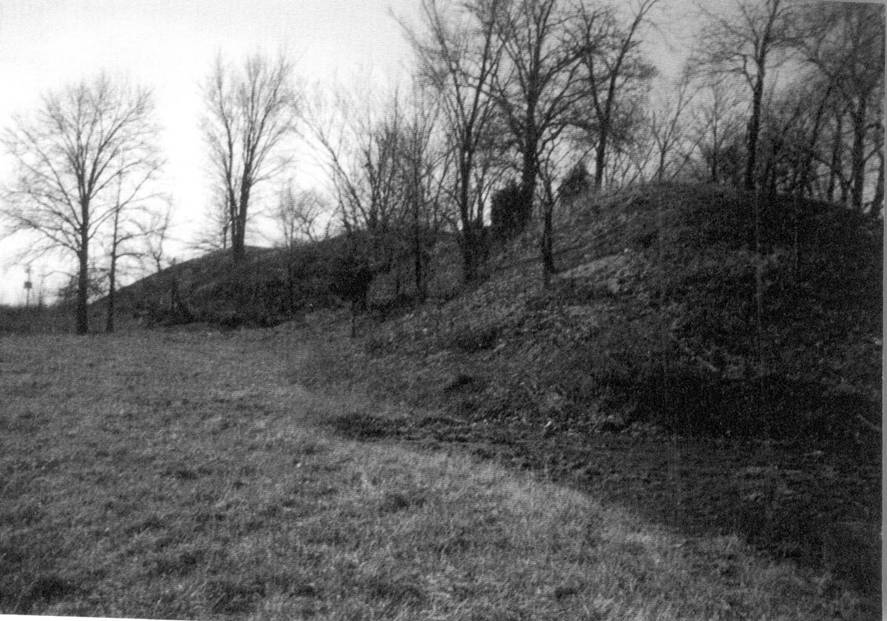
(B-102) Old Kinmundy coal mine slag mounds [taken 2004]
__________________________________________________
June 17, 1886 – “Centralia Daily Sentinel”
Kinmundy Items from Patoka Enterprise:
“The newly elected directors of the coal company together with those holding over met last Tuesday and re-organized the new board by electing B.W. BLAKESLEE, President; A.M. YOUNG, Secretary, and Thomas BAGOTT, Treasurer. Like most of our political conventions, this start was made sometime previous, and a very worthy and capable man who was efficient and faithful last year as President, Mr. J.C. HAWORTH, was, to gratify some personal spite, set aside. This action has caused considerable feeling among the stockholders, and it has blocked the wheels of progress for the present, at least.”
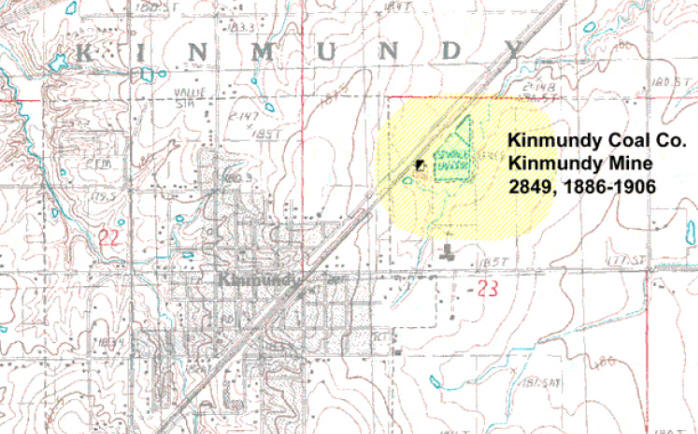
Map excerpt from the State of Illinois detailing location.
_____________________________________________________
“Republican Express” – Defiance County, Ohio - July 2, 1891
“Southern Illinois - Editorial Jottings taken on the Wing - A Country that Once enjoyed a Boom – Fruit Raising and Coal Mining”
“Egypt Defined. Some fine farms. A Glorious Country Peopled by a Hospitable Class.”
Kinmundy, Ill. – June 28th, 1891
(Excerpt from article about coal mining in Kinmundy)
Coal Mining
There is an abundance of coal under this country. Kinmundy has a mine with a decided history. It was put down by a stock company of citizens in 1886. $25,000 was subscribed and paid in. But before the mine was completed the stock was increased to $40,000 and all paid in. The first years of the mines history were discouraging to the citizens of Kinmundy in general and the stockholders in particular. $5000 or more is said to have been squandered the room and pillar system of mining before the company woke up to the fat that the Kinmundy coal was hard to be mined on that plan successfully. It is the rule in this plan of mining for the miners to furnish their own gun powder for blasting. It is also the custom of the mine operators to buy the powder at wholesale and sell it to the miners at cost. The Kinmundy coal was so hard that the blasting process proved to be unsuccessful to the miners and operators alike – unsuccessful to the operators because little coal was brought to the surface; unprofitable to the miners because many of them were owing the company for powder at the end of each settlement. The stockholders became discouraged; the mine was mortgaged to keep it running, and finally in September last, it was sold at mortgage sale for $6010. It was purchased by ten citizens of Kinmundy of whom J.W. WILSON is the president and manager, and Mr. W.W. NEIL, secretary.
The superintendent and the man that introduced the long wall system of mining so successfully, for the present operators, is a Scotchman who up to 10 years ago was a resident of Scotland and a miner there. The shaft in the Kinmundy mine is six by twelve feet and is 988 feet in depth, requiring 40 seconds at high speed to hoist or lower a car, or cage. The cars or cages, of the shaft are operated by an inch and eighth wire cable, which winds around a drum 25 feet in circumference propelled by the Double Beech Engine, each engine being of 71 horse power. The circulation of air in the mines I maintained by a system of ten foot fans which gather the air at the surface of the ground and force it into a 2 x 6 air chamber down into the mine. The foul air exhausts through the shaft of the mine.
For a radius of a quarter of a mile in either direction from the foot of the shaft of the mine has been operated and the coal is taken out. These excavations describe a perfect circle the map of which would show as follows.
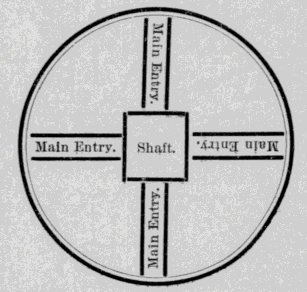
It will be understood that from each of the four main entries that extend in four directions from the foot of the shaft, as shown above, rooms, or long walls are started, and from these again minor branches and subdivision entries are started until the mine becomes honey-combed with walls, or entries, spreading out; or rather, reaching out from sub-divisions, or branches, like the limbs of a tree, excepting that all branches from the main entries of the mine are maintained in circular form. The vein of coal which in this mine is 4 feet 6 inches thick, is intersected at every 46 feet by an entry. At this entry the vein is attacked at the bottom and the vein mined into at an angle of about 95 degrees. This weakens the vein of course, and by its own weight the coal crackles and falls, and is then loaded up on cars and sent to the surface. There is said to be little danger in this system of mining, as the coal, by its loud crackling, gives warning before it falls. It is said that experienced miners can tell from 3 hours to a day before entry of coal is going to fall. All the coal the Kinmundy mine is producing at present, is used by the Illinois Central Railroad company who are under contract to use all that the mines output at 87 cents per ton. It is expected that this fall will witness a new era in the mine, as many improvements are contemplated. At present only 22 miners are at work."
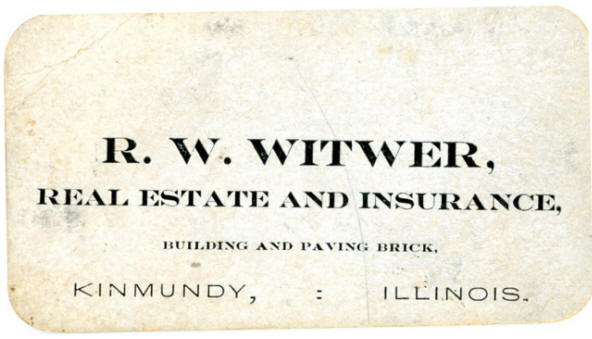
R.W. WITWER business card - Real Estate and Insurance - Building and Paving
Brick - Kinmundy
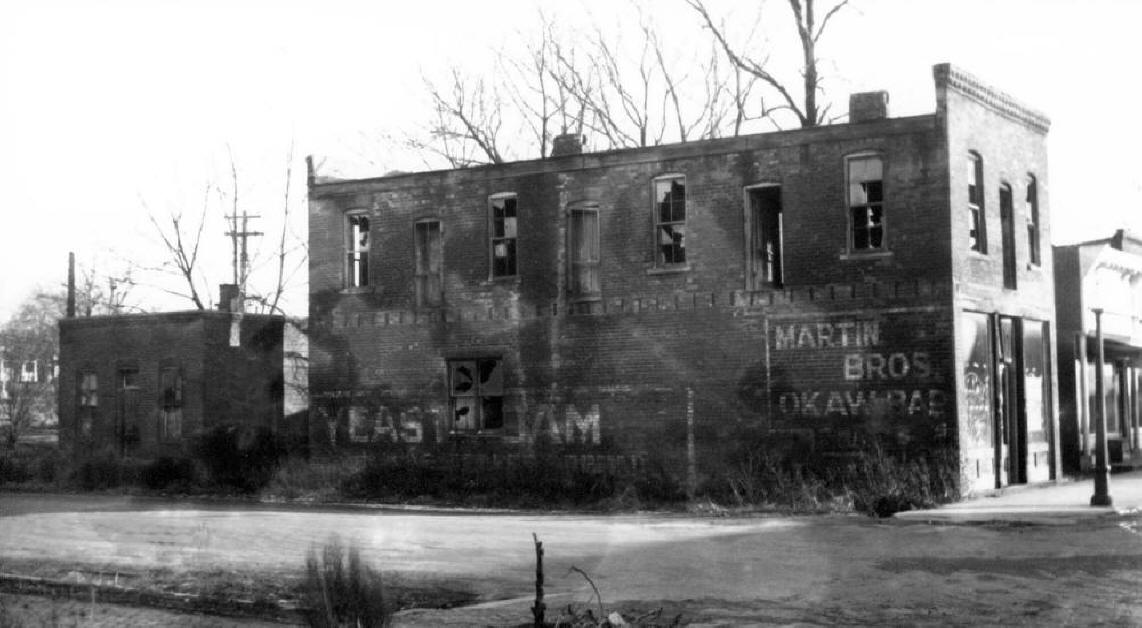
(B-61) Building located on S. Madison St. just south of the Wetter building. (This has been torn down.)
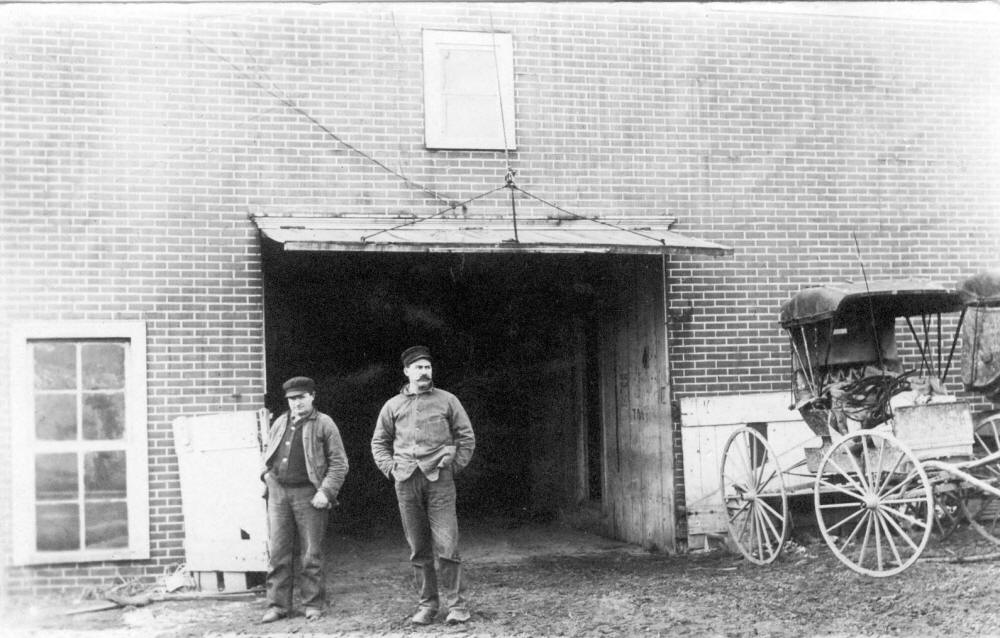
(B-62) This building was known as the old ice house and was located on the northwest corner of W. Sycamore and N. Madison St.
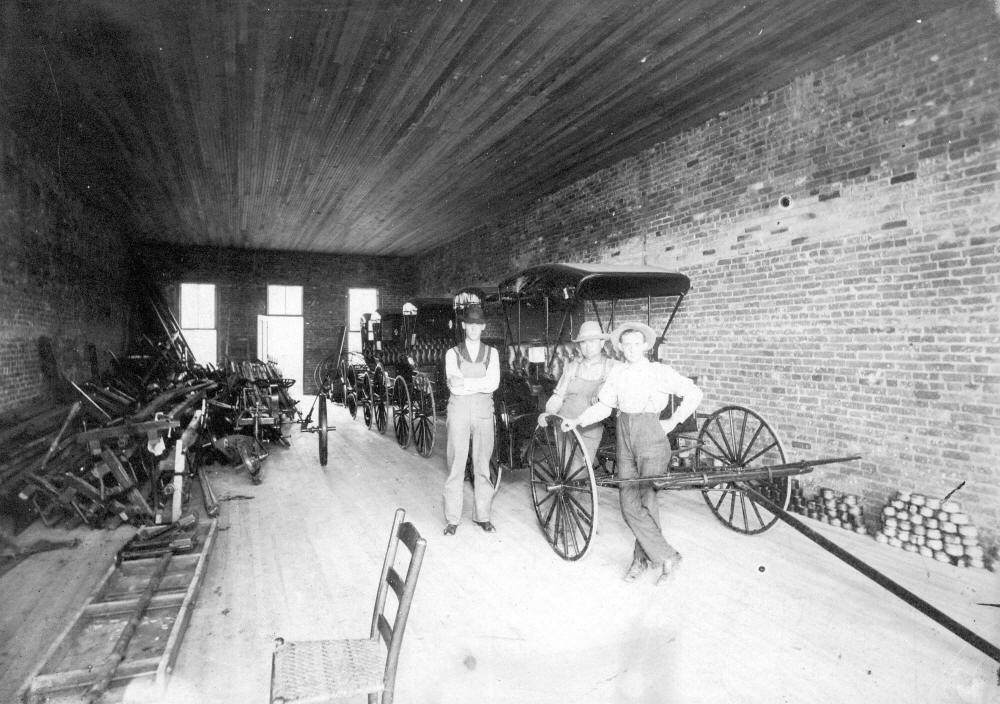
(B-150) Carriages - July 1905

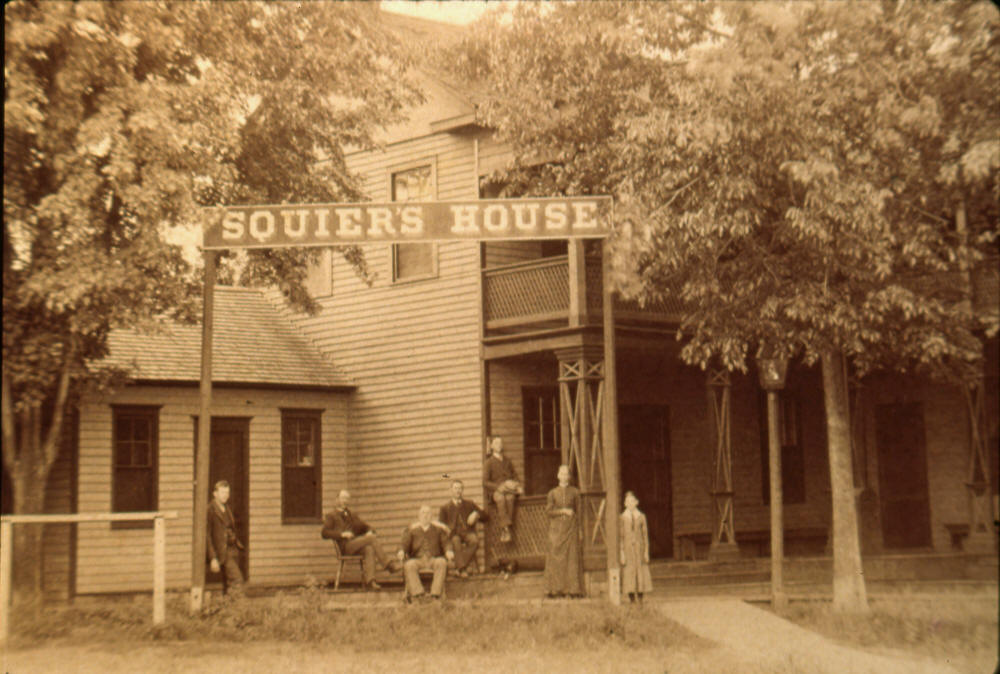
(B-7a) Squier’s House – Kinmundy, Ill. 1877 - Photo by O.N. Tyner

(B-7b) Closeup of Squier's House. William Chittenden Squier was the proprietor of this Hotel.

(B-67) Squier's House located at the 300 block of S. Jefferson St.. This very popular and modern hotel was located close to the Depot.
(There were once three hotels in Kinmundy.)
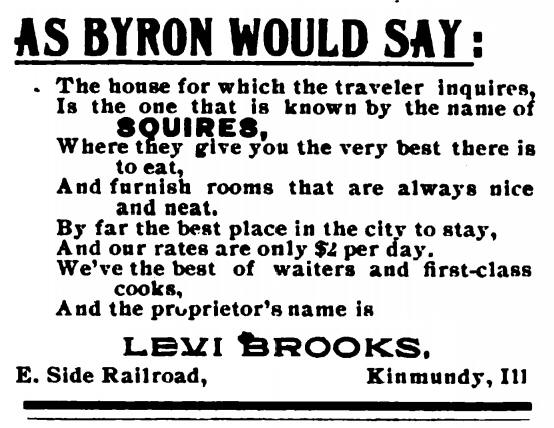
Squires - Advertisement in May 1895 in the "Southern Illinois Horticultural Visitor" published by E.G. Mendenhall
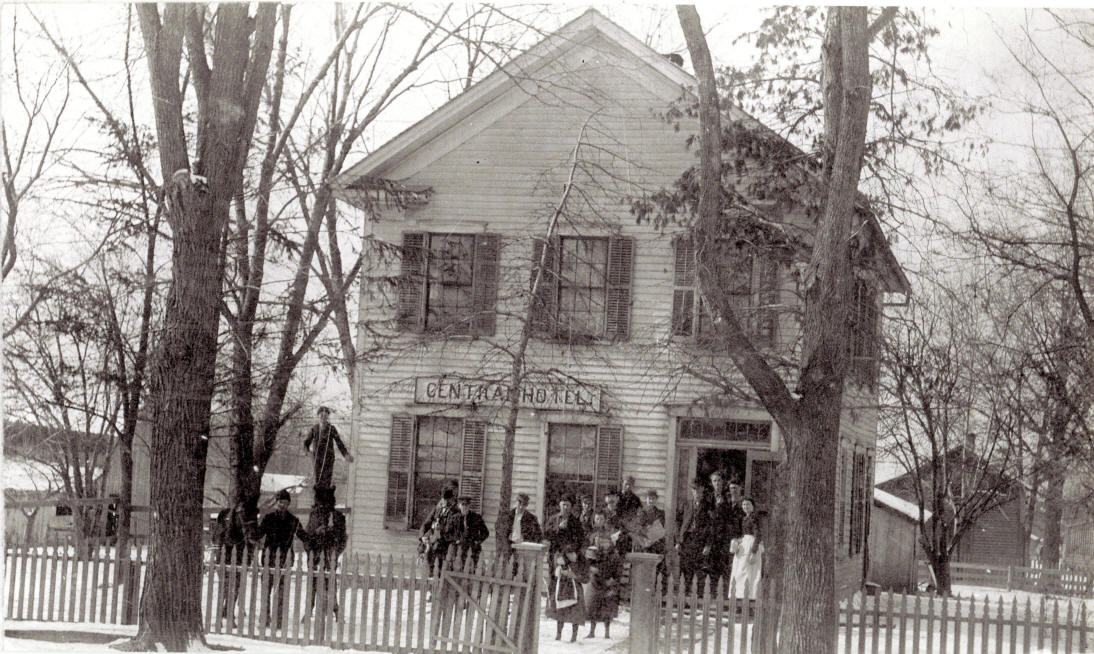
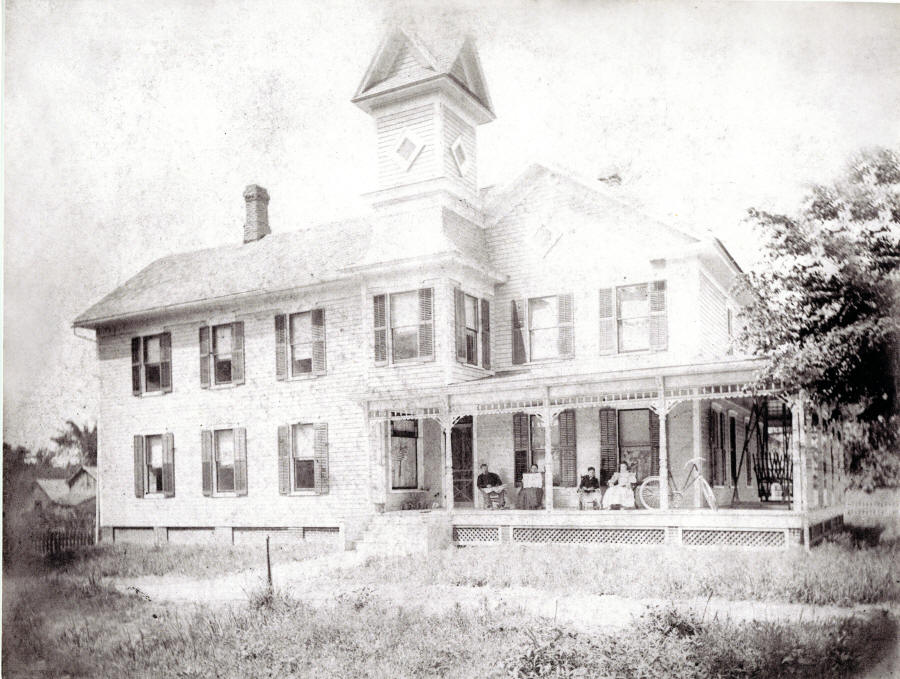
The Central Hotel was built about the time that the C & E.I. tracks were laid and depot was built in Kinmundy. It was centrally located between the new railroad and the Illinois Central depot & tracks.
This hotel was purchased by L.C. Matthews in the 1890's, additions were made, and it was turned into a private residence. Below is the photo of the Matthews home after additions were made.
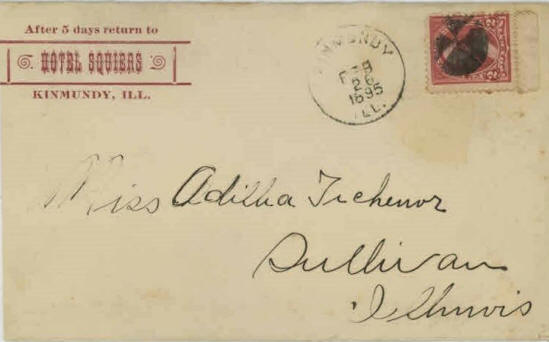
Envelop from Hotel Squiers - postmarked Feb. 26, 1895
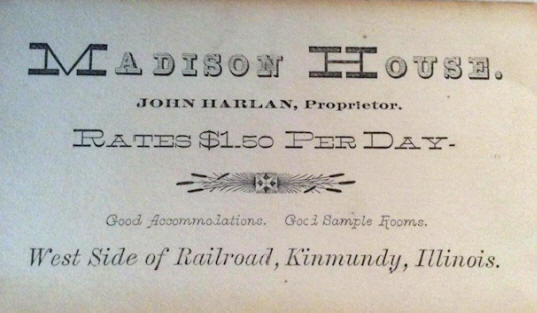
"Madison House" - John Harlan, proprietor.
"Centralia Sentinel" - Centralia, IL - June 15, 1876: "Capt. Gray supercede his father, J.N. Gray, in the hotel business, is having the Madison House fixed up for the comfort and convenience of the traveling public. W.C. Squiers, proprietor of the "Squier House", has his repapered and painted, and fly nets about all the windows. The Squier House is the best hotel in Southern Illinois."
"The Kinmundy Independent" - Dec. 12, 1880: "The prospect for another hotel in Kinmundy is good. We learn that the Madison House has been leased for that purpose."
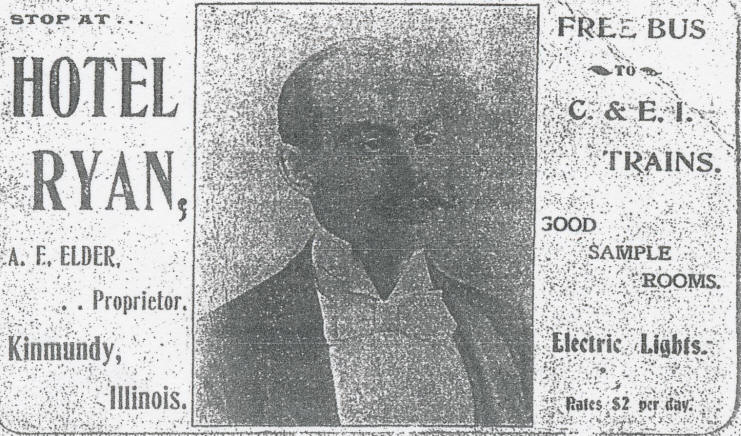
(B-158a) Hotel Ryan. The proprietor was Albert Eugene Elder, who was born and raised in Kinmundy, son of
John Boyd Elder & Bridget (Toolen) Elder. The hotel was named after his wife, Beatrice Ryan.
In the 1900 census, Albert and Bernice (Ryan) Elder were listed as proprietors of the hotel with several boarders.
This property is located at 208 W. 4th St. in Kinmundy. The upper story was torn down and Peggy and Junior Harvey
occupied the lower story (Feb. 2011). Property once owned by Eris Conant in the early 1930's.
(Information from Norma Miller (daughter of Dr. Miller) and Eileen (Eagan) Garrett)
Helen (Robb) Garrett remembers her mother's stories about working in the dining room of the
Hotel Ryan dressed in high heals and a long dress.
"The Kinmundy Express" - March 27, 1900 (reprinted June 24, 1915): "A large number of invited guests gathered at the Hotel Ryan Saturday night and enjoyed a social dance and ice cream supper given by the host and hostess, Mr. and Mrs. A.E. Elder. The Kinmundy band assisted in making the evening a pleasant one of those present."
"The Kinmundy Express" - Oct. 19, 1900 (reprinted in Oct. 24, 1940): "A.M. ALLEN has taken a contract to build an addition 15 x 34 feet, two stories high to the Ryan Hotel and the work will be commenced and completed as soon as possible."
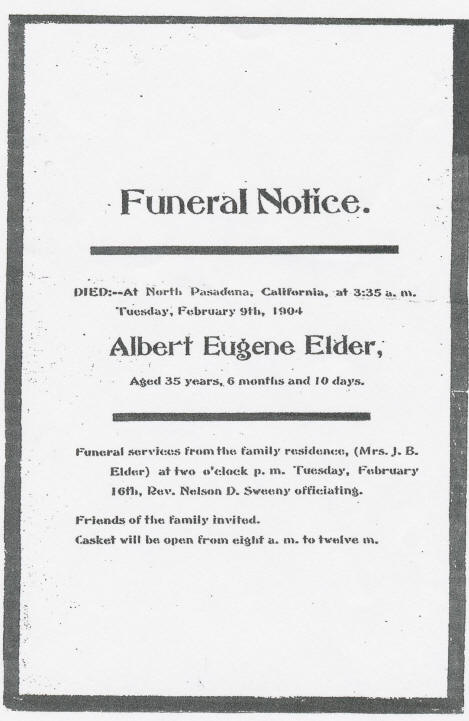
(B-158b) Funeral card for Albert Eugene Elder, who's funeral was in Kinmundy.
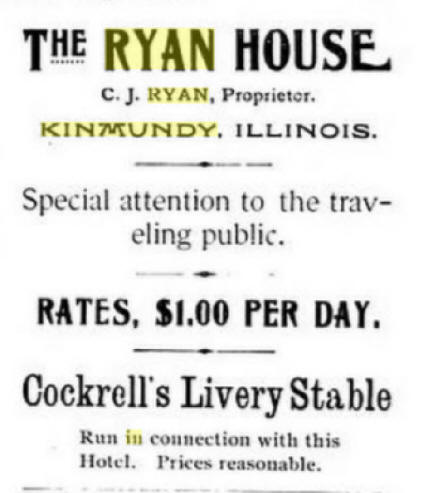
"The Ryan House" - C.J. Ryan, Proprietor
Advertisement in May 1895 in the "Southern Illinois Horticultural Visitor" published by E.G. Mendenhall
"Salem Republican" - Feb. 2, 1905 - "Leases Kinmundy Hotel" - "Capt. I.D. Lear of this city has closed the deal for a three year's lease on the Ryan House at Kinmundy and on March 1, will remove with his family to that city to take charge of that popular hostiery. Capt. Lear and his estimable wife are royal entertainers and their success in the hotel business is already assured. They will give Kinmundy visitors the best service they have ever had. Salem citizens regret the removal from here but are consoled with the thought they are not leaving the confines of 'Old Marion'."
"Salem Republican" - Feb. 2, 1905 - "Dad's Tavern" - J.L. Johnson (Soda Pop) has traded his Kinmundy property for the Ryan House at Kinmundy and in turn sold it to S.B. Sarchet commonly known as "Dad" Sarchet, who formerly was proprietor of the old Squire's House at that point. Dad has been farming and at times merchandising for several years but will now turn all his attention to the hotel business for a time."
%20B-92.jpg)
(B-92) "The Ryan House" in which C.J. Ryan was one of the first proprietors. This would later became "Dad's Hotel".
-Elwyn%20Cheatums%20slide.jpg)
"The Kinmundy Express" - Sept. 9, 1915 - "Charles E. Hamilton, who for the past two years has been the proprietor of Dad's Hotel, has sold his interest to Harry H. Craycroft, who has assumed full control. Harry was formerly proprietor of this place and thoroughly understands the business. He is starting off nicely and will no doubt succeed."
"The Kinmundy Express" - May 4, 1916 - "C.J. Ryan, formerly of this city, died at his home in Elk City, Okla., April 15, aged 70 years. He was actively engaged in business in Kinmundy for several years. He was at one time, Proprietor of the Ryan Hotel now known as "Dad's Hotel". His great ambition was fine stock and public improvement. He was laid to rest in Elk city Cemetery."
"The Kinmundy Express" - July 27, 1916 - "J.M. Carmean and family, who have had charge of the Stock Hotel (in Arthur) for several years, are to leave Arthur, having leased "Dad's Hotel" at Kinmundy and expect to make the change about August 10."
"The Kinmundy Express" - Apr. 7, 1917 - "Former Resident Dies in St. Louis. Body of Wm. E. RYAN Brought Here for Burial. Funeral Held Friday. After an illness of three days Mr. William E. RYAN, passed away at his home in St. Louis, at the age of 35 years. The body was brought back here, his old home for burial, the funeral being held Friday morning at the M.E. church, conducted by Rev. J.W. McNEIL. Interment was in Evergreen Cemetery. Deceased leaves to mourn their loss his wife and one sister, Mrs. Brenice DORR. His father, mother and 2 sisters preceded him in death in the brief space of 2 years. Mr. RYAN will be remembered as proprietor of the old Ryan Hotel, now known as "Dads" hotel. Those from out of town who attended the funeral were J.B. LESTER of Decatur, a brother-in-law; Mrs. Brenice DORR and Mrs. Homer HILL, sisters, and the widow, Mrs. Will RYAN."
"The Kinmundy Express" - Dec. 31, 1925 - "Kinmundy is without a hotel, the first time in many, many years. Mrs. Black moved her hotel furniture from the Dad's Hotel building to the Kate Buswell property yesterday."
Around 1928, Albert C. Dunlap sawed this hotel in half, remodeling the front half that would be used as a home to his son and wife (Carl and Lela (Garrett) Dunlap, and the other half was moved - it is said it was moved to Alma. This was on the northwest corner of 2nd and S. Jefferson St. - which is just east of the restaurant that Judy Mulvaney Tranum built in the early 1980's.
Dorothy (Dunlap) Geiler, who was a young child living in this remodeled home, remembers the concrete block near the street that allowed customers who arrived in buggys to drop people off at the hotel, many coming from a depot in town.
In 1958 the Ben Millican family moved to this home and later the Toler family moved here.
The house was still standing in 2017.
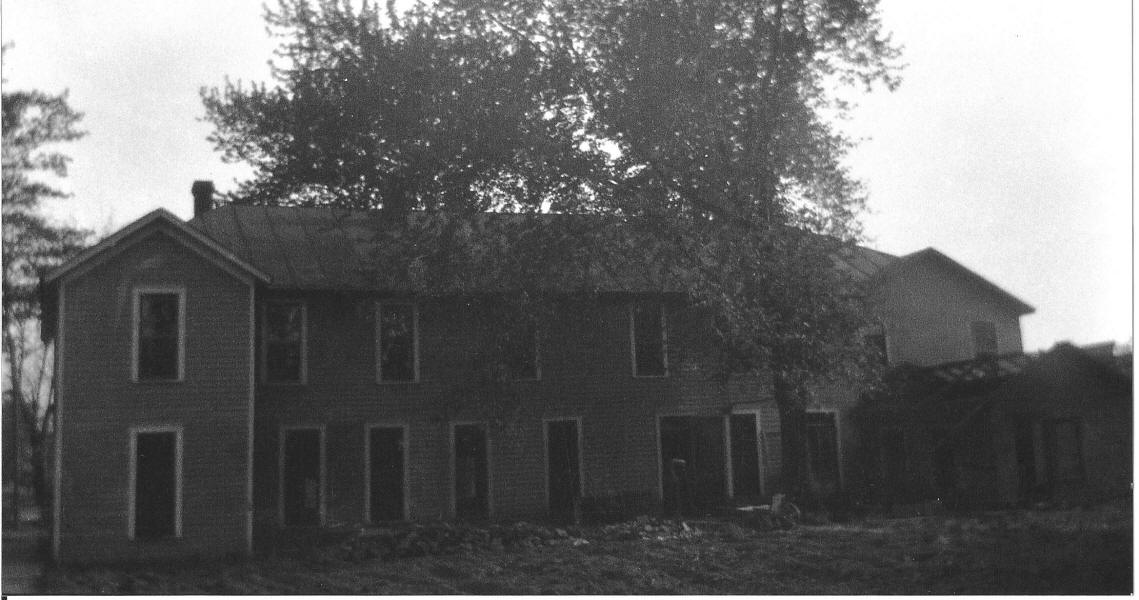
(B-161a) "Ryan's Hotel" in which C.J. Ryan was one of the first proprietors. This would later became "Dad's Hotel" located at the corner of 2nd St. and S. Jefferson St.
(B-162a) "Ryan's Hotel" in which C.J. Ryan was one of the first proprietors. This would later became "Dad's Hotel" located at the corner of 2nd St. and S. Jefferson St.
(B-163a) "Ryan's Hotel" in which C.J. Ryan was one of the first proprietors. This would later became "Dad's Hotel" located at the corner of 2nd St. and S. Jefferson St.
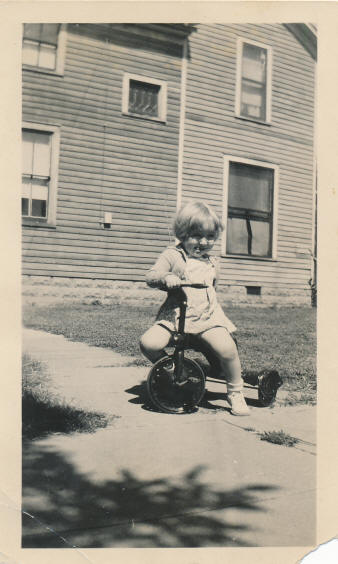
1937 - Dorothy (Dunlap) Geiler outside her family's home on the corner of 2nd street and Jefferson street. Prior to renovating this home in 1928, this was "Dad's Hotel".
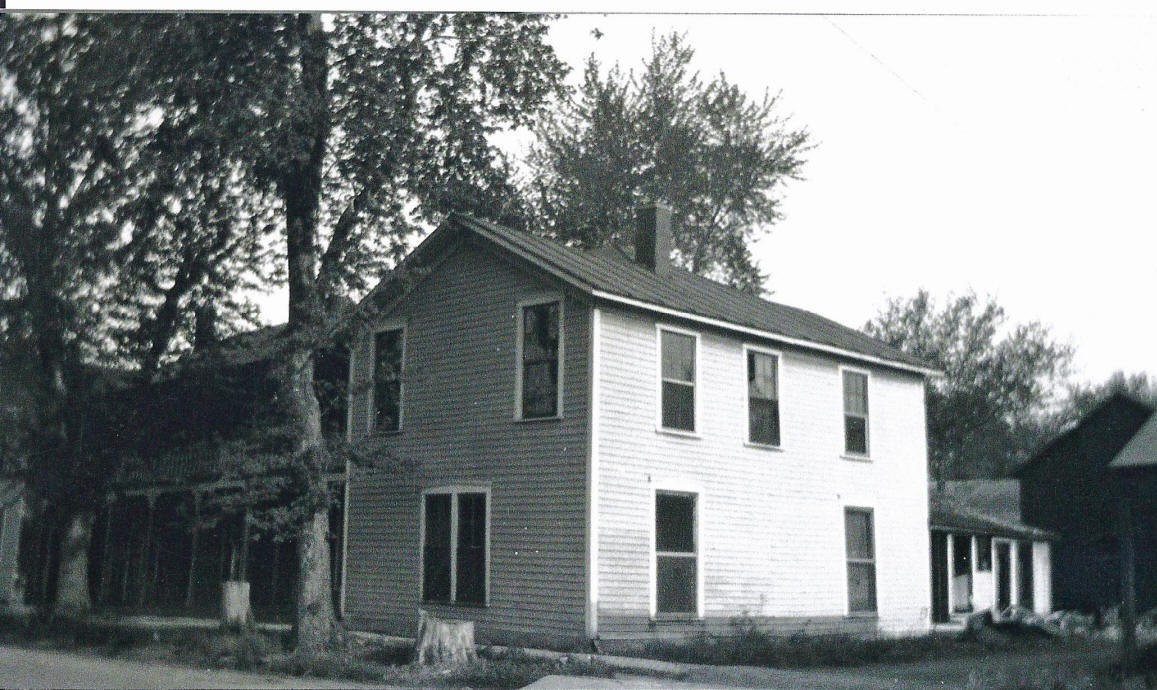
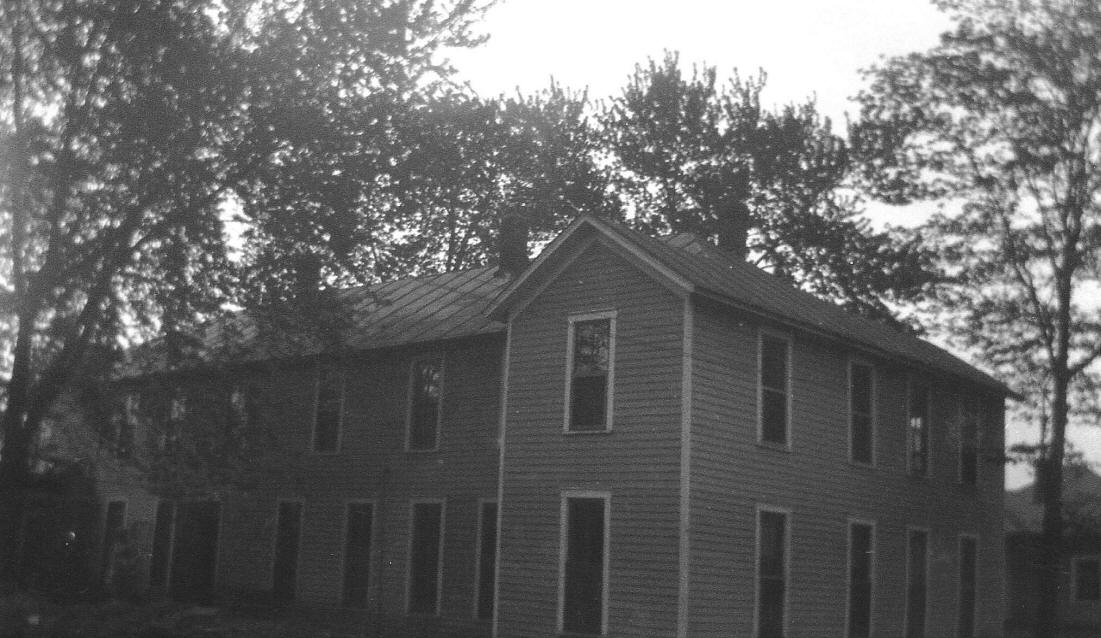
The following three photos were taken of the old Ryan's Hotel at the northwest corner of 2nd & S. Jefferson St. after much of the building had been stripped down. It was for many years, the home of the Toler family, and there is a photo of that home in the Kinmundy Residences section of photos.
.JPG)
.JPG)
.JPG)
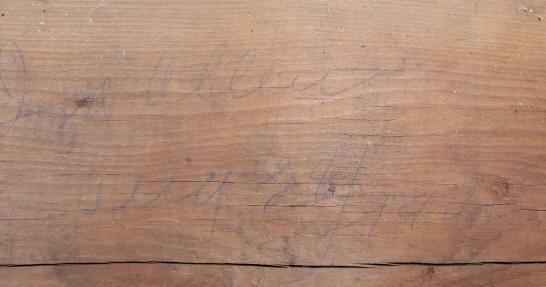
Jeff Smith found this written on a board from the old porch of the former "Ryan House".
It says "Ira Allen - Aug. 28, 1894." Ira Allen was the son of Adam Mitchell "Mitch" Allen. Ira and his brother Samuel John Allen were brothers and the two brothers were carpenters and of the Allen Brothers business. They are listed as a business doing carpenter work and architect work in a business directory of Kinmundy in 1889.
(Their business was located in the big building located just across the street and north of where the bank stands now, and where Doc Hanna built two little rental houses on corner of 2nd and Madison streets.)
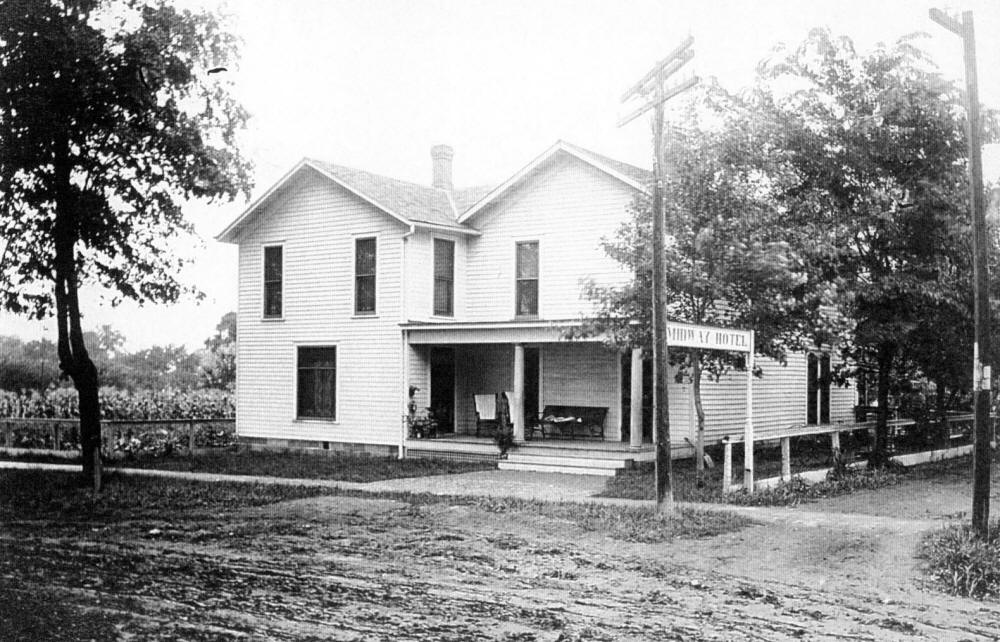
(B-68) Midway Hotel located at 210 W. 4th Street.
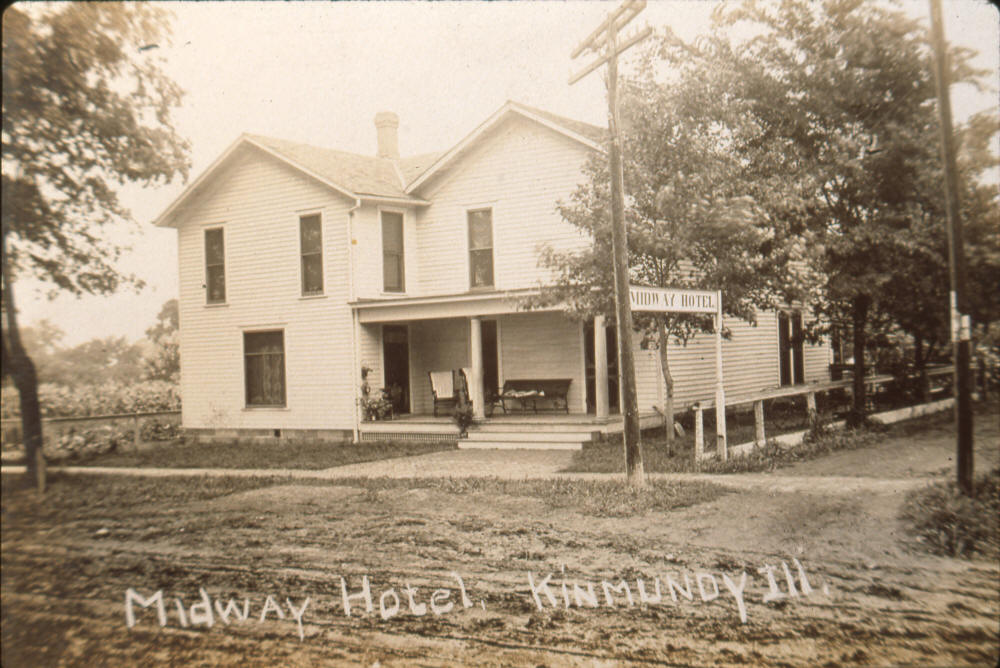
%20looking%20east.jpg)
(B-34b) New Year's Postcard from J.F. Donovan
%20B-100%20-%201910.jpg)
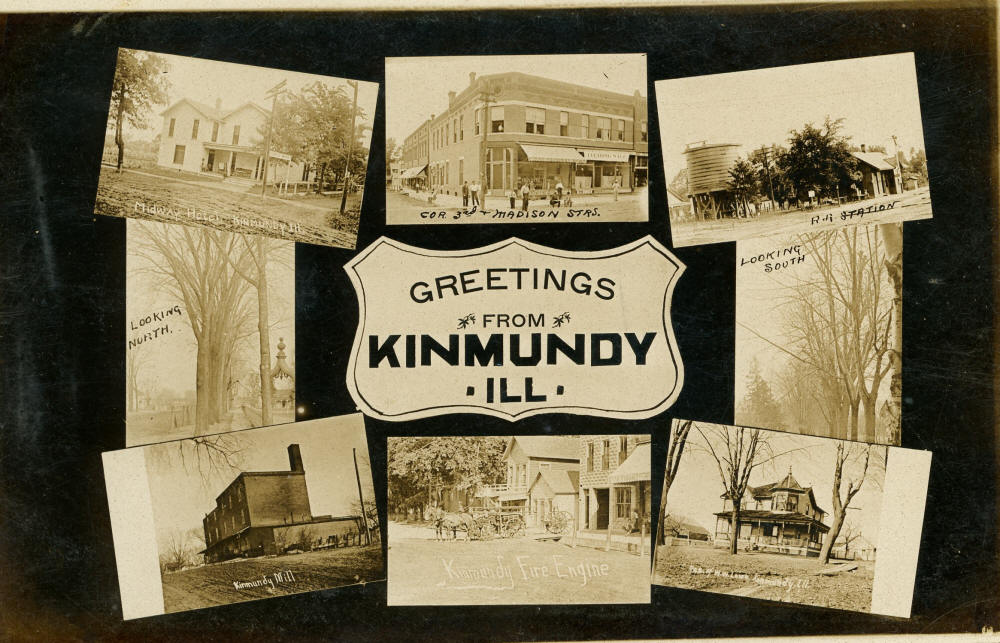
b.jpg)
(B-46) Kinmundy Postcard of Churches
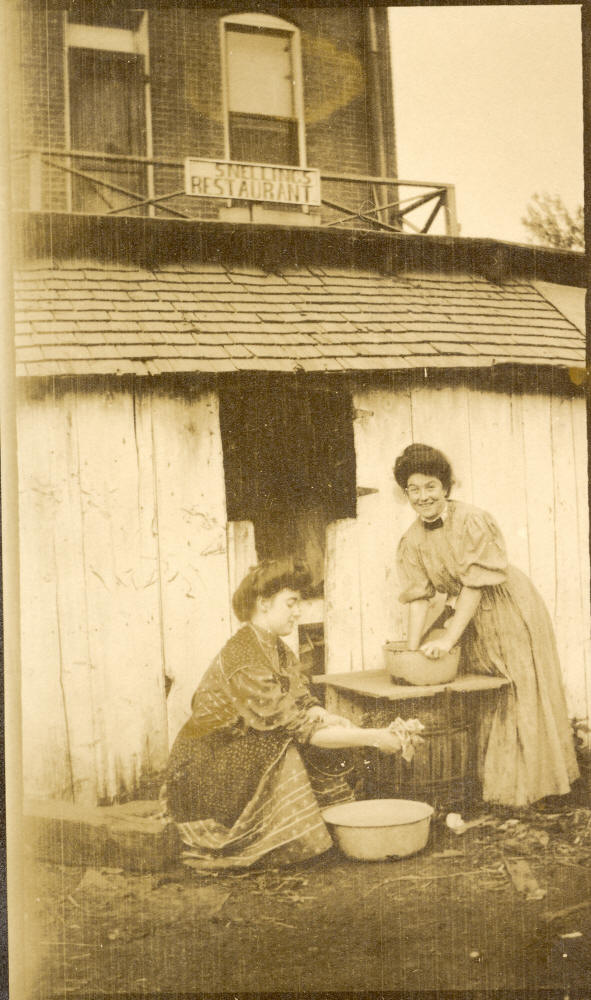
(B-88b) Snelling’s Restaurant
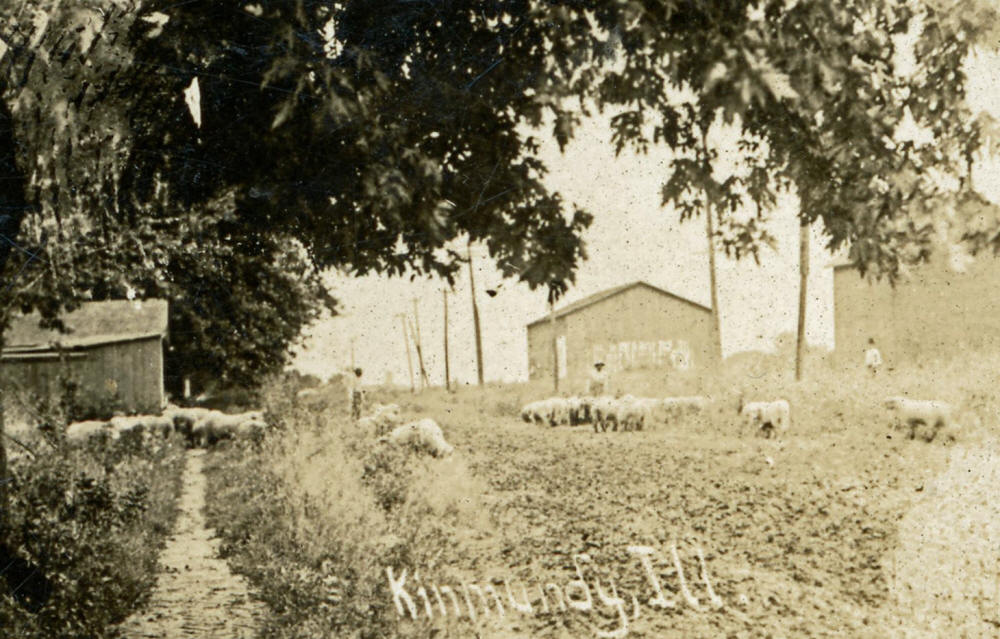
Kinmundy street view - sheep in street
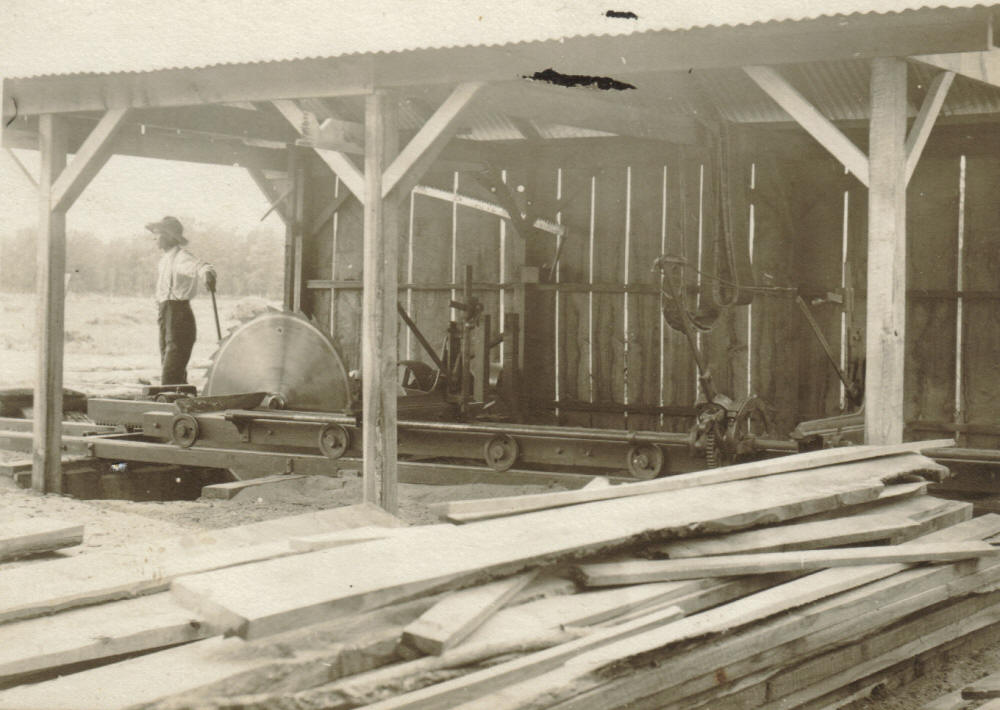
(B-112) Frank Green's Sawmill - Aug. 10, 1913
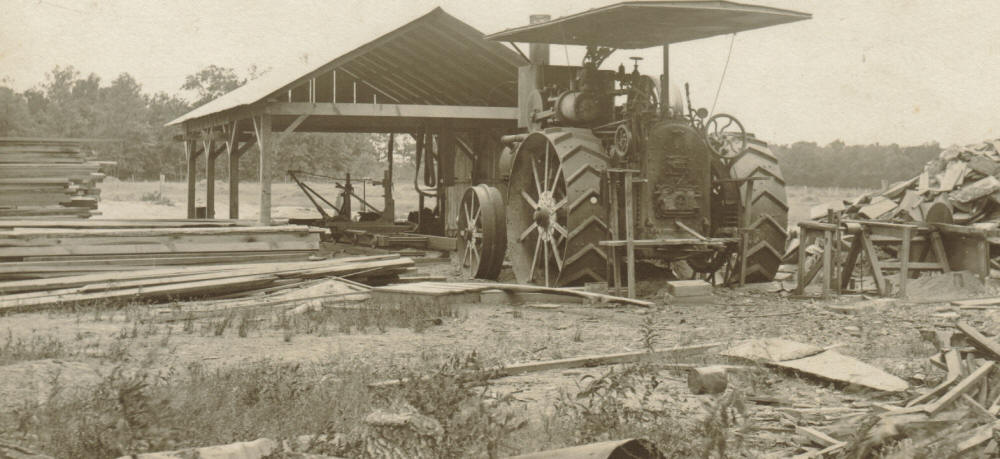
(B-113) Frank Green's Sawmill - Aug. 10, 1913
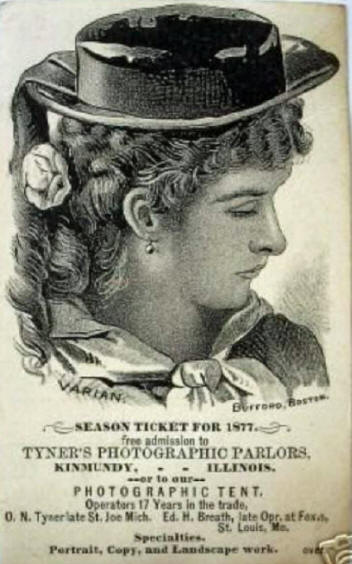
O.N. Tyner Photographic Parlors advertisement - 1877
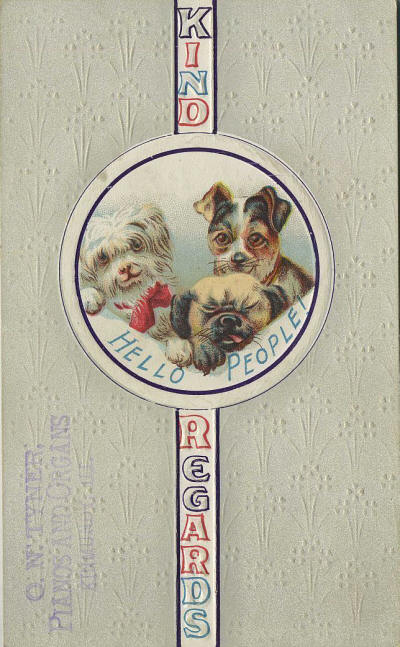
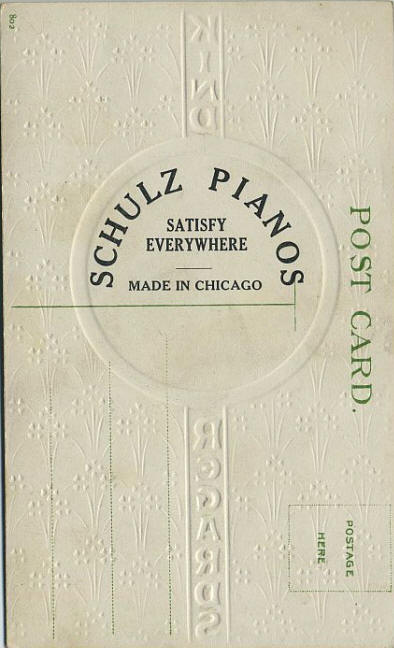
O.N. Tyner; Pianos and Organs; Kinmundy, IL
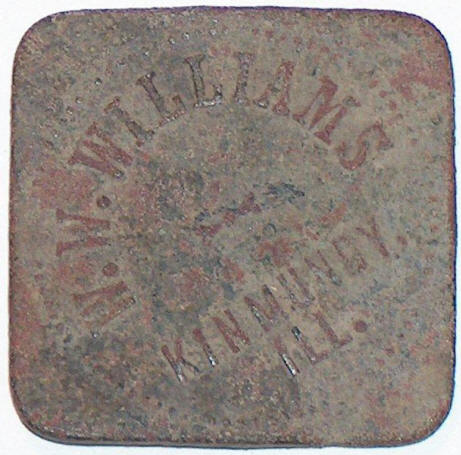
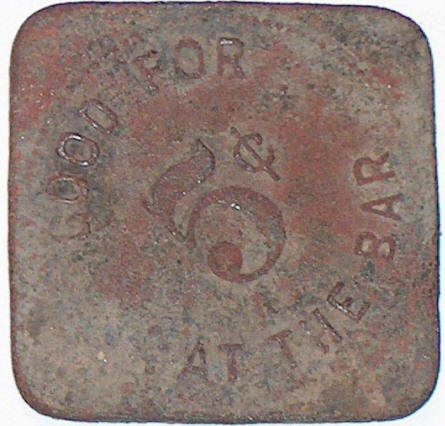
A 5 cent bar token (front and back sides) for the saloon owned by Wyatt W. Williams in Kinmundy, IL.
This token was found in Salem by Tom Watts while out with his metal detector.
Of course, those who are very familiar with the history of alcohol sales in Kinmundy will find this especially interesting, since Kinmundy has been "dry" for over 100 years.
Wyatt was listed in the 1900 Census in Kinmundy as being a saloon keeper, and he was raised in Kinmundy, later marrying Ellen Rooney.
We're not sure it's the reason he relocated, but in a 1908 vote, all saloons were closed down in Marion County with the exception of those in Centralia.
In 1910, Wyatt and Ellen were living in Centralia, and then in 1920 they had relocated to Salem, where they owned a hotel - which later burned to the ground,
and all that was saved from the fire was a rocking chair and a canary. Both Wyatt and Ellen Williams are buried in Kinmundy's Evergreen Cemetery.
.jpg)
.jpg)
.jpg)
Kinmundy spoon
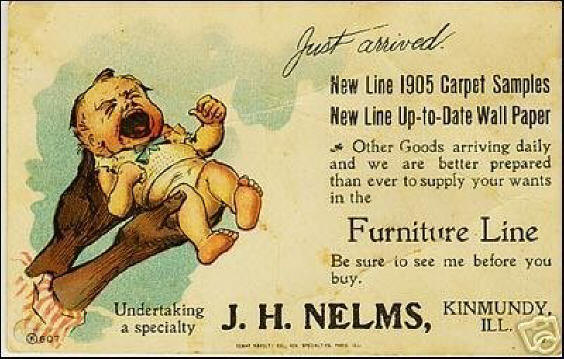
J.H. Nelms - Furniture and Undertaking
.jpg)
(B-116) Postcard scenes of the Mill, West Third Street, Madison St. and Kinmundy Lake
%20-%20front.jpg)
%20-%20Back.jpg)
(B-114) Postcard from the Park Nursery, E.G. Mendenhall, Proprietor, Kinmundy, Illinois
.jpg)
.jpg)
E.G. Mendenhall - Fruit Growers' Supply Depot
(B-115) Postcard from Kinmundy, Illinois (postmarked 1909)
Old Kinmundy postcard
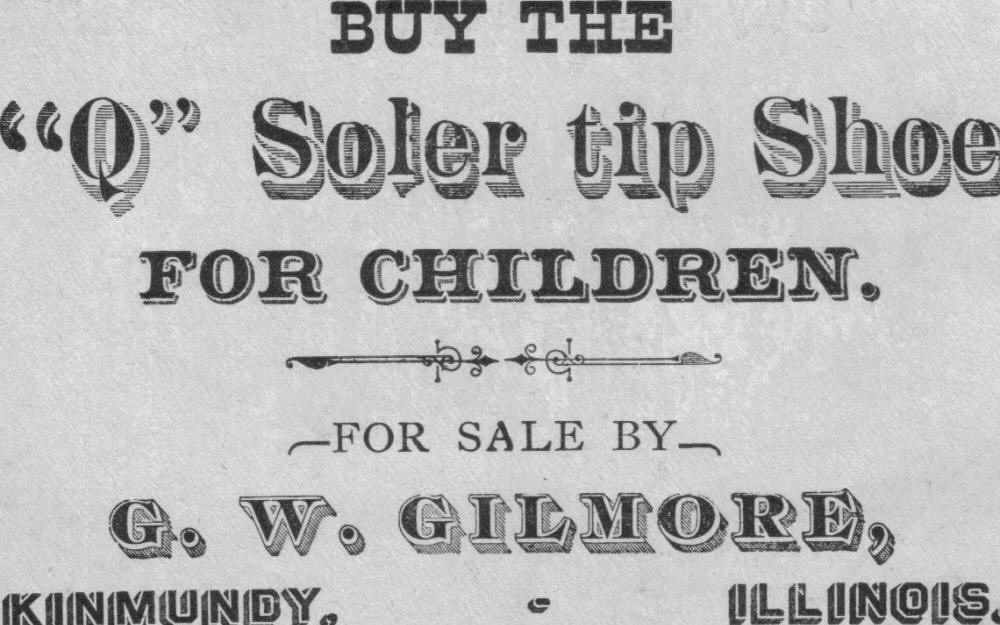
(B-112a and B-112b) G.W. Gilmore business card
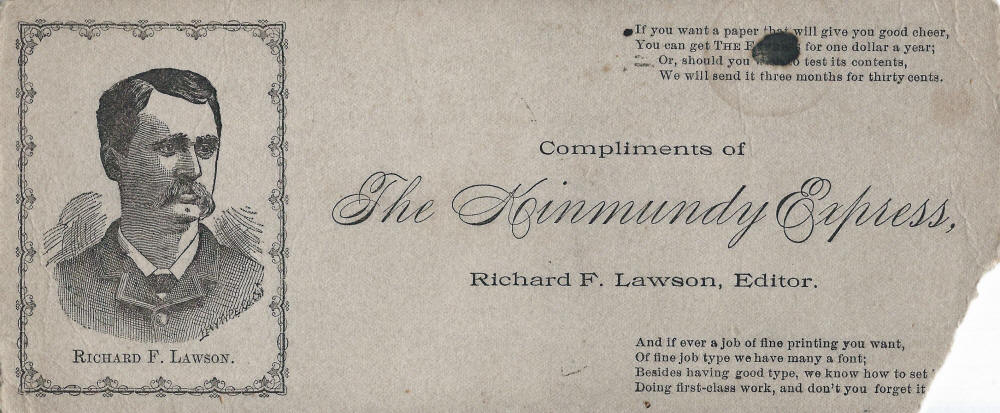
"The Kinmundy Express" business card - Richard F. Lawson, Editor
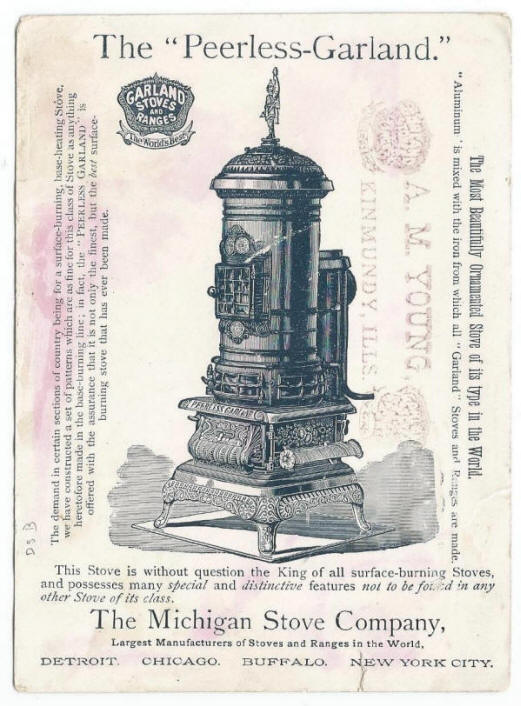
A.M. Young postcard advertisement - Kinmundy, Illinois
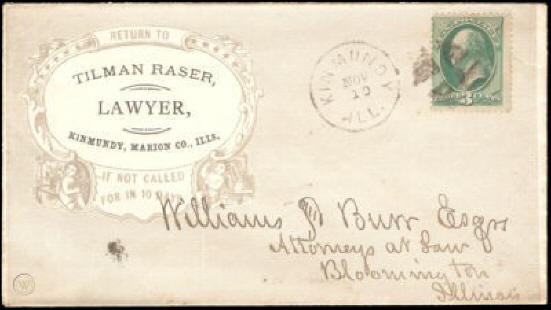
Envelope from Tilman Raser, lawyer in Kinmundy
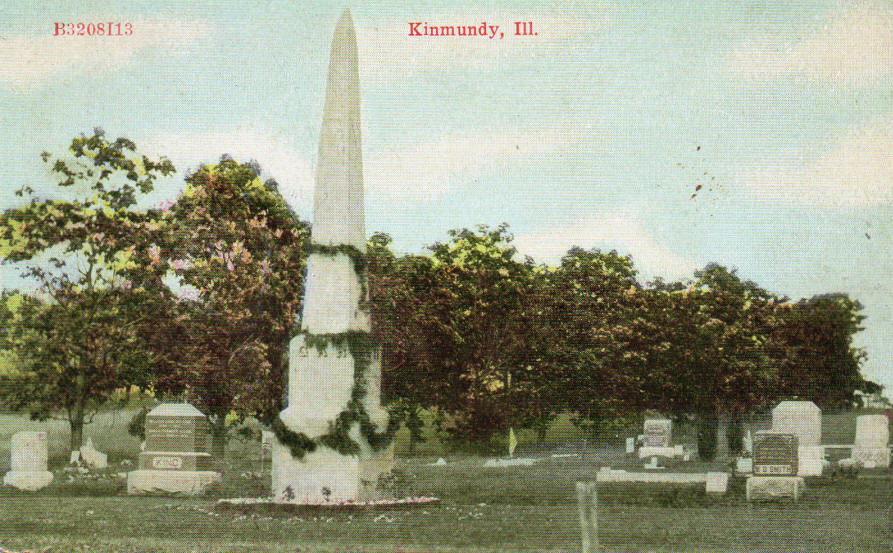
(B-175) G.A.R. Soldier Monument in Evergreen Cemetery
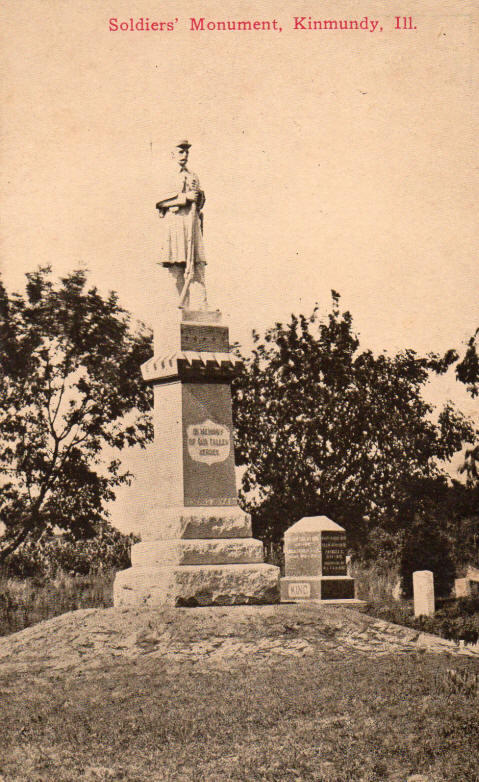
(B-174) G.A.R. Soldier Monument in Evergreen Cemetery
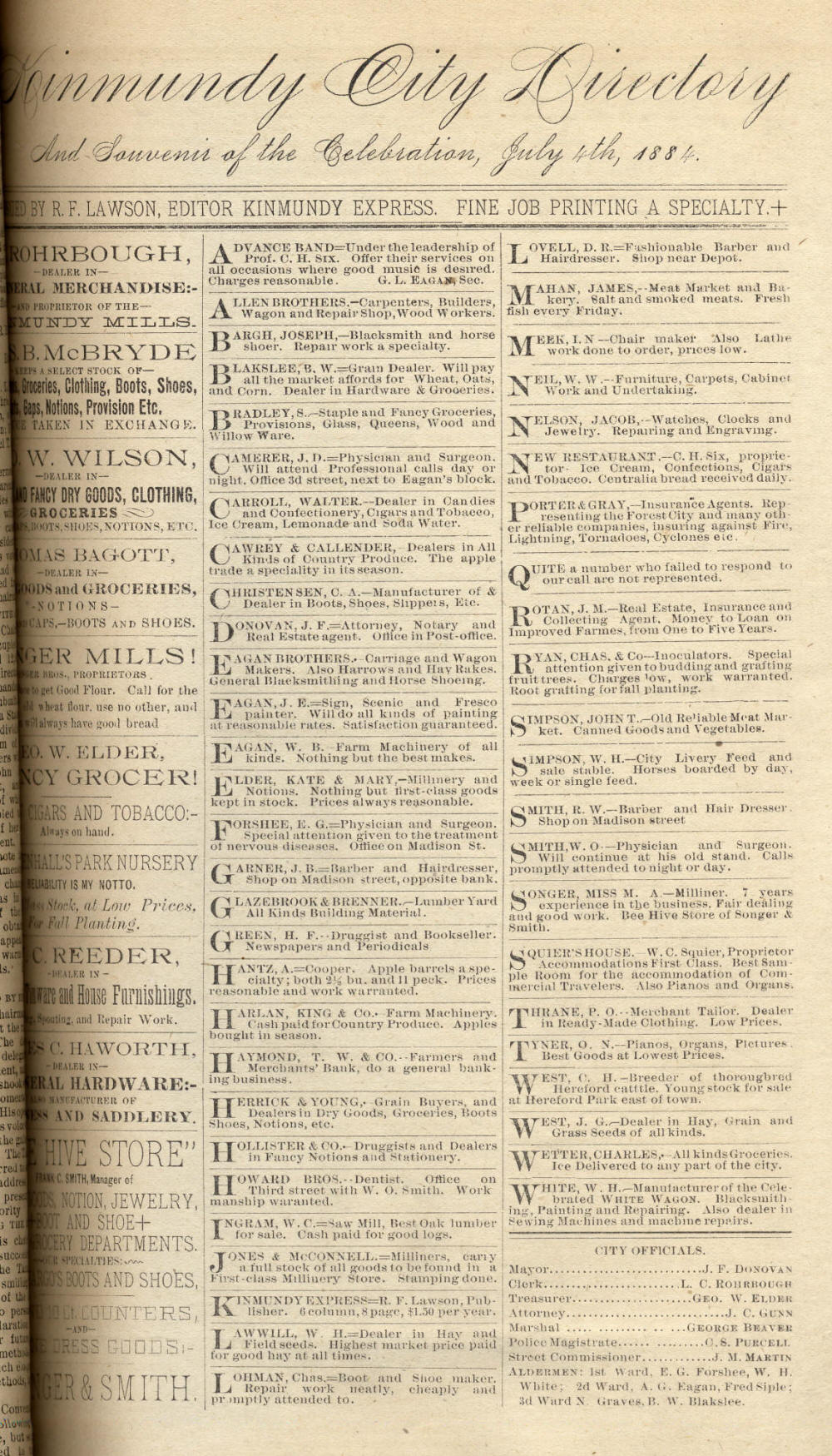
(B-115a) Kinmundy City Directory - July 1884
The following article appeared on the front page of "The Kinmundy Express", Friday, Jan. 14, 1887. Richard LAWSON was editor and publisher. Mr. Rodney SCHOOLEY came up with a copy, thought some of our readers might like to read it. The poeme includes the names of a great many people who lived in Kinmundy in 1887. This article was reprinted Jan. 23, 1986.
“LAWSON’s Local Lyric”
“Of all the towns that you will find; In the east or in the west,
For people who are good and kind, Kinmundy’s by far the best.
Of course we have some croakers, Who may say this isn’t so,
But in this we are no joiner, And speak whereof we know.
The country by which it’s surrounded, Is composed of good farming land,
And very pleasant farm-houses, May be found on every hand.
Public schools as good as need be, Several months in the year are taught
To educate the children free, And if they don’t go they ought.
There are four churches in the place, Where regular meetings are held,
So we have the means of grace, By very few towns excelled.
In fact we have all at our command, That might well be called a boon,
What pence and comfort most demand, And nary a darned saloon.
A brief synopsis we will give, Of the men and women too,
Who are allotted here to live, And the business that they do.
J.F. DONOVAN has long been the mayor, And fills with grace the official chair.
The writer of this is the city clerk, And does all the city’s clerical work.
J.W.WILSON is the treasurer elect, And keeps the city’s cash correct.
The city attorney is J.C. GUNN, Salary – one dollar, honor and fun.
ALLEN and CHAPMAN, the First represent,
CAMERER and SONGER from Second are sent;
HARLAN and ______ are for the Third Ward, So that in the council all have a word.
C.S. PURCELL is the police magistrate, And adds woe to the transgressor’s fate.
C.W. BEAVER is the chief of police, And a very good fellow to keep the peace.
J.M. MARTIN, superintendent of streets, makes the official list complete.
The big grist mill of SONGER Brothers, Is surpassed indeed by very few others.
A farm or spring wagon, Mr. W.H. WHITE, Will sell to you at prices right.
Or ALLEN Brothers will make you a wagon, And one that you can safely brag on.
Kinmundy coal mine is a new institution, And is the means of wealth distribution.
Of millinery goods you cannot get finer, Than at the Star Bazar of Mrs. TYNER.
T.W. HAYMOND in charge of the bank, Keeps that institution in the front rank.
If a lawyer’s assistance you ever require, J.F. DONOVAN is the man to hire.
To qualify yourself for an easy pursuit, Go to G. RUTHERFORD’s short hand institute.
W.C. REEDER, dealer in stoves and tin ware, Has household goods and does repair.
His son, J.F., the boss tinner and clerk, A job of iron roofing will never shirk.
Harness and hardware there’s no better on earth, Then that made and sold by J. HAWORTH;
The saddlery work and clerking is done, By Lee HAWORTH and Jim WHITSON.
C.H. DENNIS does dentistry here, Of his workmanship you need have no fear.
While Frank FORSHEE is well up in the art, And at making new teeth does his part.
GLAZEBROOK and BRENNER a lumber yard keep, And sell building material very cheap.
W.H. WHITE also sells lumber, At prices that will not encumber.
G.L. EAGAN at the Golden Sun, The restaurant business has just begun.
At FENSTER’s restaurant you will find, Sweet knickknacks of every kind.
William CAWREY, the baker of bread, In that branch of trade stands at the head.
General store of John WILSON is complete, And L.R. DAVIS keeps it quite neat.
Isaac N. MEEK – Old Seventy-Six, Is always ready your chairs to fix.
For groceries and provisions you cannot do better, Than go to the store of Charley WETTER.
Dr. E.G. FORSHEE, though the eldest of all, Is always prompt to answer a call.
Dr. J.D. CAMERER will attend to a case, In medicine or surgery with greatest grace.
Dr. W.O. SMITH is the old standby, Ready for duty be it wet or dry.
For shirts and overalls it is worthwhile, To give the Kinmundy shirt factory a trial.
Buy your groceries at the store of S. BRADLEY, The very best he will give you gladly;
Master Ed DEW, their delivery boy, Will deliver the goods with speed and joy.
Mrs. M.R. LAWWILL runs the hay press – Another evidence of female progress;
Her superintendent is C.S. NEIL, An excellent fellow with whom to deal.
O.W. HARLAN is the hay seed buyer, For which none pay prices higher.
In the produce line Mr. W.L. KING, Buys and sells most everything.
You will find the Star grocer, P.C. SMITH, A first-rate fellow to deal with;
If he is not there his clerk, John NELMS, Will always be found at the helm.
Miss M.A. SONGER of the Bee Hive, To the wants of her trade is ever alive;
Millinery branch is in charge of Miss ROSS, While over the drygoods DEIWERT is boss.
Of various goods you will seldom find more, Then in B.W. BLAKESLEE’s variety store;
And HERMAN, his clerk, is ever on hand, To wait upon you in the manner grand.
Mrs. M.E. HOLLISTER keeps drugs, oil and paint, Also fancy goods, both common and quaint;
Her stock of the same is very large, And the store is in charge of E.C. BARGH.
H.F. GREEN, the druggist and book seller, Keeps a good store and is a good fellow;
He has a nice clerk, too, by the way, In the person of Mr. William CLAY.
C.A. CHRISTENSON for boots and shoes, Good work and low prices, beats the Jews;
While his able lieutenant, Mr. J.F. CROFT, Can make you a boot that’s nice and soft.
If you have a boot or shoe to mend, To Charles LOHMAN you should go or send.
Or Simon VAN ARNUM, a knight of the last, Can put on a patch neat and fast.
SMITH and HOWIE, the dealers in meat, Always have something good to eat.
William O. CROZIER across the way, Can supply you with the same any day.
For clothing or shoes go to WILSON & NELMS, They have the goods and left prices sell ‘em.
J.B. GARNER is the barber next door, To WILSON & NELMS’ clothing store.
Frank CLYMER’s shop is up the stair, Where he’ll shave your face or cut your hair.
Smith and Marsh FORSHEE give you a shave, As good as barbers ever gave.
LOVELL Brothers, barbers and hair dressers, Can give you a bath or trim your tresses.
J.M. ROTAN, known as Cheap John, For bargains in notions depend upon.
HERRICK & YOUNG keep a general store, Chock full of goods from ceiling to floor.
General merchandise is also supplied, In the well known store of J.B. McBRYDE;
And with the assistance of Richard, his son, Waiting on customers is rapidly done.
Thomas BAGOTT, on Madison Street, In a general store your wants can meet.
W.W. NEIL, the furniture man, Sells goods as low as anyone can;
He is also a good cabinet maker, In addition to being city undertaker.
If you should wish out riding to go, Call at the stable of C. RYAN & Co.
Or you will be equally as certain, To get a good rig of G.W. BLURTON.
SWENEY & HOLMES also have a stable, To accommodate you are generally able.
If you should have any use for a dray, Slim DOWNS and his mules work for pay.
C.P. CALLENDER, dealer in fur and produce, Handles all products for which there is use.
C.W. CALLENDER buys potatoes and apples, With “incubators” occasionally grapples.
W.C. INGRAM who runs the saw mill, Orders for hard lumber can promptly fill.
Most any kind of farming machine, At W.B. EAGAN’s may always be seen.
For house or sign painting, paper hanging and such, You will do well to employ John MOTCH.
A.B. EAGAN does sign painting too, In which he is excelled by very few.
J.E. EAGAN is a painter of skill, If you want a good job, do it he will.
You can get good brick at the brick yard, Of W.B. EAGAN and W.N. GERARD.
For any brick work of which to be proud, You may depend upon Mr. S.B. McCLOUD.
If a house to build or that needs moving, Mr. J.O. DUMOND can do your improving.
A job of plastering, nice and level, You can have done by Samuel NEAVILL.
EAGAN Brothers wagons and carriages make, They also manufacture a good hay rake.
For all blacksmithing call on Joseph BARGH, First class is his work and low is his charge.
General woodwork we may safely may, Is always well done by Uncle George RAY.
When in search of notions on the rounds, Drop in at the store of Melvin DOWNS.
MENDENHALL’s Park Nursery can with case, Supply the market with home grown trees.
The SQUIER’s House, a first-class hotel, Is an excellent place for transients to dwell.
Commercial Hotel, the wayfaring can feed, And furnish a bed as good as they need.
As fine photographs as ever were made, Mr. O.N. TYNER supplies to his trade.
Mr. W.D. REYNOLDS the art is learning, And every day new laurels earning.
Or if you should want a piano or organ, This man TYNER will give you a bargain.
Watches, clocks, jewelry and silverware, Are sold by Jacob NELSON on the square.
You will no doubt find it to your gain, To have your clothes made by P.O. THRANE.
If your clothing is “tattered and torn”, Have a suit made by Martin SCHOENBORN.
W.M. CHAPMAN, in charge of the station, Gives very good railroad accommodation.
T.W. WILLIAMS, our obliging postmaster, Would like to sell his groceries faster.
W.T. COLEMAN is watchman at night, To see that everything is kept all right.
The number of leisuremen is very small, But the chief of that class is Dr. HALL.
Last, but not least, the Kinmundy Express, To hundreds of homes has weekly access;
To sell your goods we would advise, That you take a column and advertise,
For it is always read wherever it goes, Whether gotten up in rhyme or in prose.
If a nice job of printing you want, Of fine job type we have many a font.
If a business firm we’ve failed to mention, The omission is surely not our intention;
If you are left out do not feel solemn, ‘Cause there’s no more room in this column.”
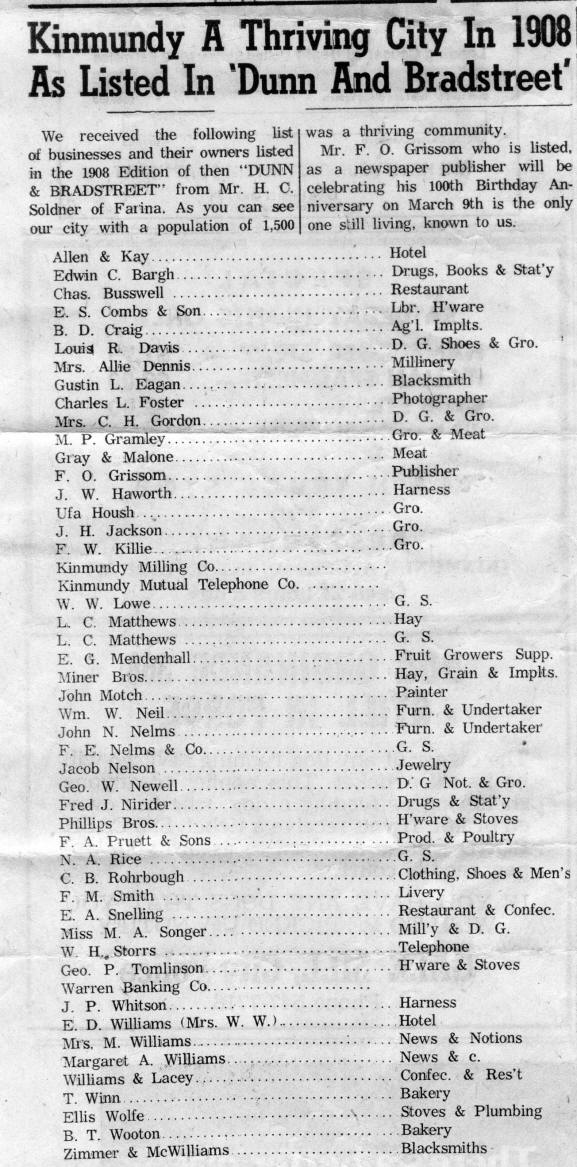
(B-118) 1908 Kinmundy Business listing
Mercantile Agency Reference Book - Marion County, Illinois - January 1914 (Page 1)
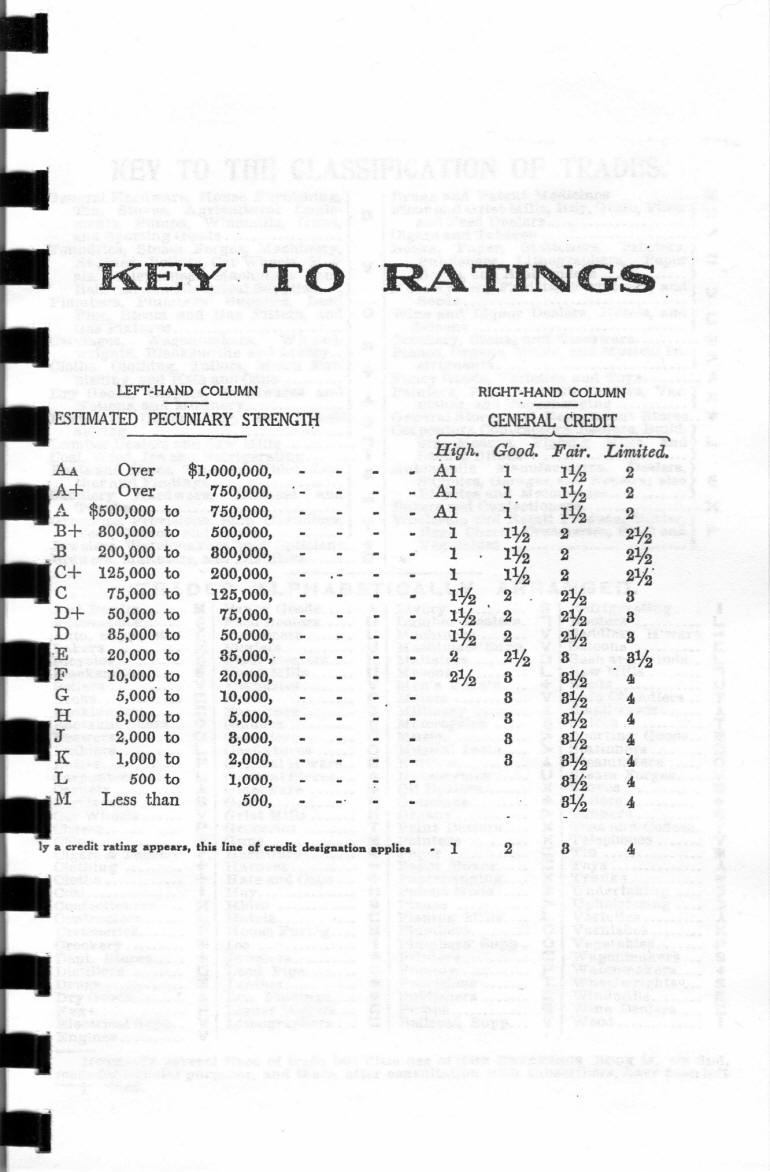
Mercantile Agency Reference Book - Marion County, Illinois - January 1914 (Page 2)
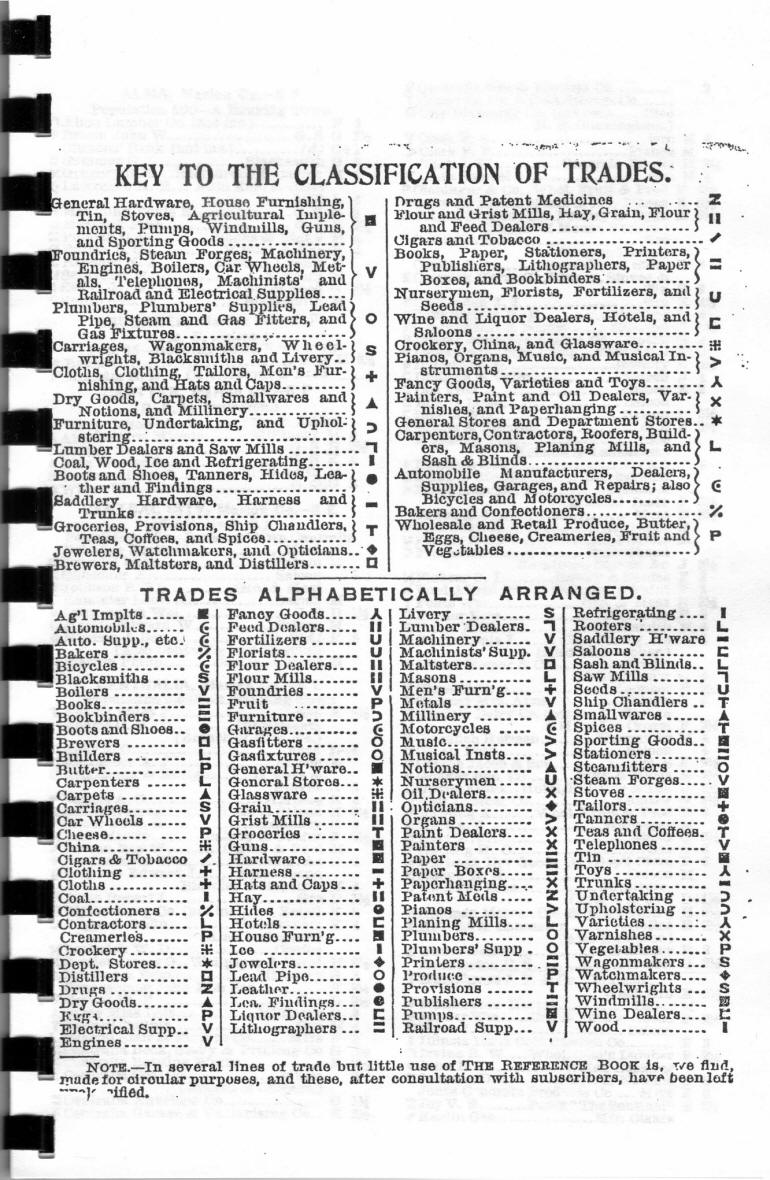
Mercantile Agency Reference Book - Marion County, Illinois - January 1914 (Page 3)
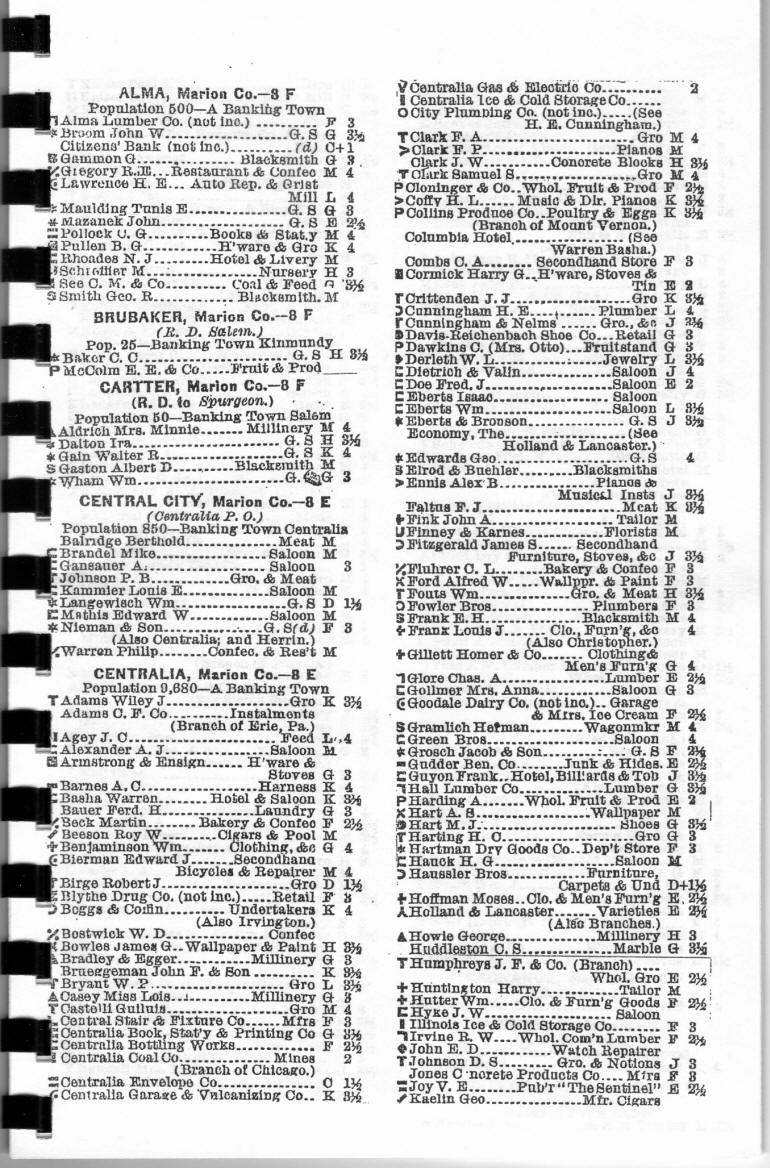
Mercantile Agency Reference Book - Marion County, Illinois - January 1914 (Page 4)
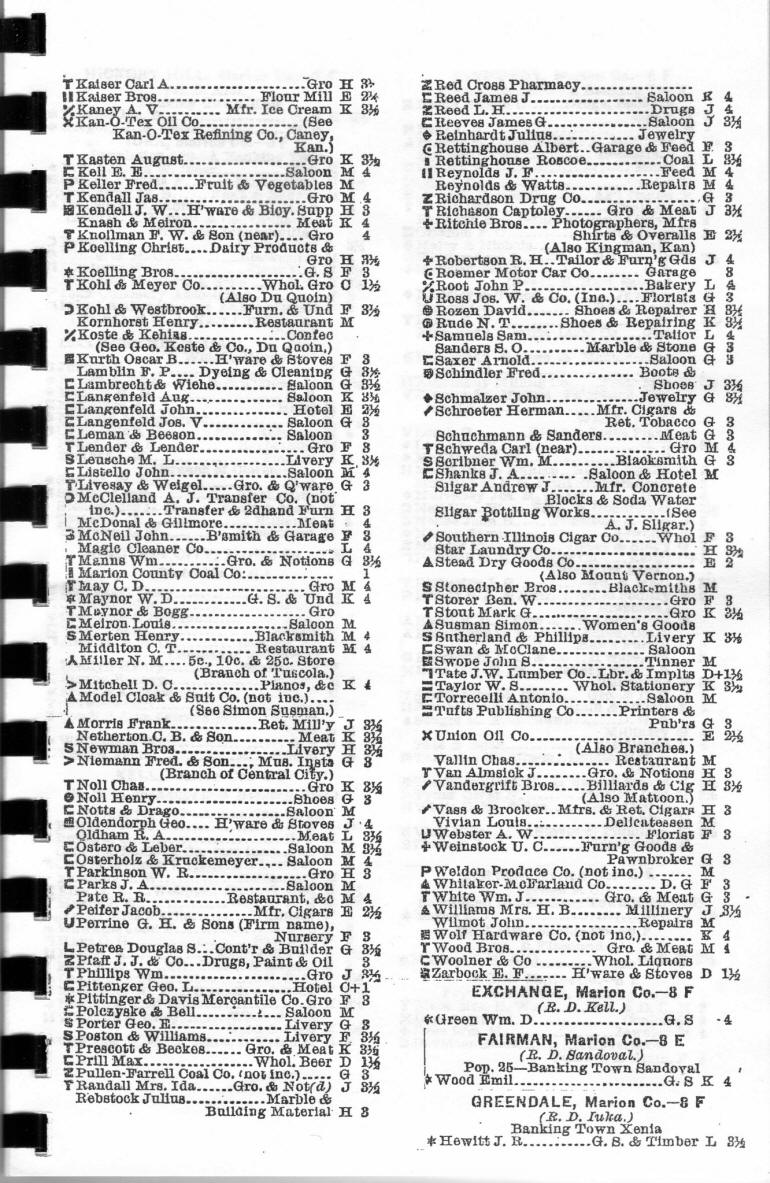
Mercantile Agency Reference Book - Marion County, Illinois - January 1914 (Page 5)
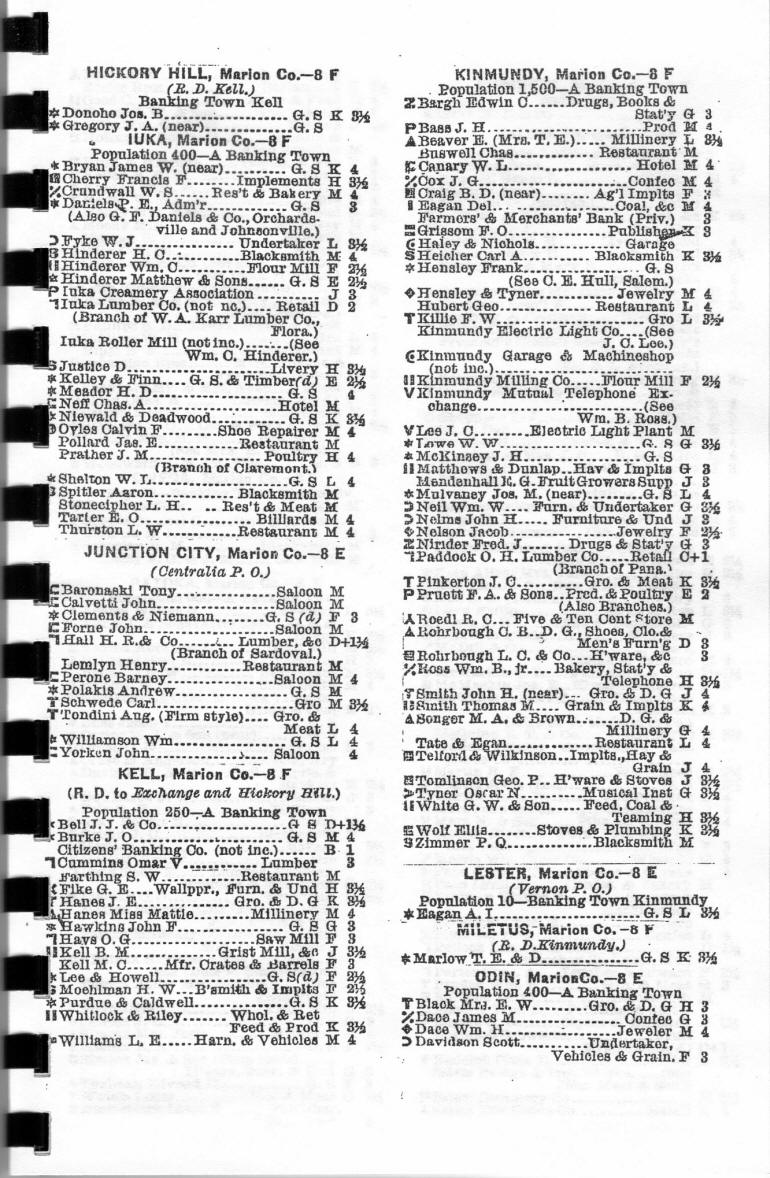
Mercantile Agency Reference Book - Marion County, Illinois - January 1914 (Page 6)
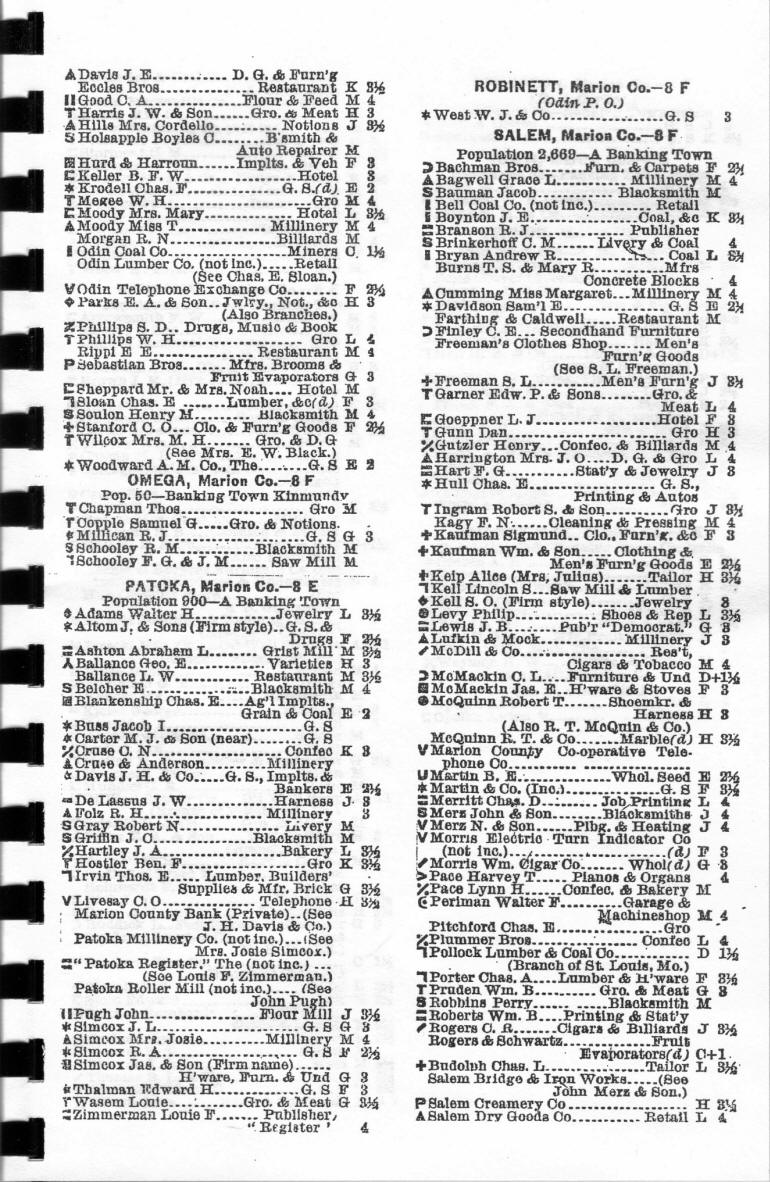
Mercantile Agency Reference Book - Marion County, Illinois - January 1914 (Page 7)
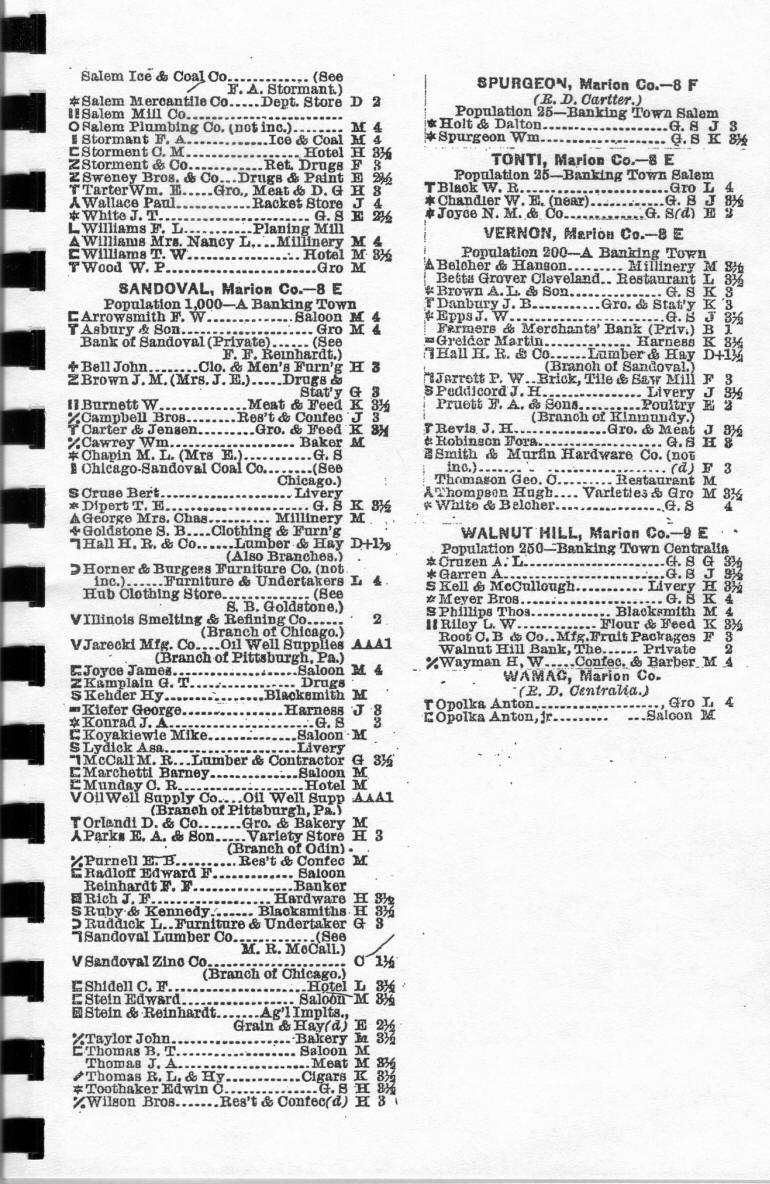
Mercantile Agency Reference Book - Marion County, Illinois - January 1914 (Page 8)
Kinmundy Mills account book - May 1881 - August 1881
.jpg)
.jpg)
.jpg)
.jpg)
.jpg)
.jpg)
.jpg)
.jpg)
.jpg)
.jpg)
.jpg)
.jpg)
.jpg)
.jpg)
.jpg)
.jpg)
|
Site and contents copyright - Kinmundy Historical Society (Kinmundy, Illinois) - a nonprofit organization.
|